Zoran Music
TIMELINE
1909
Anton Zoran Music was born on 12 February in Bukovica, near Gorizia, then part of the Austro-Hungarian Empire and now Slovenia.
I was born in Gorizia and I used to go to my grandparents’ home in the Collio. Of that land I remember the hills that overlooked the plain, an immense plain, in which I liked to lose my gaze, sitting on the little wall of the house. […] My grandparents were great wine producers, my mother was a teacher, my father was a teacher. I have rather distant images of that time: I remember that my father was a quiet, amiable person. […] It was my mother who decided. She had a lightning gaze, able to paralyse one.
The artist in conversation with Paolo Levi, in Zoran Music Dialogo con l’autoritratto, Electa Milan 1992, p.44.
1915
At the outbreak of war, his father, a schoolmaster, was at the front, in Galicia; the family moved to Styria.
We were refugees in a small village in Styria. During the First World War, my father was sent to the front and my mother was left alone with two sons, Ljuban and myself. We lived in a hut with a thatched roof. The school was quite far away and woe betide if you were late. The teacher invariably pointed his finger at me every morning after the Pater noster. It was my turn to recite the Habsburg anthem, then taken up in chorus by the whole school group.
The artist in conversation with Paolo Levi, in Zoran Music Dialogo con l’autoritratto, Electa Milan 1992, p.45.
1930-35
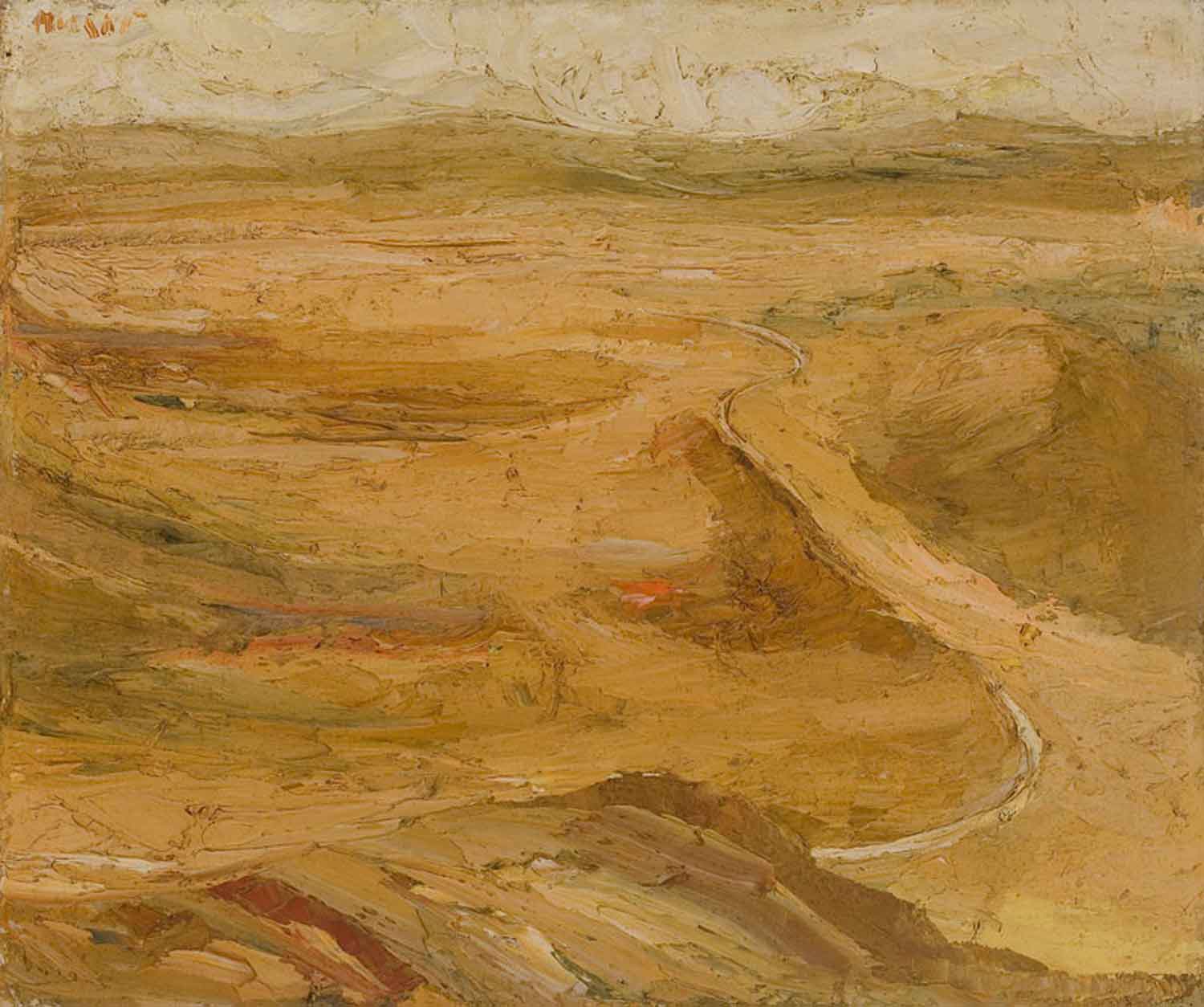
Polje (Field), c.1935, oil on canvas 54 × 64 cm, Umetnostna Galerija Maribor.
He studies in Zagreb, at the Academy of Fine Arts.
Polje (Field), c.1935, oil on canvas 54 × 64 cm, Umetnostna Galerija Maribor.
1935-36
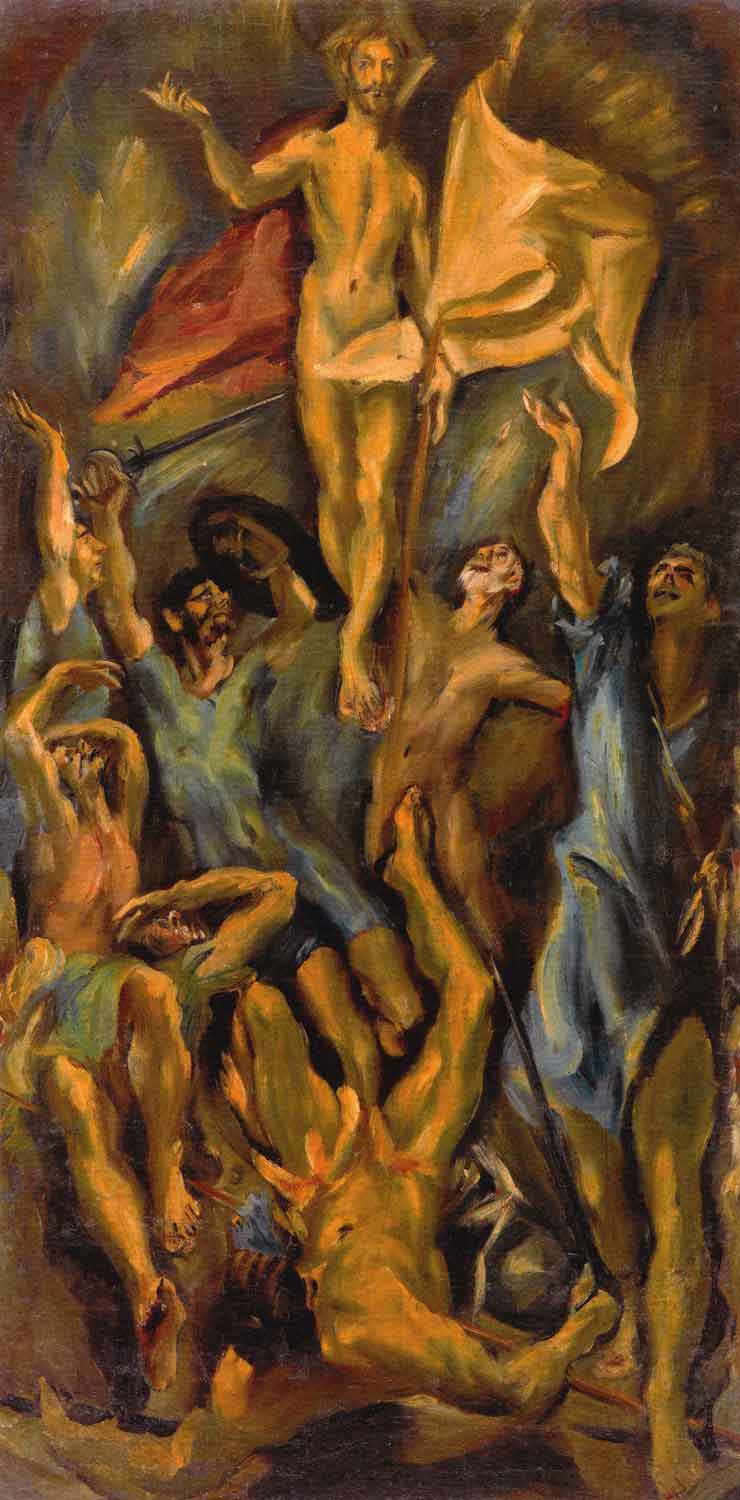
The Resurrection (after El Greco), 1935, oil on canvas 145 × 73.6 cm, Umetnostna Galerija Maribor.
After graduation, on the advice of his teacher Lubjo Babić he undertook a study trip to Spain (Madrid, Toledo). When the Civil War broke out, he left the country.
Spain at that time was still a distant country, almost unreachable for a student. Throughout the year I spent whole days at the Prado, copying Goya and El Greco. My stay in Toledo lasted three weeks and the landscape of Castile awakened in me the memory of my Dalmatian homeland. But in 1936 I left Spain. The civil war had just begun. I returned to Dalmatia, to Curzola, seduced by that stony landscape, where every now and then a tiny oasis of red earth with a vineyard or purple lavender bushes sprout between the walls.
The artist in conversation with Paolo Levi, in Zoran Music Dialogo con l’autoritratto, Electa Milan 1992, p.45.
The Resurrection (after El Greco), 1935, oil on canvas 145 × 73.6 cm, Umetnostna Galerija Maribor.
1936-42
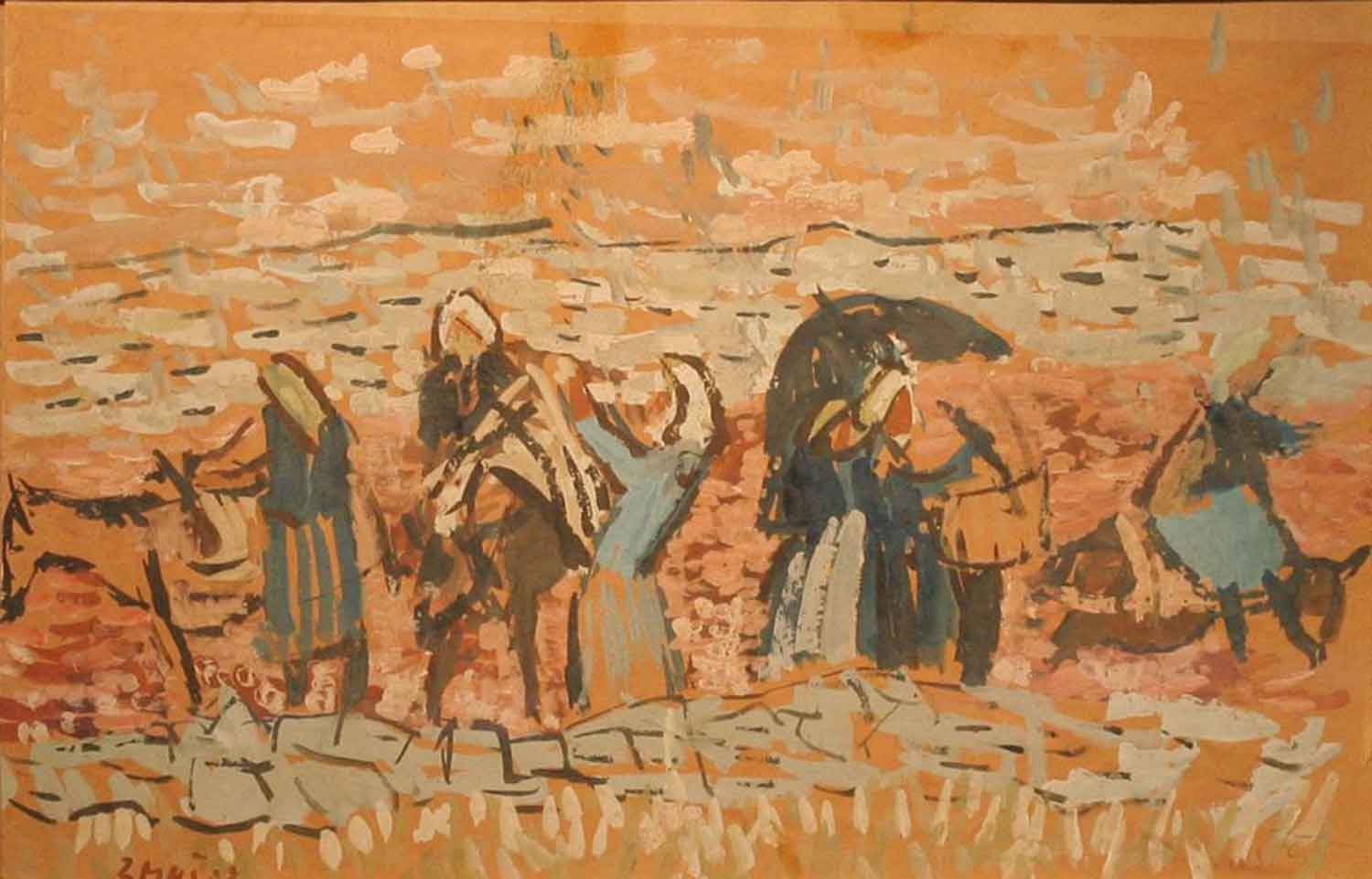
Dalmatian Women, 1938, gouache on paper 35.3 × 49.9 cm, National Gallery of Slovenia, Ljubljana.
Long stays in Dalmatia; he exhibits in Zagreb and Ljubljana. Mural paintings in several churches in Friuli.
Dalmatian Women, 1938, gouache on paper 35.3 × 49.9 cm, National Gallery of Slovenia, Ljubljana.
1943
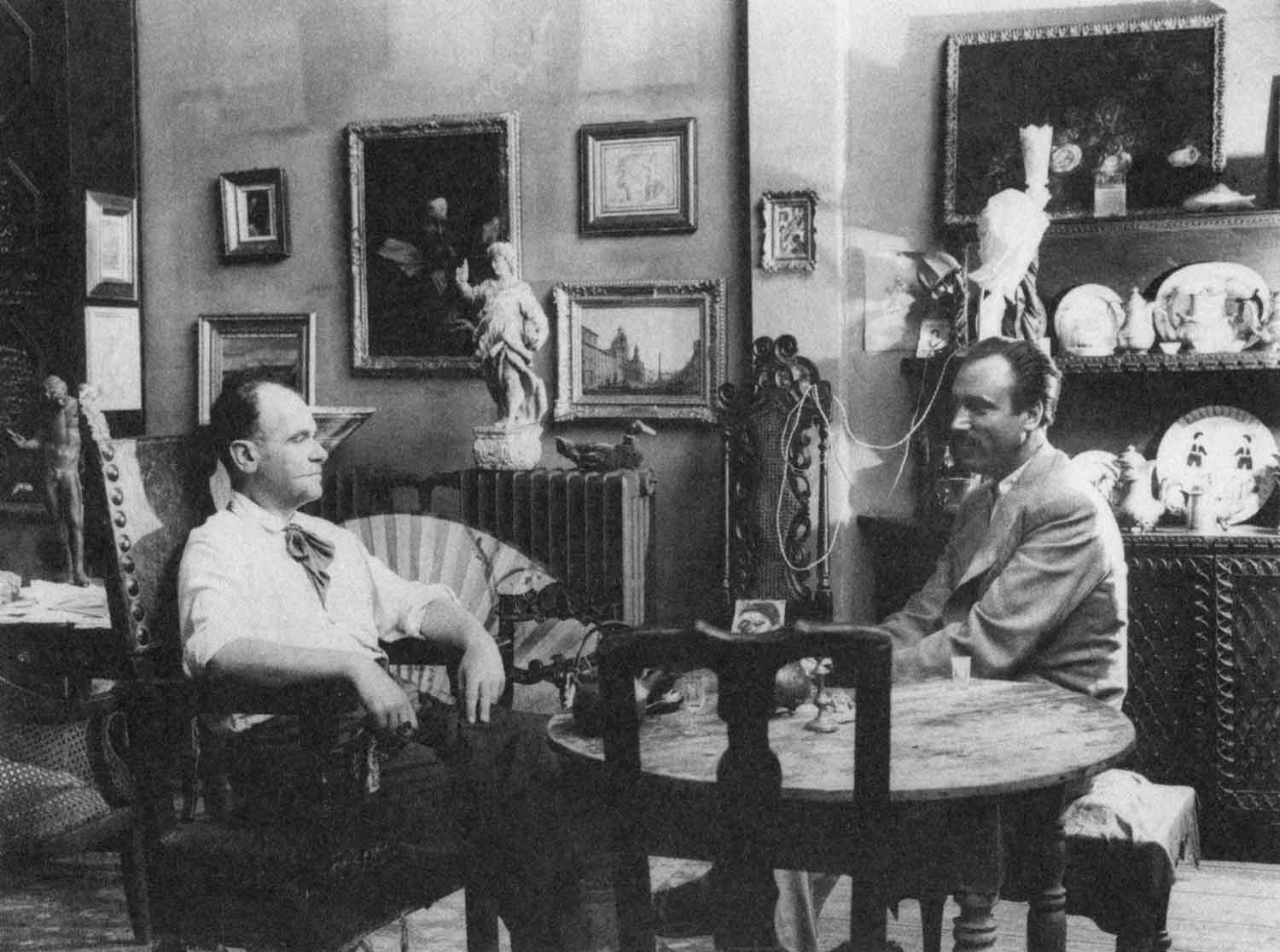
Zoran Music with Filippo de Pisis, 1943.
He exhibits in Trieste, at the Galleria d’Arte al Corso. In autumn he is in Venice, where he meets Guido Cadorin. Donne al Mercato, Lattaie con asinelli (Women at the market, Milkmaids with donkeys), Venetian landscapes and interiors…
Zoran Music with Filippo de Pisis, 1943.
1944
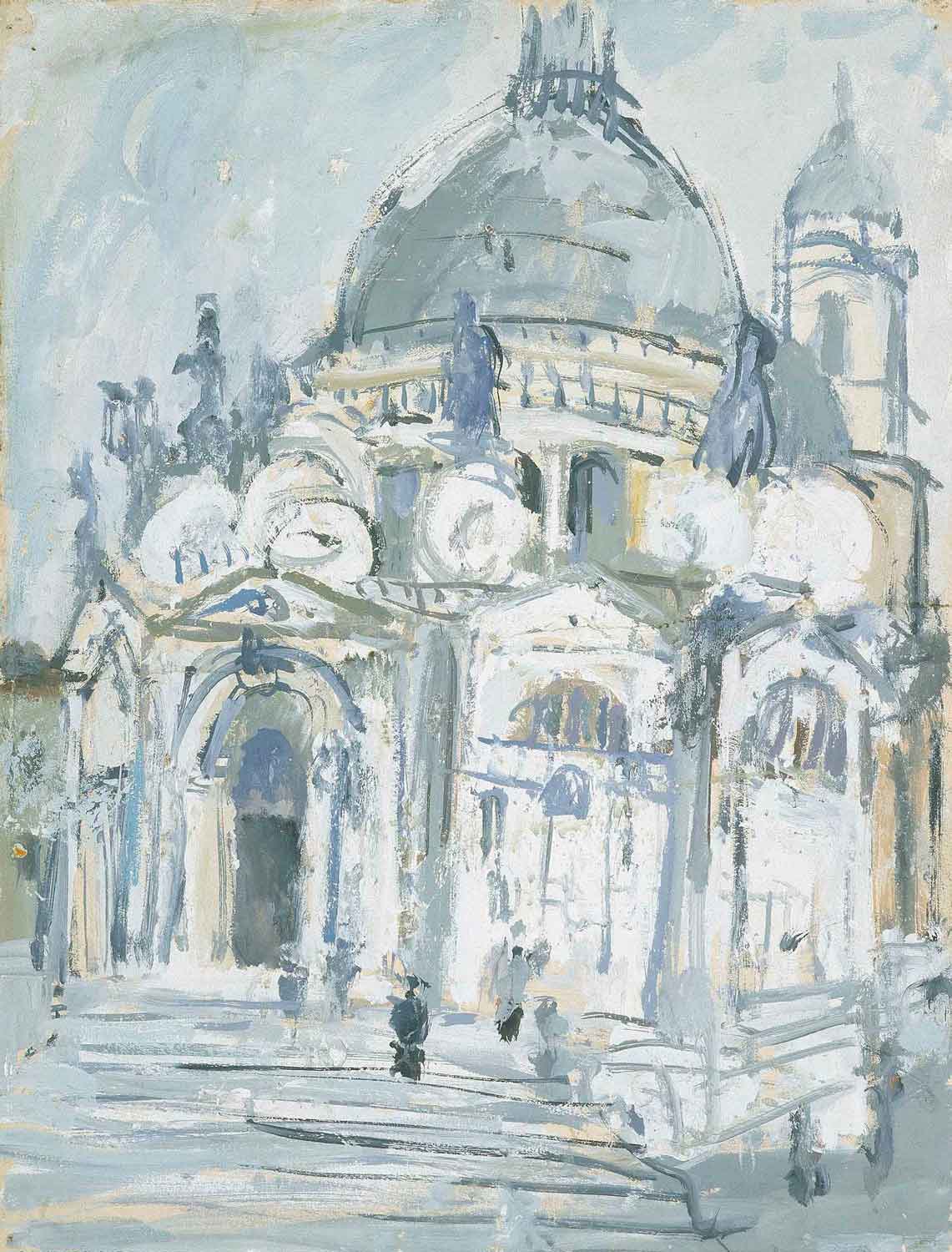
The Basilica della Salute, 1944, tempera on paper glued to Masonite 65 × 50 cm.
In spring, his first meeting with Ida Cadorin, in Trieste. He lives in Venice and here he exhibits at Roberto Nonveiller’s Piccola Galleria: a monograph with an introduction by Filippo De Pisis is published for the occasion. In October, he is arrested by the Gestapo, due to his relations with exponents of the Resistance. Imprisoned in Trieste, he refuses to collaborate and is deported to Dachau.
The concentration camp was my great school of solitude. It taught me not to be afraid, to be alone, even in the midst of a thousand people. […] After Dachau something broke in me. Before, I had many certainties: suddenly I lost them, and I realised that there is only emptiness around us. I am not a hero. I was only a young painter, and for me the world still shone with magnificent colours. In Dachau, I grasped reality, and I understood what it means to get down to the essentials.
The artist in conversation with Paolo Levi, in Zoran Music Dialogo con l’autoritratto, Electa Milan 1992, p.46.
The Basilica della Salute, 1944, tempera on paper glued to Masonite 65 × 50 cm.
1945
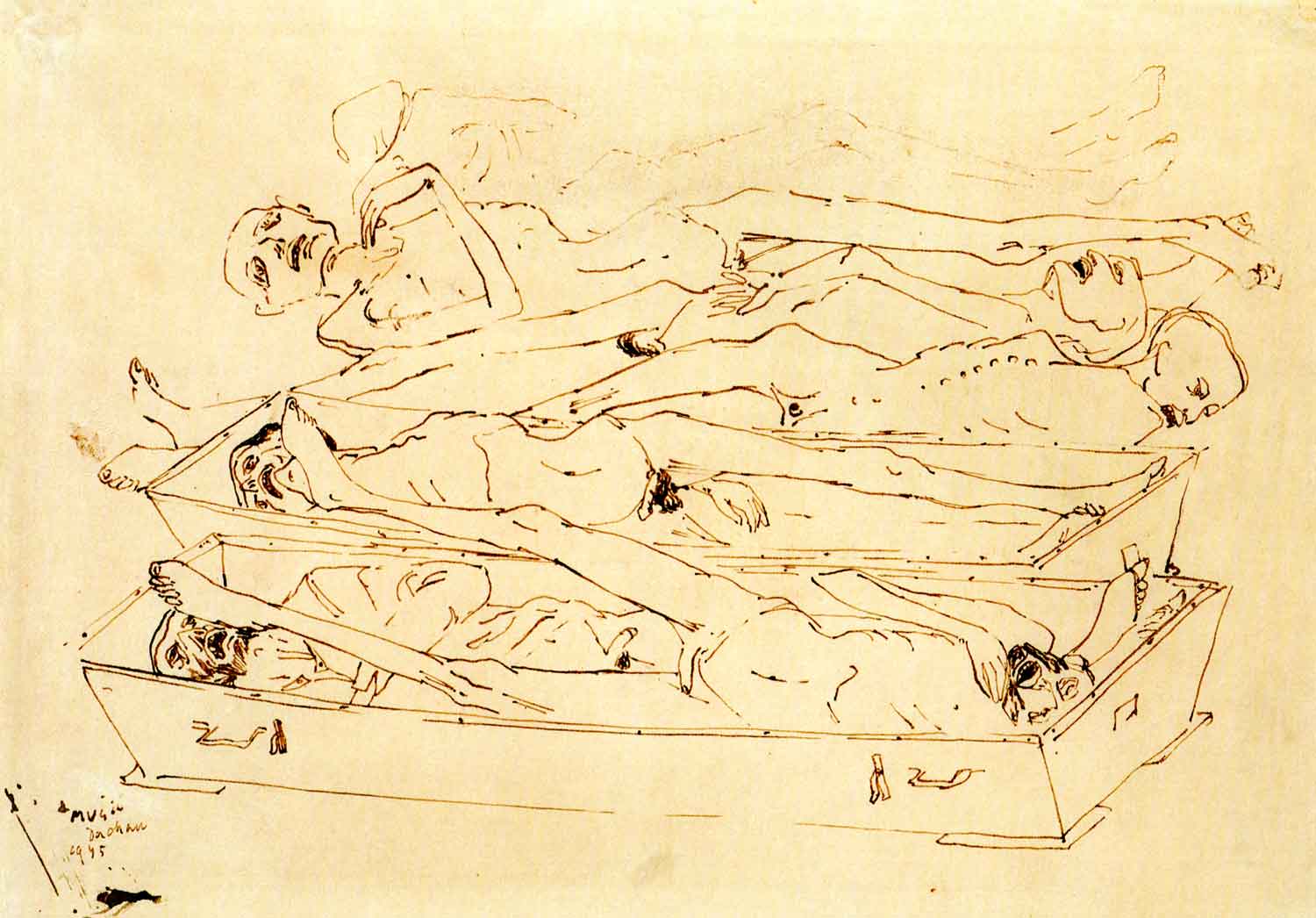
Dachau, 1945, india ink on paper 21.1 × 29.7 cm, Kunstmuseum Basel, Kupferstichkabinett, Basel
At the end of April, the camp is liberated by the Americans. He returns to Gorizia and then to Venice, taking with him a group of drawings executed secretly during his deportation. He finds Ida Cadorin again who, a student at the Accademia, lends him her studio. He resumes painting.
Dachau, 1945, india ink on paper 21.1 × 29.7 cm, Kunstmuseum Basel, Kupferstichkabinett, Basel
1946
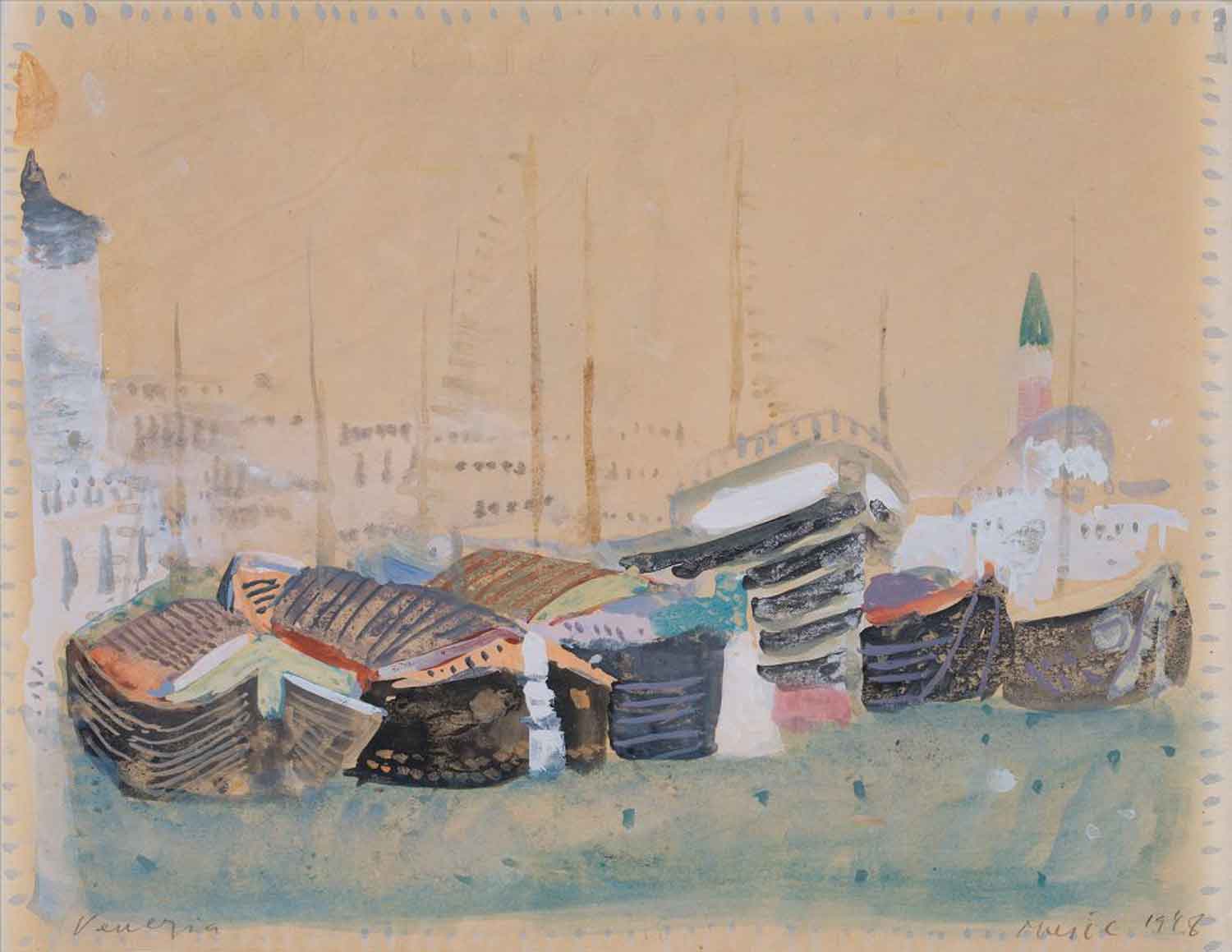
Boats in Venice, 1948, tempera and warercolour on paper 20.8 × 25.9 cm, the Ljuban, Milada and Vanda Mušič Collection, National Gallery of Slovenia, Ljubljana.
He collaborates with Guido Cadorin on the frescoes in the church in Cadola, near Belluno (assisted by Ida Cadorin and Sylva Bernt). He exhibits in Trieste and in the Galleria del Cavallino in Venice; this is a period of intense activity, inspired also by the lagoon atmosphere.
In this immense light I suddenly discovered the gold of San Marco. I have the impression that something is being revealed to me that was buried in distant memory. […] I feel as if I had already lived in another life among the arabesques of the Orient. At the Zattere I live the happiest of days. If only these watercolours could be the first drops from a spring of fresh water!
The artist, October 1946; quoted in Mazzariol, Music. Electa, Milan 1980, p.38
Boats in Venice, 1948, tempera and warercolour on paper 20.8 × 25.9 cm, the Ljuban, Milada and Vanda Mušič Collection, National Gallery of Slovenia, Ljubljana.
1948
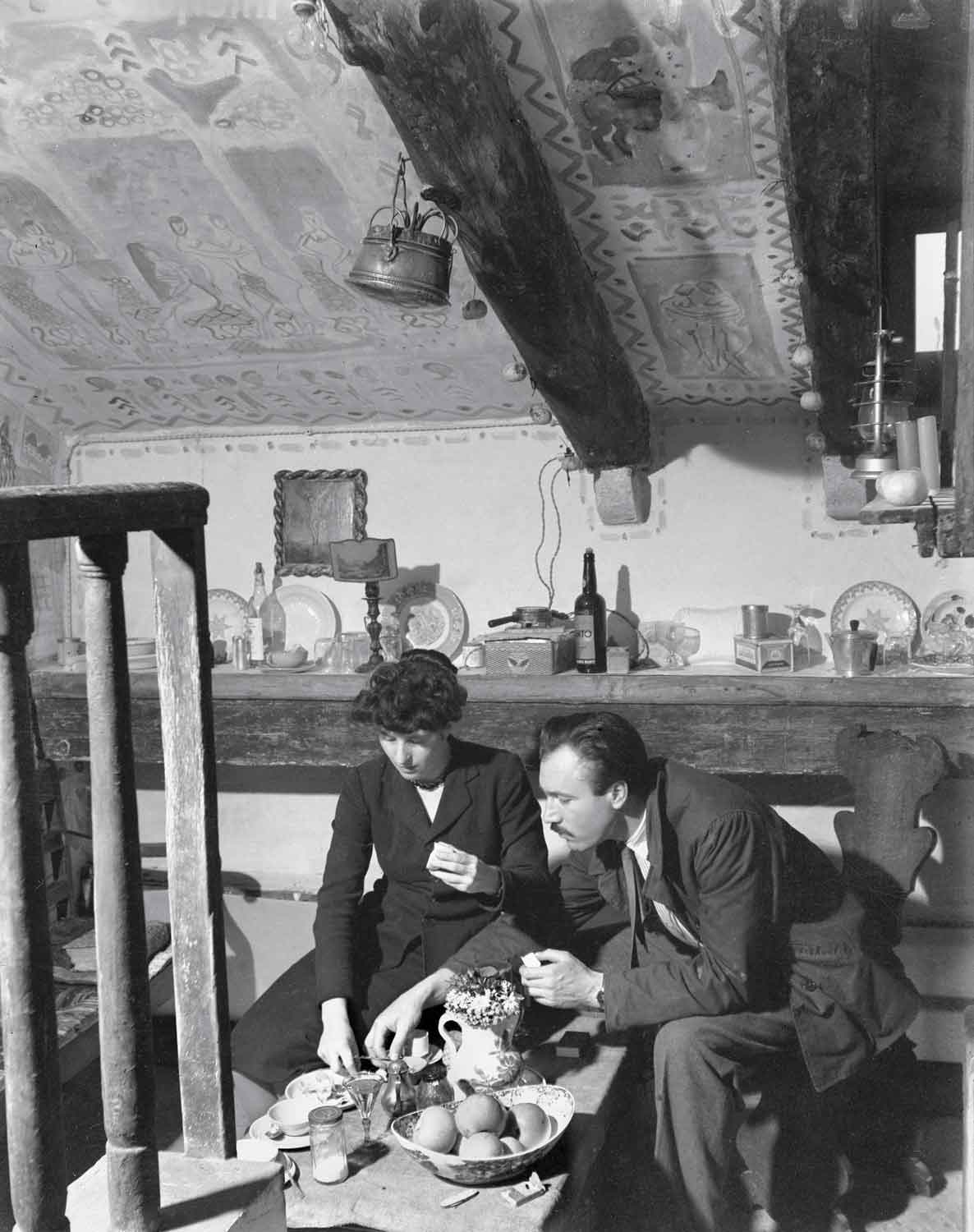
Ida Barbarigo and Zoran Music in the studio at Palazzo Pisani.
He has a studio in the attic of Palazzo Pisani in Venice, home of the Benedetto Marcello Conservatory. He visits Zurich several times, where he exhibits at the Galérie Chichio Haller; first participation at the Venice Biennale and the Quadriennale in Rome. In Rome he begins exhibiting at the Galleria dell’Obelisco. The hills he glimpses from the train on his travels to Rome suggest the cycle of Sienese Landscapes.
Ida Barbarigo and Zoran Music in the studio at Palazzo Pisani.
1949
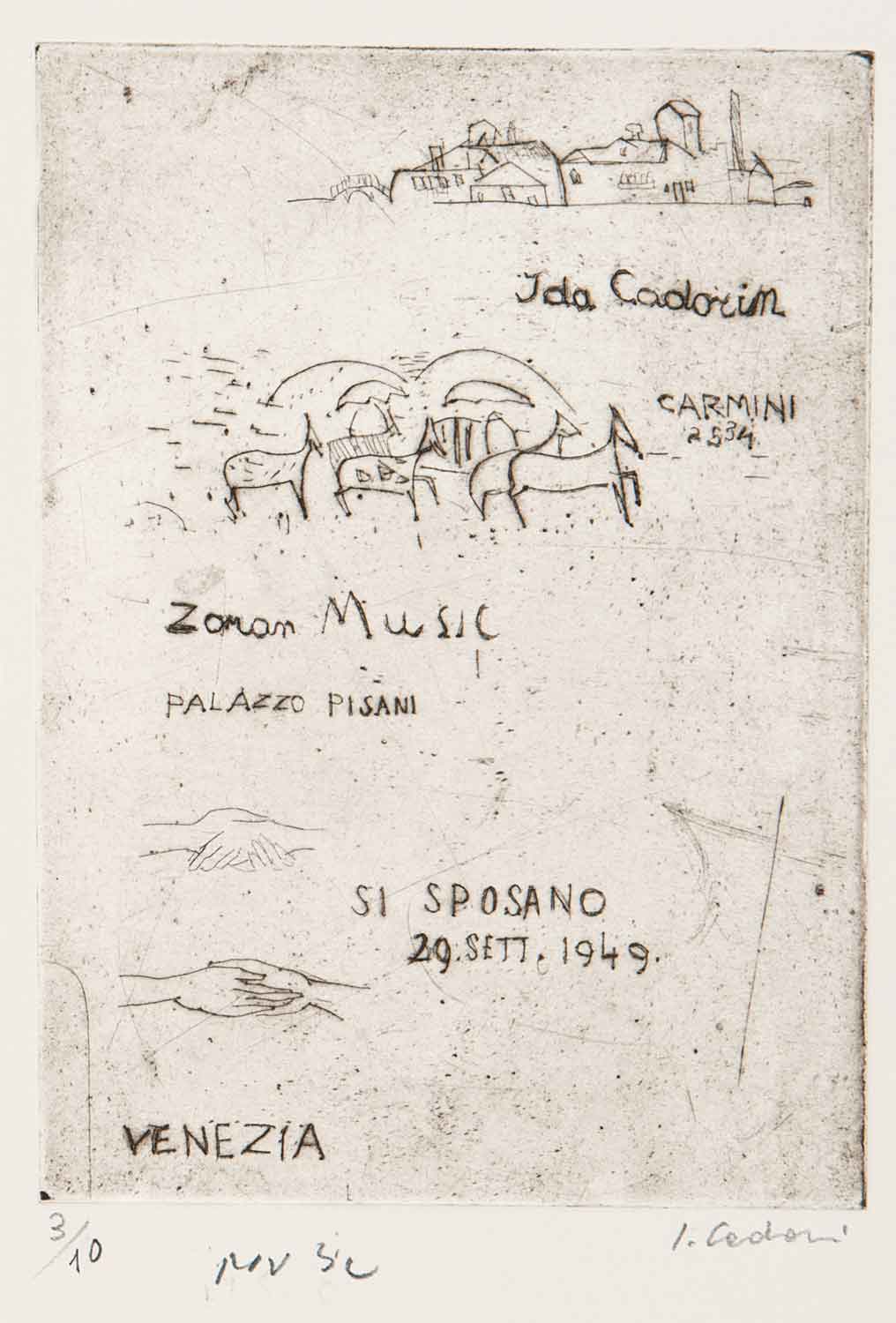
Wedding Announcement, 1949, drypoint 28.5 × 19 cm.
On 29 September, he marries Ida Cadorin in Venice. For the occasion, the two artists produce an etching, engraved by two hands, announcing the event. He exhibits at the Galérie Georges Moos in April (plaquette with texts by Cipriano Efisio Oppo, P. A. Quarantotti Gambini, Sergio Solmi, Diego Valeri).
Wedding Announcement, 1949, drypoint 28.5 × 19 cm.
1950
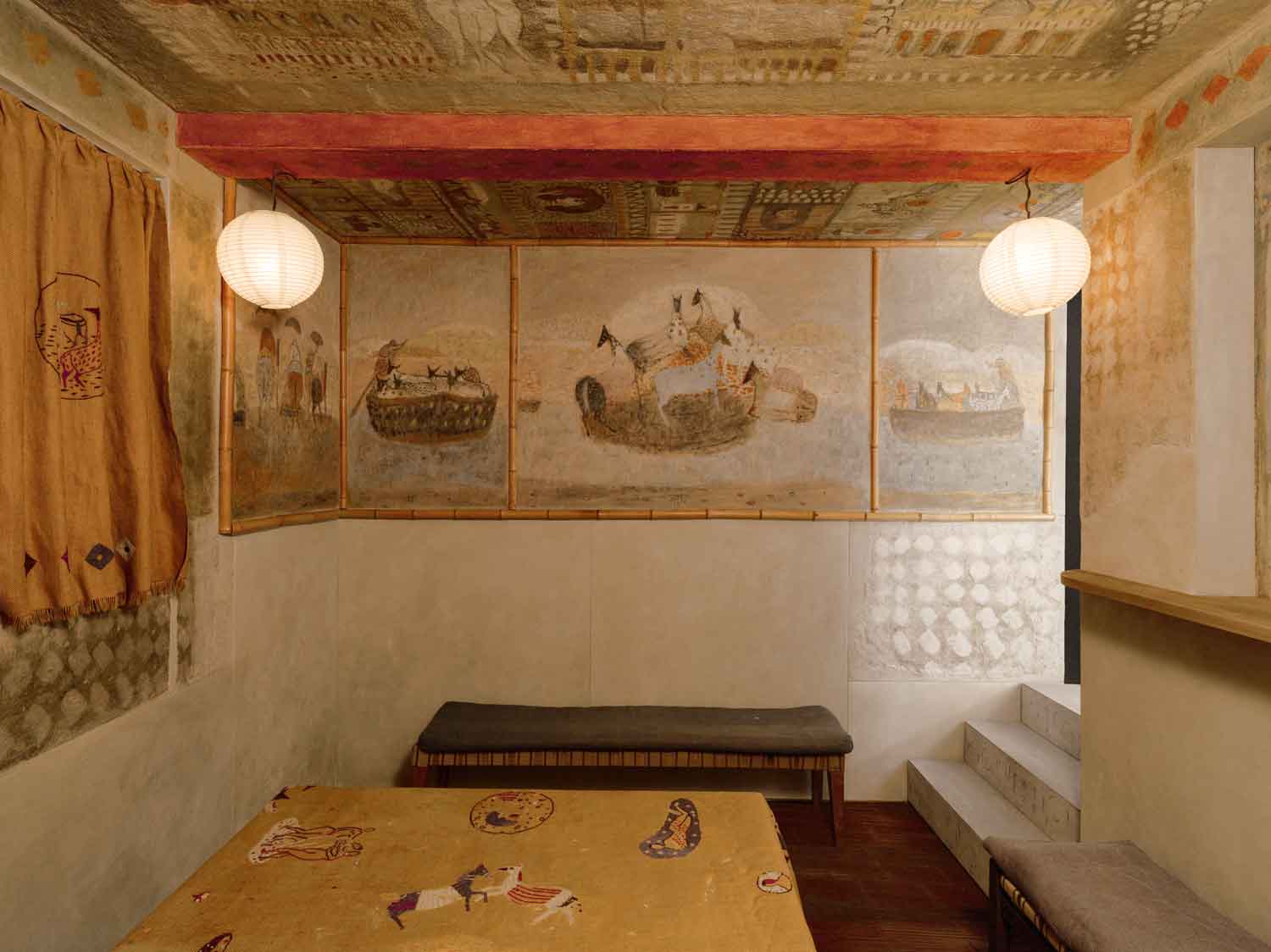
Partial view of the ‘Stanza‘.
He painted a ‘Stanza’ (Room) for the Dornacher sisters in the basement of a villa in Zollikon, near Zurich, with the collaboration of Paolo Cadorin, Ida’s brother, who is working in Switzerland as a restorer.
Partial view of the ‘Stanza‘.
1951
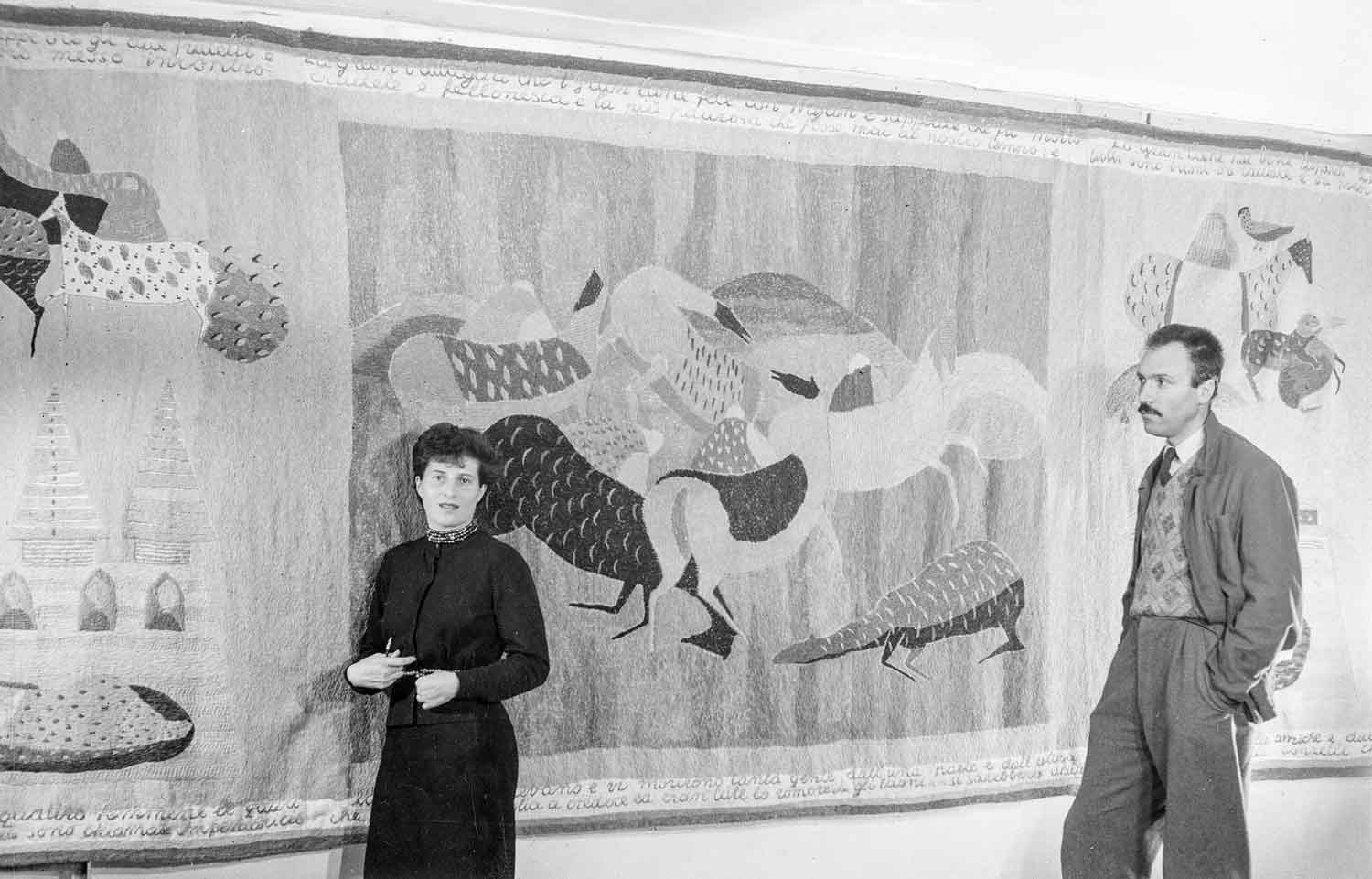
Ida Barbarigo and Zoran Music photographed in front of the tapestry, now in the collections of the Galleria Nazionale di Arte Moderna in Rome (currently on display in Monfalcone, at the Museo della Cantieristica).
He finishes the large tapestry with the Stories of Marco Polo for the ocean liner Augustus; the work is published with an extensive photo report in the magazine ‘Domus’, edited by Gio Ponti. He wins the ‘Premio Parigi’ in Cortina d’Ampezzo (ex aequo with Antonio Corpora).
Ida Barbarigo and Zoran Music photographed in front of the tapestry, now in the collections of the Galleria Nazionale di Arte Moderna in Rome (currently on display in Monfalcone, at the Museo della Cantieristica).
1952
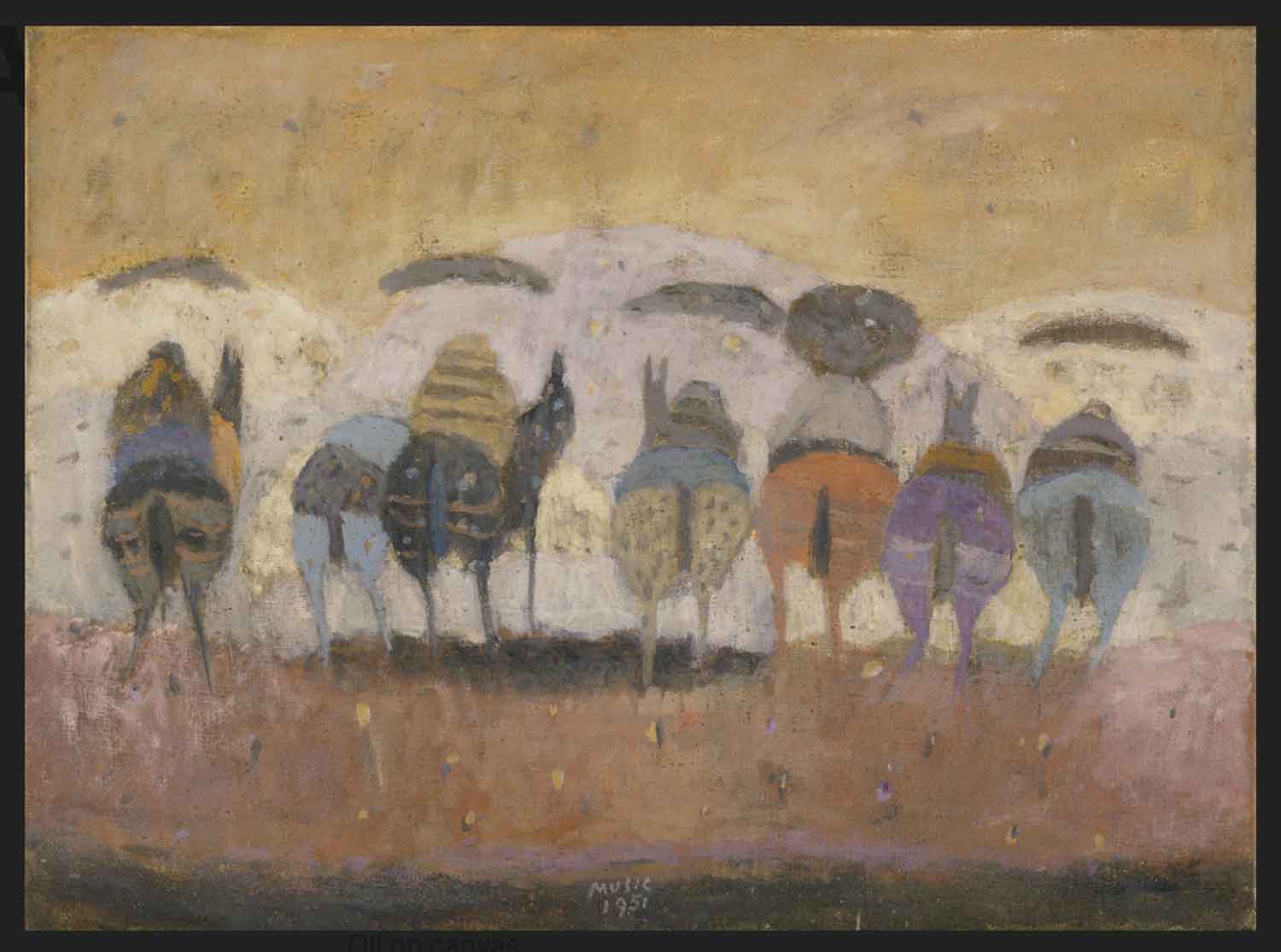
Dalmatian motif, 1951, oil on canvas 54.3 × 73 cm, MoMa Museum of Modern Art, New York.
Thanks to the ‘Premio Parigi’, he exhibits at Gildo Caputo’s Galerie de France, the first of a long series of solo exhibitions at this gallery. The contract enables him to settle in the French capital, while continuing to live and work in Venice.
Dalmatian motif, 1951, oil on canvas 54.3 × 73 cm, MoMa Museum of Modern Art, New York.
1953-1954
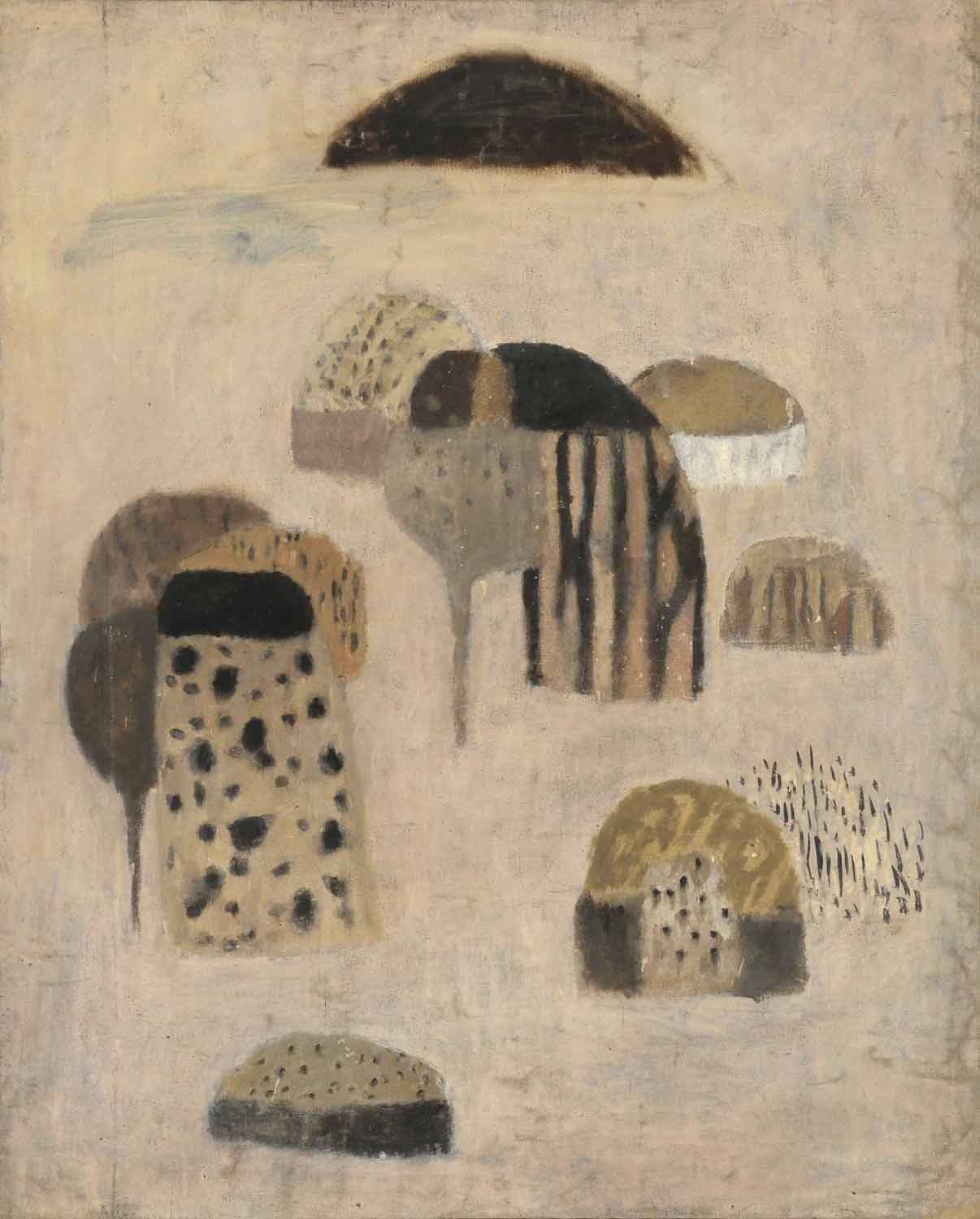
The Market, 1953, oil on canvas, 162 × 130 cm.
New studio in Venice, near the Accademia. In Paris, he installs himself in Montparnasse, at 16 Rue du Saint Gothard, in the studio that was once Brassaï’s. Exhibition in New York, at the Cadby Birch Gallery.
The Market, 1953, oil on canvas, 162 × 130 cm.
1955
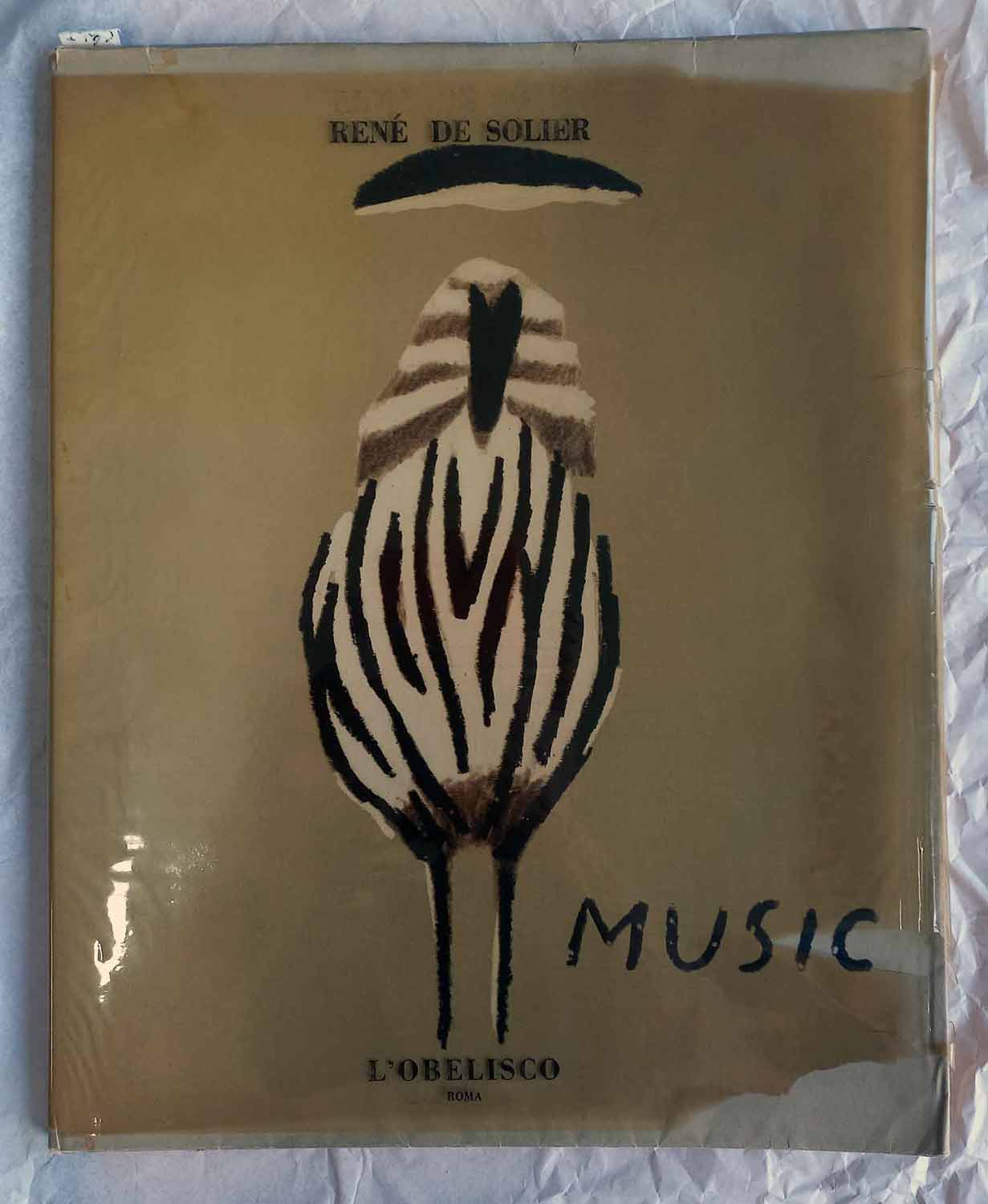
The catalogue of the exhibition at the Galleria dell’Obelisco, Rome.
Monograph published by Obelisk, text by René de Solier. He exhibits at ‘documenta’, Kassel.
The catalogue of the exhibition at the Galleria dell’Obelisco, Rome.
1956
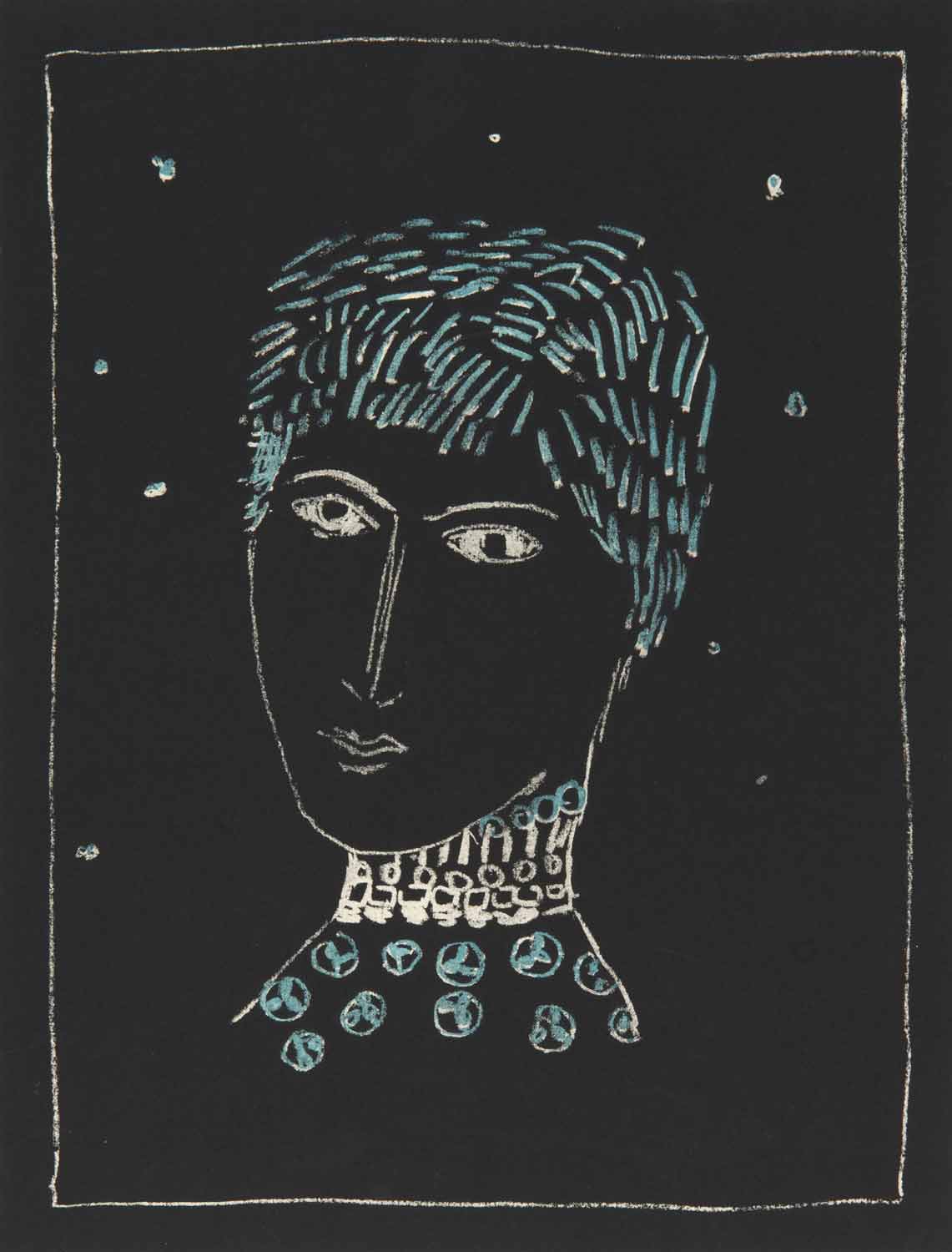
Ida, 1950, lithograph 43.5 × 33.6 cm, Stedelijk Museum, Amsterdam.
Grand Prize for Graphic Art at the Venice Biennale. The following year, again for prints, he wins a prize at the Ljubljana Biennale.
Ida, 1950, lithograph 43.5 × 33.6 cm, Stedelijk Museum, Amsterdam.
1958
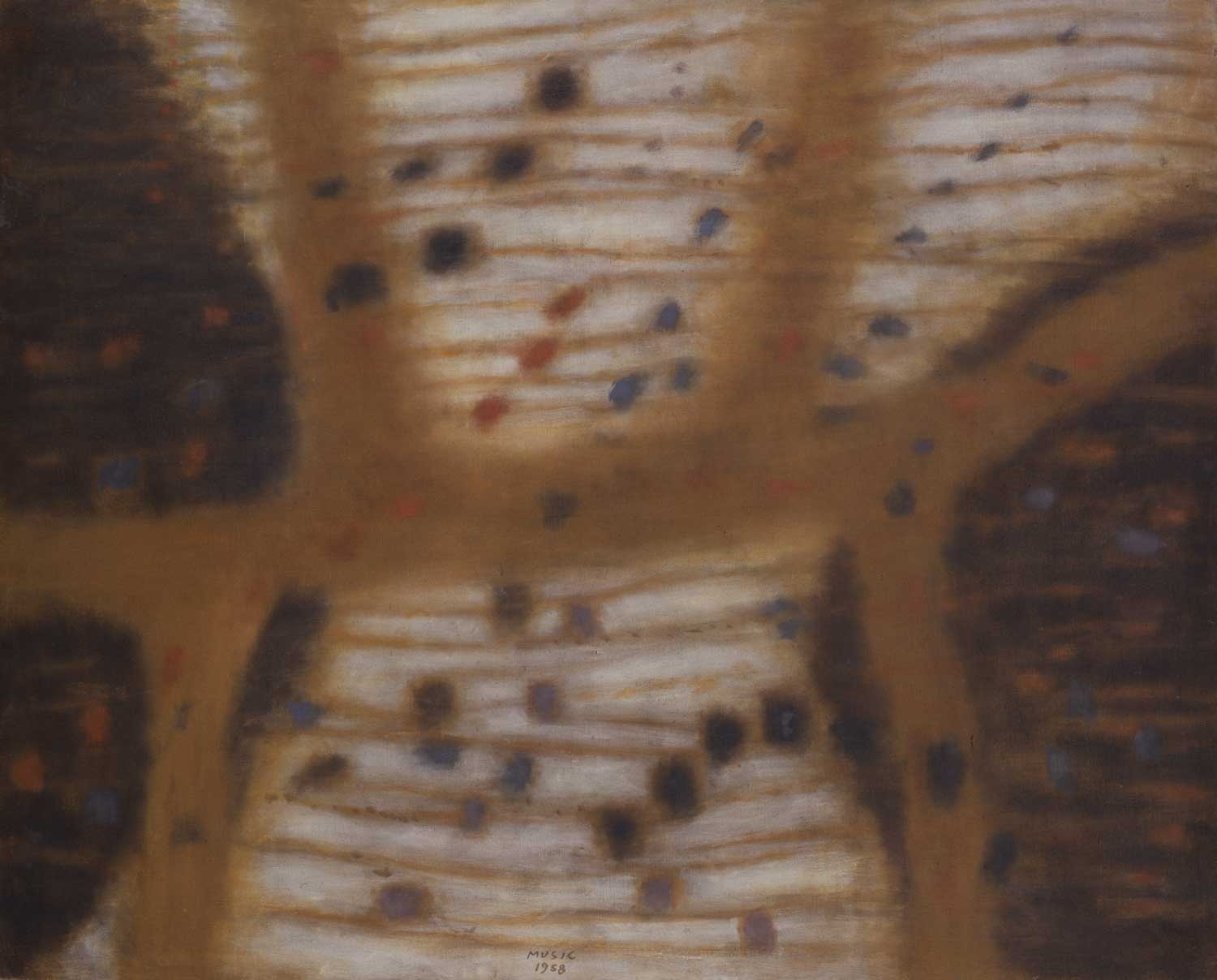
Wind and sun 1958, oil on canvas 130 × 161.5 cm, Galleria d’Arte Moderna di Ca’ Pesaro, Musei Civici Veneziani.
He exhibits the Terre Dalmate (Dalmatian lands) cycle at the Galérie de France.
Wind and sun 1958, oil on canvas 130 × 161.5 cm, Galleria d’Arte Moderna di Ca’ Pesaro, Musei Civici Veneziani.
1959
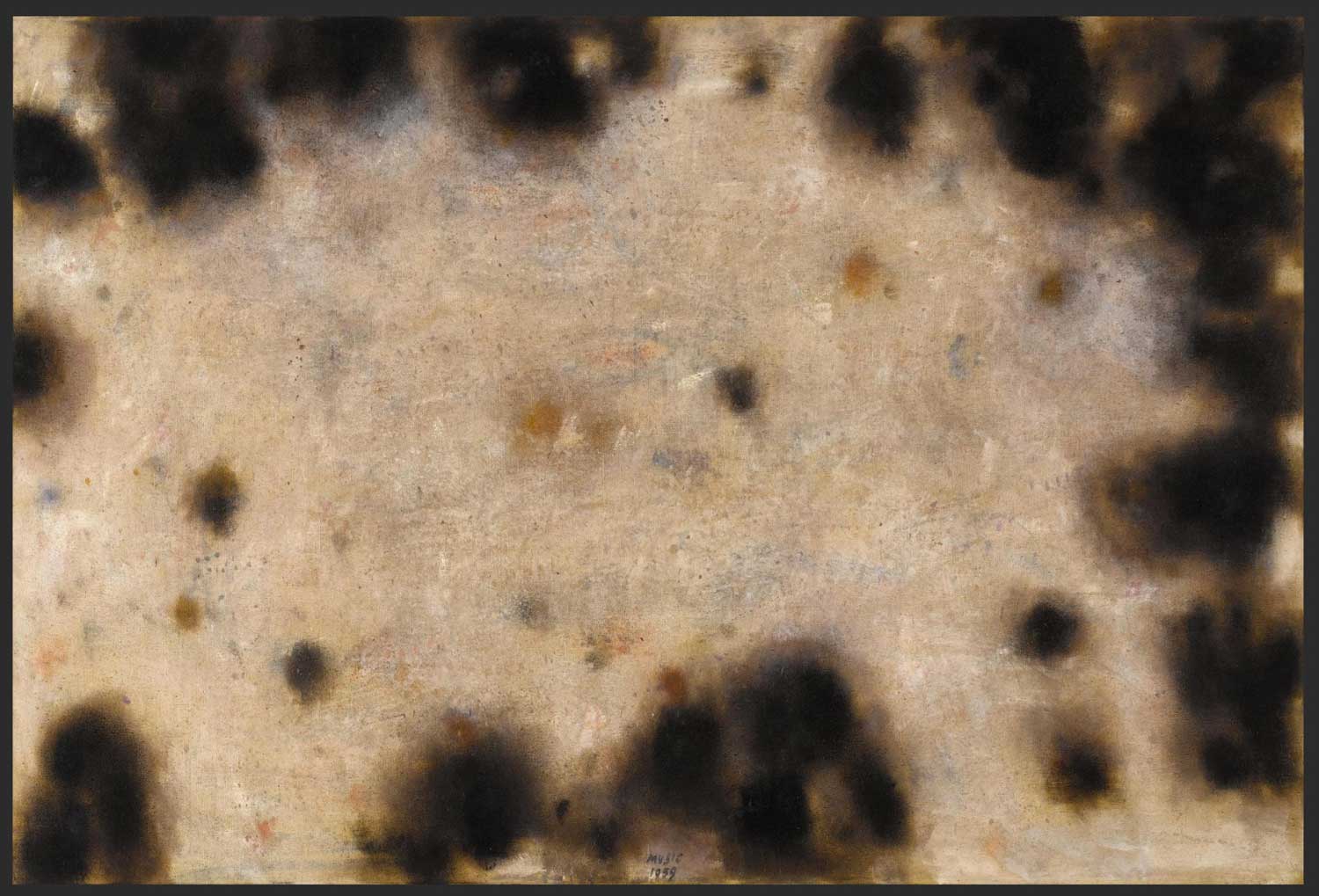
Paysage vide (Empty landscape), 1959, oil on canvas 130 × 196 cm, Musée Nationale d’Art Moderne, Centre Pompidou, Paris.
He leaves his studio in Montparnasse and takes up residence at 73 Rue des Vignes, in the former studio of his friend Léon Gischia.
Paysage vide (Empty landscape), 1959, oil on canvas 130 × 196 cm, Musée Nationale d’Art Moderne, Centre Pompidou, Paris.
1960
Unesco Prize at the Venice Biennale, solo exhibition at the Ljubljana Graphic Arts Biennale.
1961
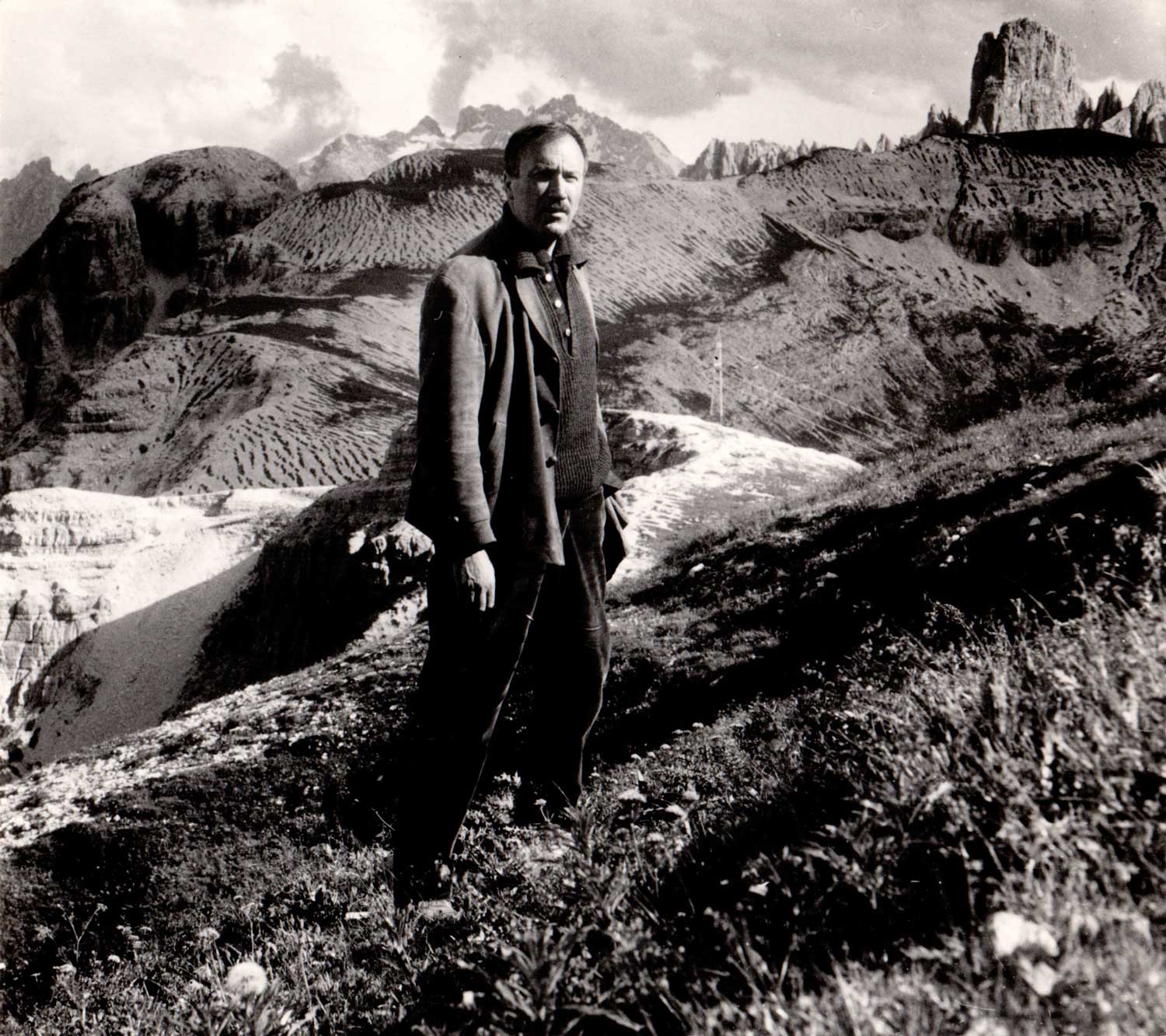
Zoran Music in Cortina, early 1960s.
He spends some time in Cortina and starts the Fiori a Cortina cycle. Exhibition at Lorenzelli in Milan. Throughout the decade, series of exhibitions in numerous museums in Germany, Switzerland, Austria, Yugoslavia.
Zoran Music in Cortina, early 1960s.
1962
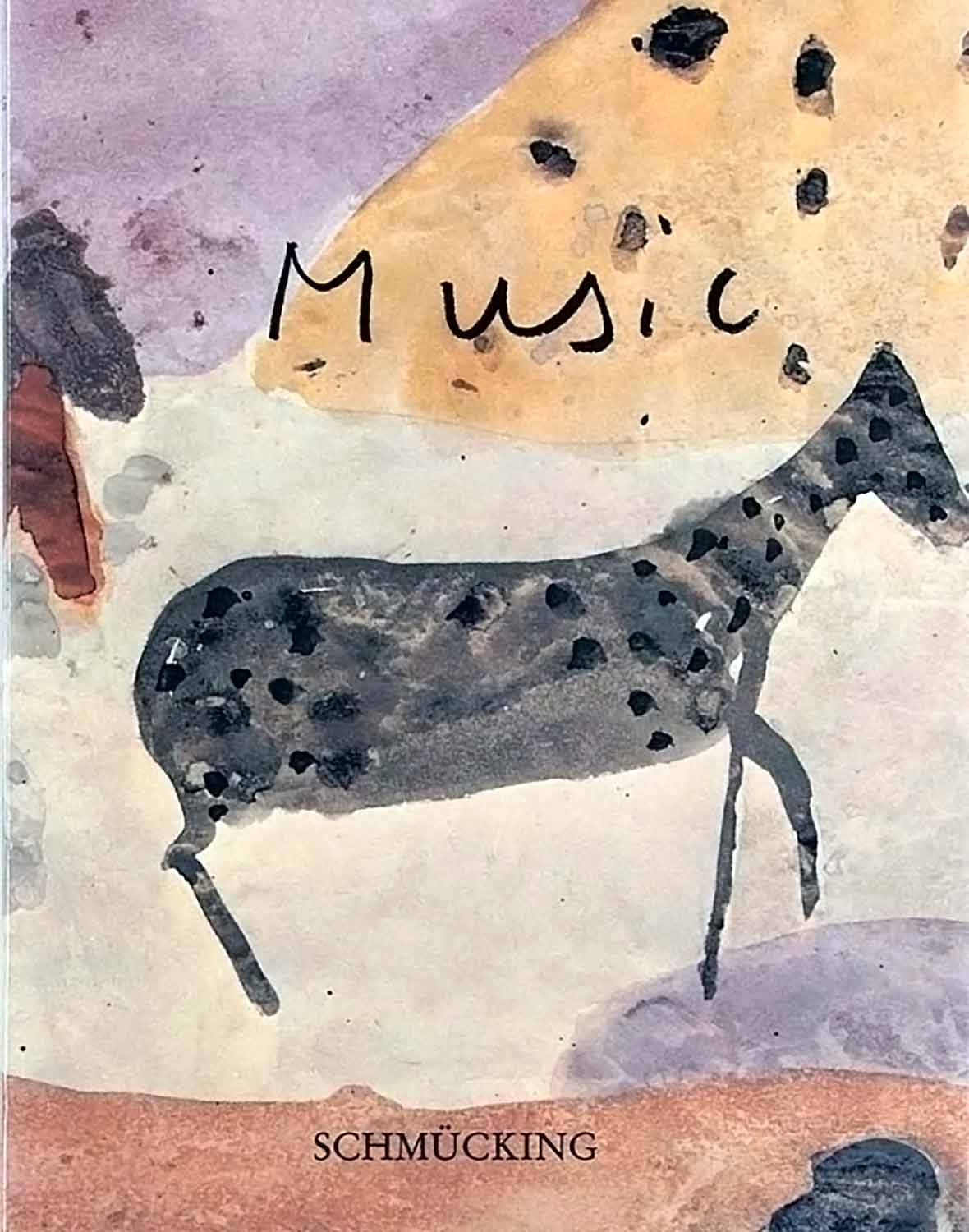
Cover of the catalogue raisonné of graphic art published by Rolf Schmücking.
Retrospective of graphic art in Braunschweig (Staedtisches Museum). On this occasion, Rolf Schmücking publishes the first edition of the catalogue raisonné of the graphic works.
Cover of the catalogue raisonné of graphic art published by Rolf Schmücking.
1968
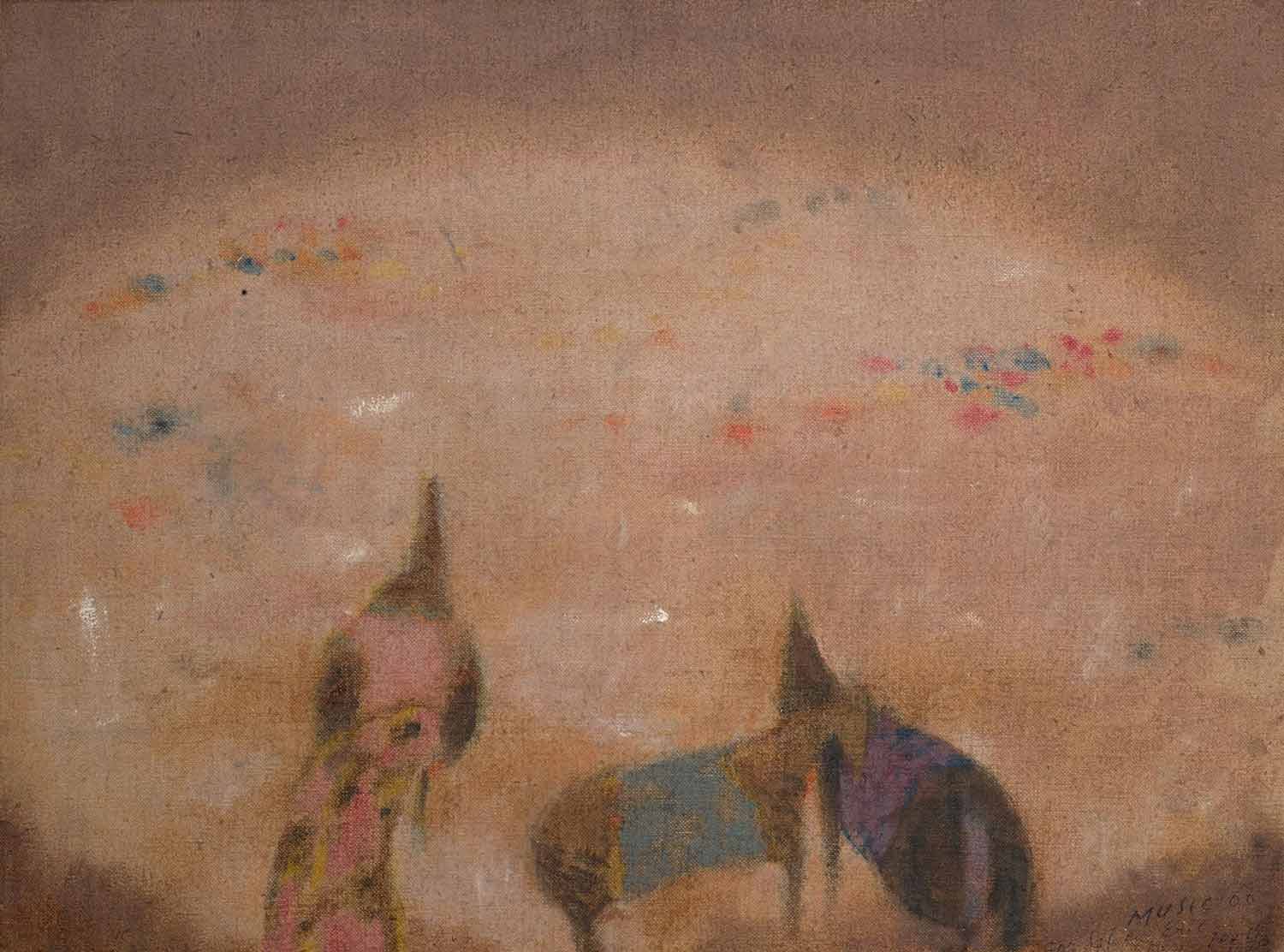
Motivo carsico (Karst motif), 1966, oil on canvas 60.5 × 81 cm, Estorick Collection, London.
He is appointed Chevalier des Arts et Lettres.
Motivo carsico (Karst motif), 1966, oil on canvas 60.5 × 81 cm, Estorick Collection, London.
1970
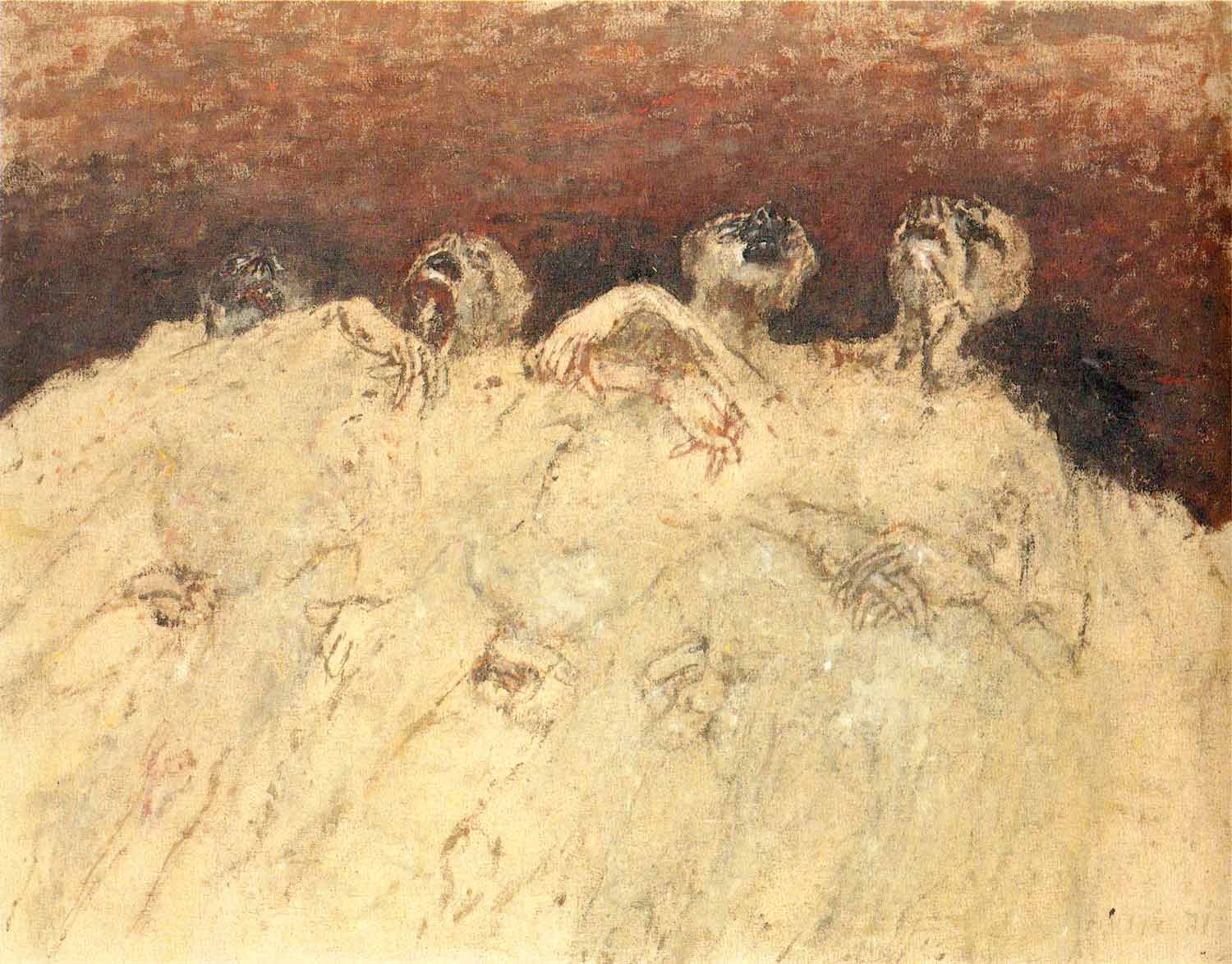
Non Siamo gli Ultimi (We are not the last), 1971, oil on canvas 116 × 148 cm, MET, Metropolitan Museum of Art, New York.
Beginning of the Nous ne sommes pas les derniers cycle, first exhibited at the Galerie de France and later in Munich (Neue Staatsgalerie im Haus der Kunst, 1971) and Brussels (Palais des Beaux-Arts, 1972). The artist speaks of it as a sort of ‘new beginning’ after a period of crisis:
After a few years, in Paris, I experienced a crisis in my work and around me there was nothing but abstract painting. I began to feel useless, weak, outside this great current to which all the famous artists and important critics belonged. So I ended up changing my path. I tried in my own way to do abstract painting. And in this attempt, I completely lost my personal truth. This is the worst thing that can happen to an artist, because without this truth he does not exist. And it is out of this confusion, out of this frustration, that the corpses came out.
From Michael Peppiatt, Zoran Music Entretiens 1988-1998, L’Échoppe, 2000
Non Siamo gli Ultimi (We are not the last), 1971, oil on canvas 116 × 148 cm, MET, Metropolitan Museum of Art, New York.
1972
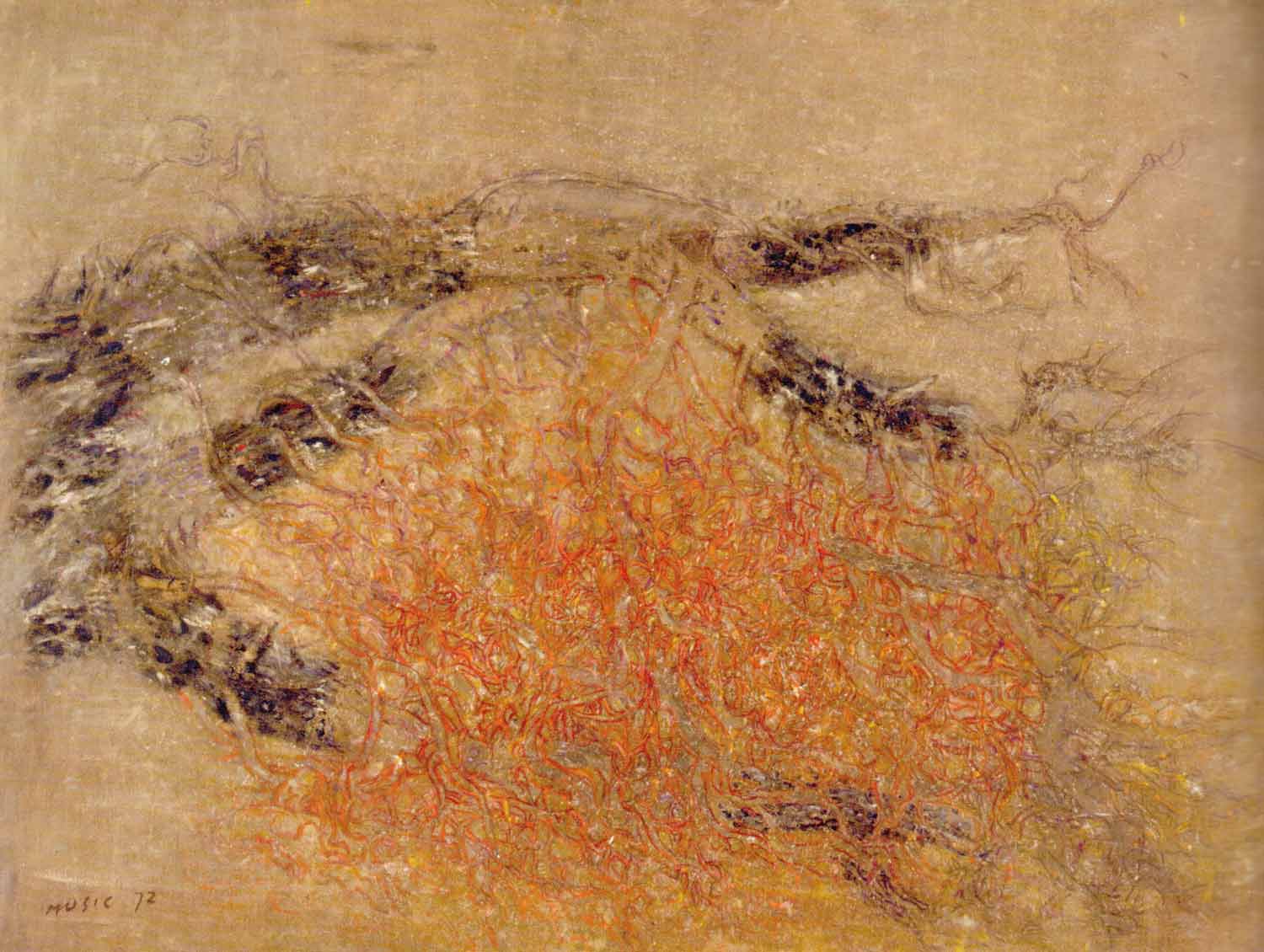
Motif végétal (Plant motif), 1972, oil on canvas 202 × 268 cm, Musée d’Art Moderne de la Ville de Paris.
He begins the Motivo vegetale series
Motif végétal (Plant motif), 1972, oil on canvas 202 × 268 cm, Musée d’Art Moderne de la Ville de Paris.
1974
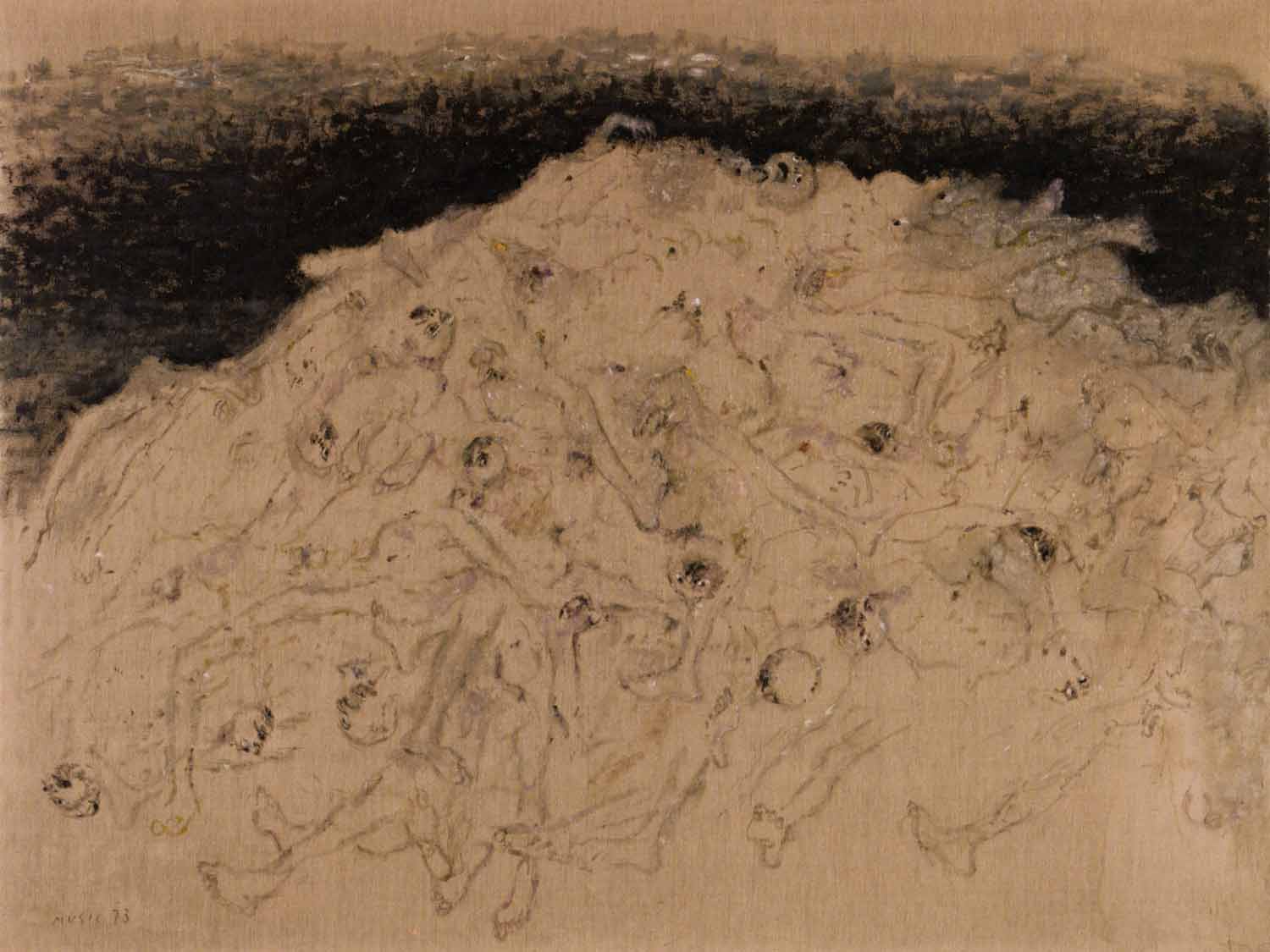
Non Siamo gli Ultimi (We are not the last), 1973, acrylic on canvas 200 × 267 cm, Museo Nacional Centro de Arte Reina Sofía, Madrid.
Solo exhibition in Venice, at the Fondazione Querini Stampalia.
Non Siamo gli Ultimi (We are not the last), 1973, acrylic on canvas 200 × 267 cm, Museo Nacional Centro de Arte Reina Sofía, Madrid.
1977
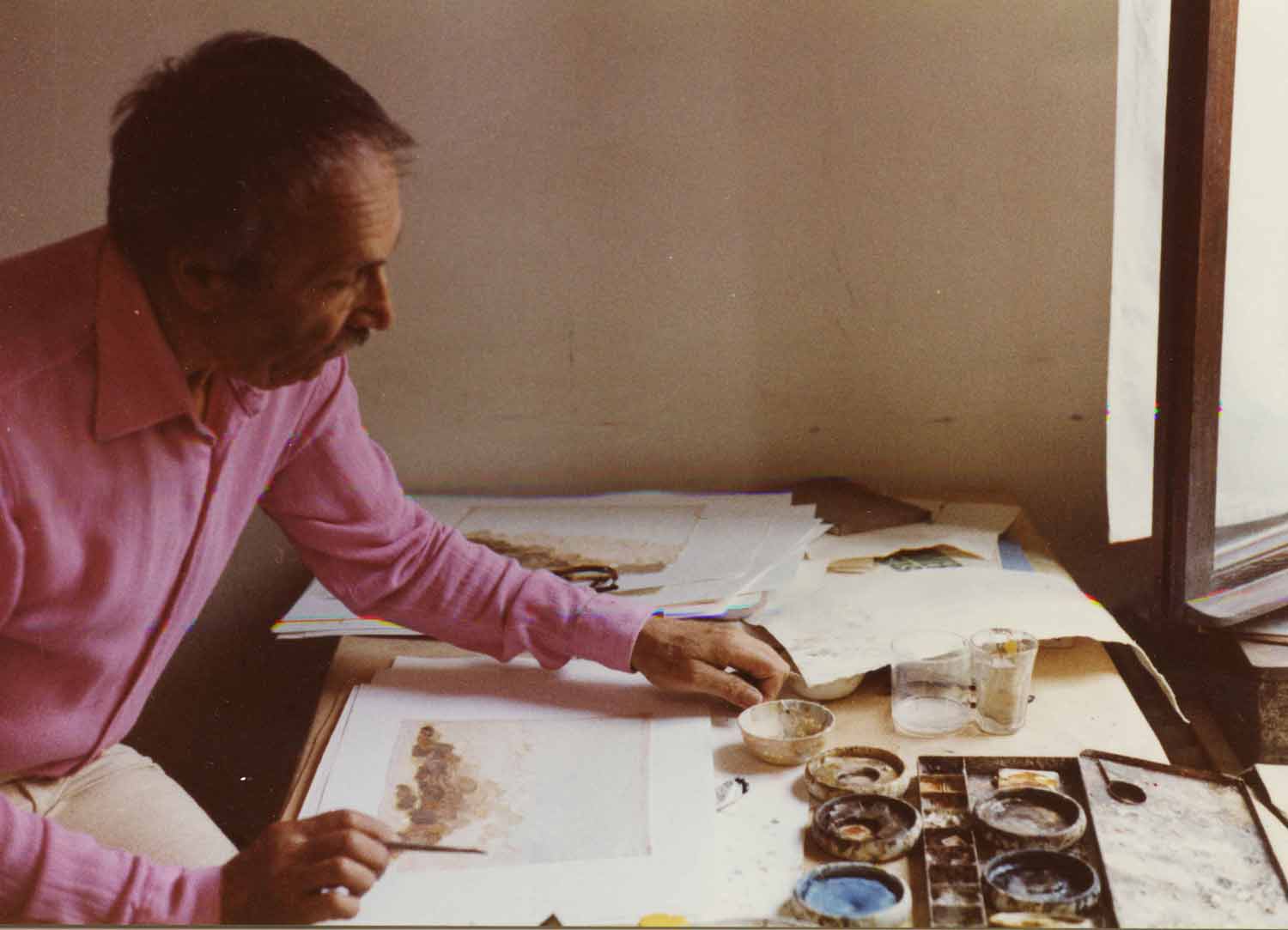
The artist painting a watercolour from the Paesaggio roccioso (Rocky Landscape) series (photo Paolo Cadorin).
Major show in Darmstadt. Further solo exhibitions in Oslo and Basel.
The artist painting a watercolour from the Paesaggio roccioso (Rocky Landscape) series (photo Paolo Cadorin).
1980
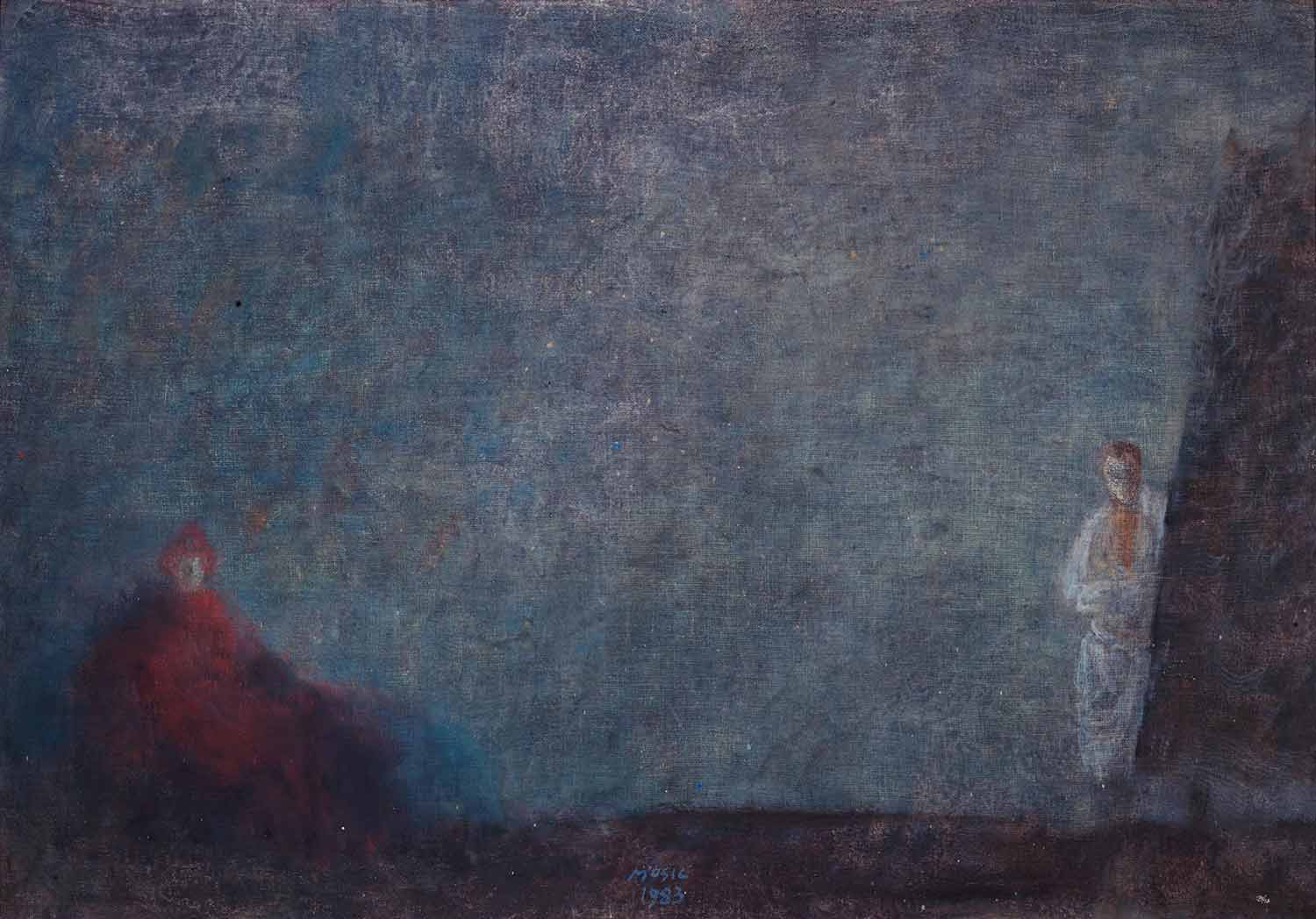
Nello Studio (In the studio), 1983, oil on canvas 81.5 × 116.5 cm, Estorick Collection, London.
Exhibition at the Gallerie dell’Accademia, Venice. Monograph with text by Giuseppe Mazzariol. He begins new painting cycles in these years: Canale della Giudecca (from 1980), Punta della Dogana (from 1981), L’Atelier (from 1983).
Nello Studio (In the studio), 1983, oil on canvas 81.5 × 116.5 cm, Estorick Collection, London.
1984
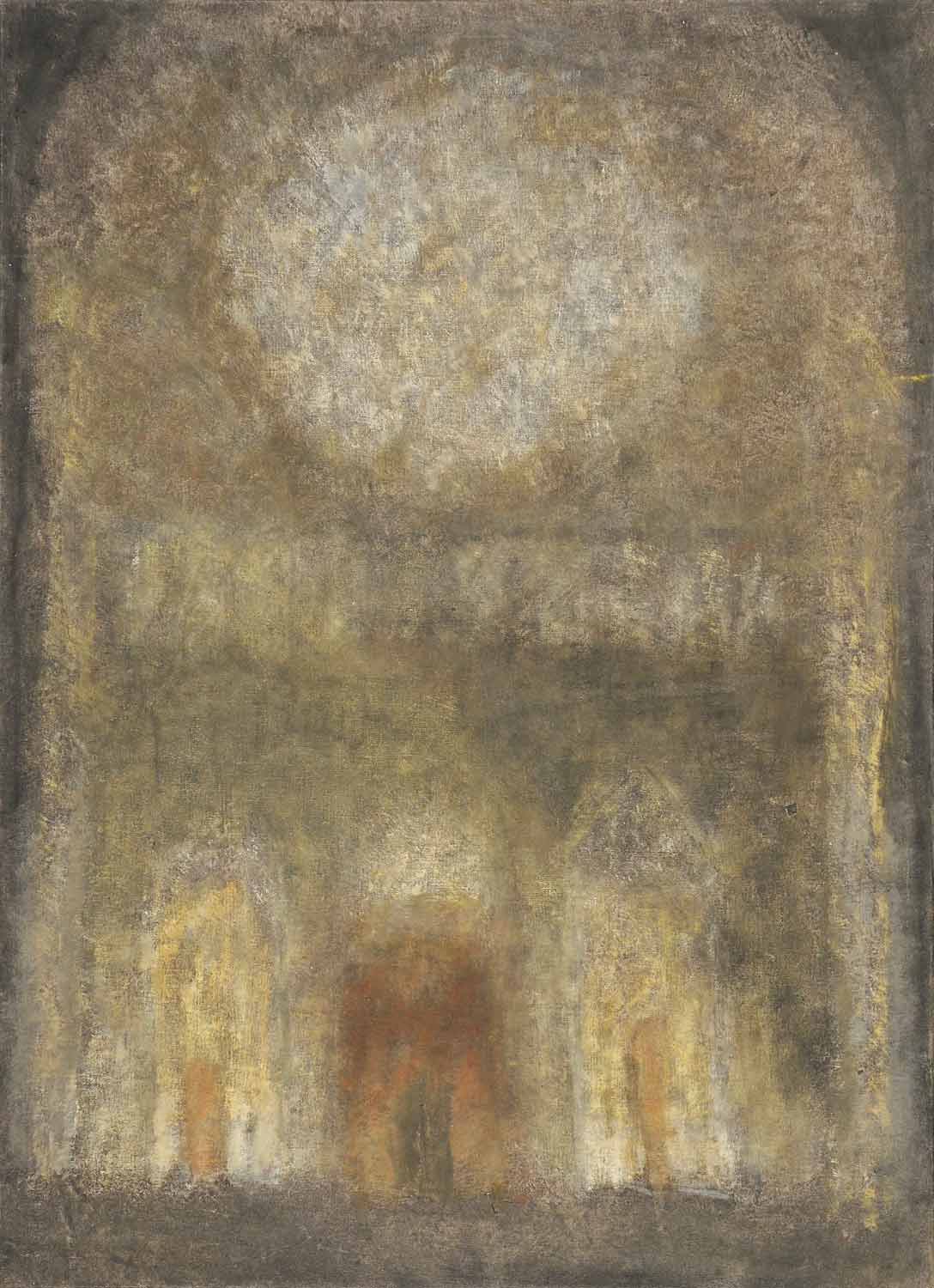
Interno di cattedrale (Cathedral interior), 1984, oil on canvas 100 × 73 cm.
He begins the Cattedrali (Cathedrals) series. The Venice Biennale dedicates a solo room to him.
Interno di cattedrale (Cathedral interior), 1984, oil on canvas 100 × 73 cm.
1985
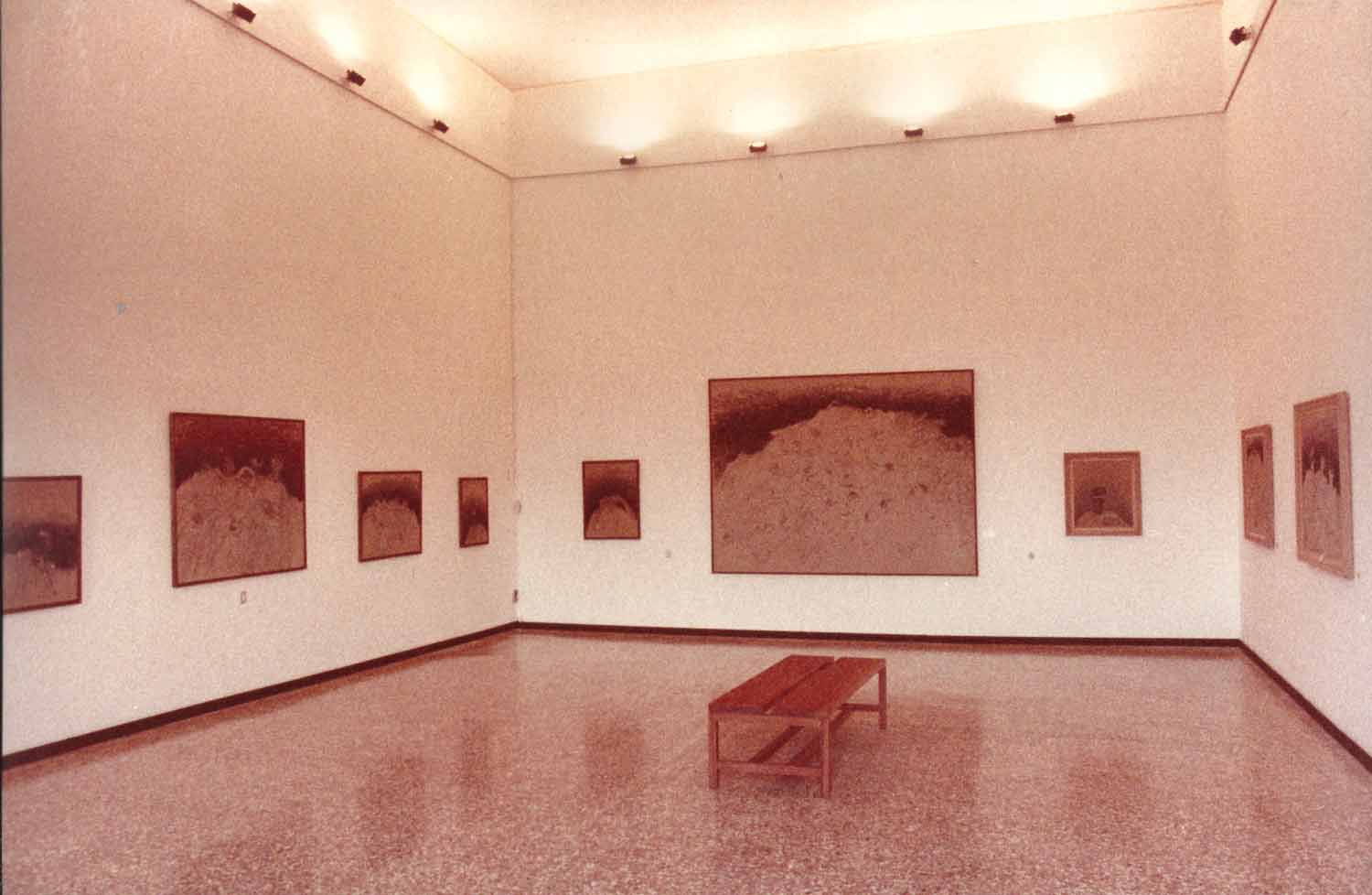
Views of the monographic exhibition at the Museo Correr, installation by Daniela Ferretti.
Major show curated by Giuseppe Mazzariol, at the Museo Correr, Venice.
Views of the monographic exhibition at the Museo Correr, installation by Daniela Ferretti.
1986
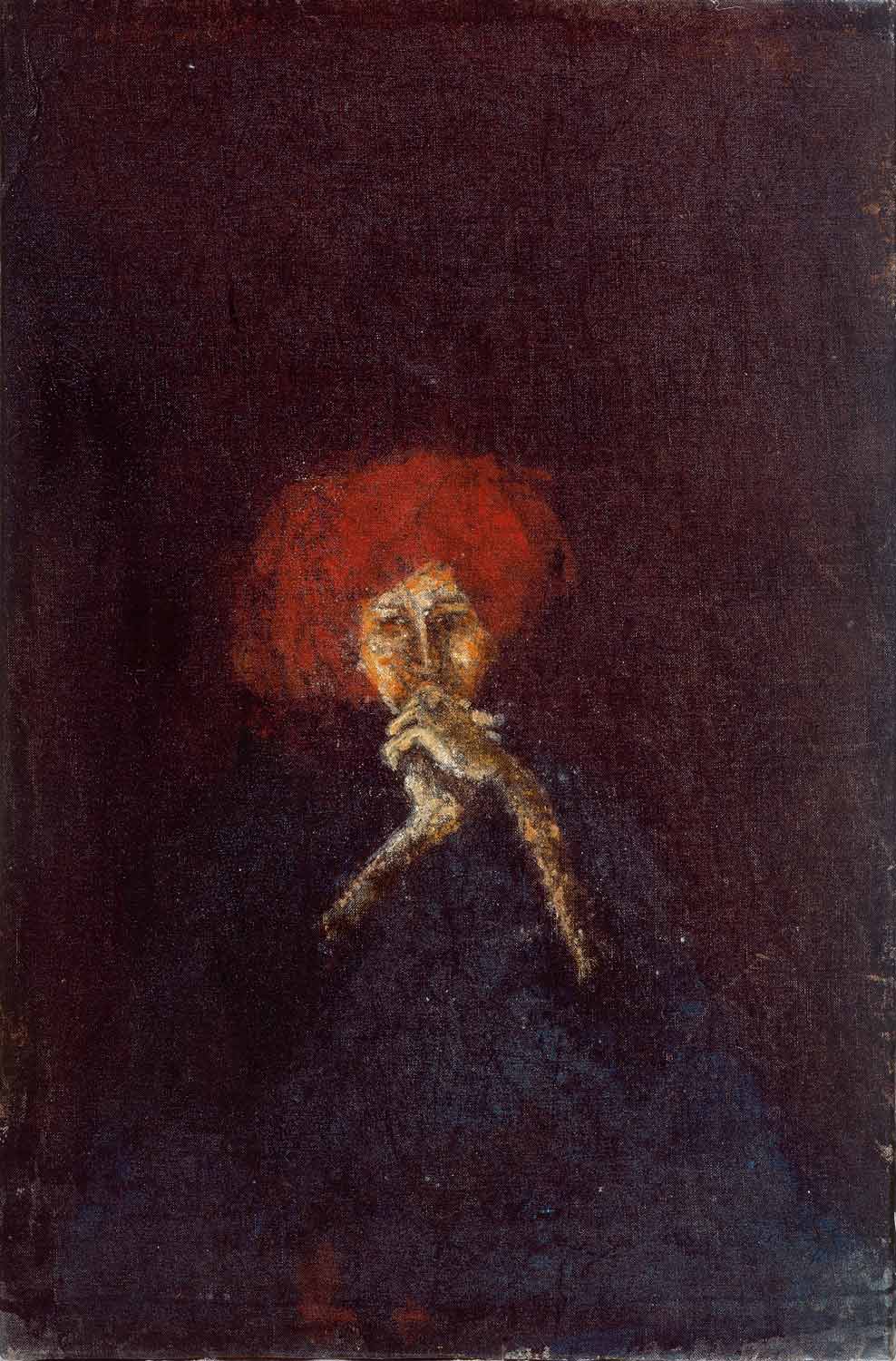
Ida, 1986, oil on canvas 41 × 27 cm.
Retrospective at Museo Jenisch, Vevey, Switzerland, curated by Bernard Blatter.
Ida, 1986, oil on canvas 41 × 27 cm.
1988
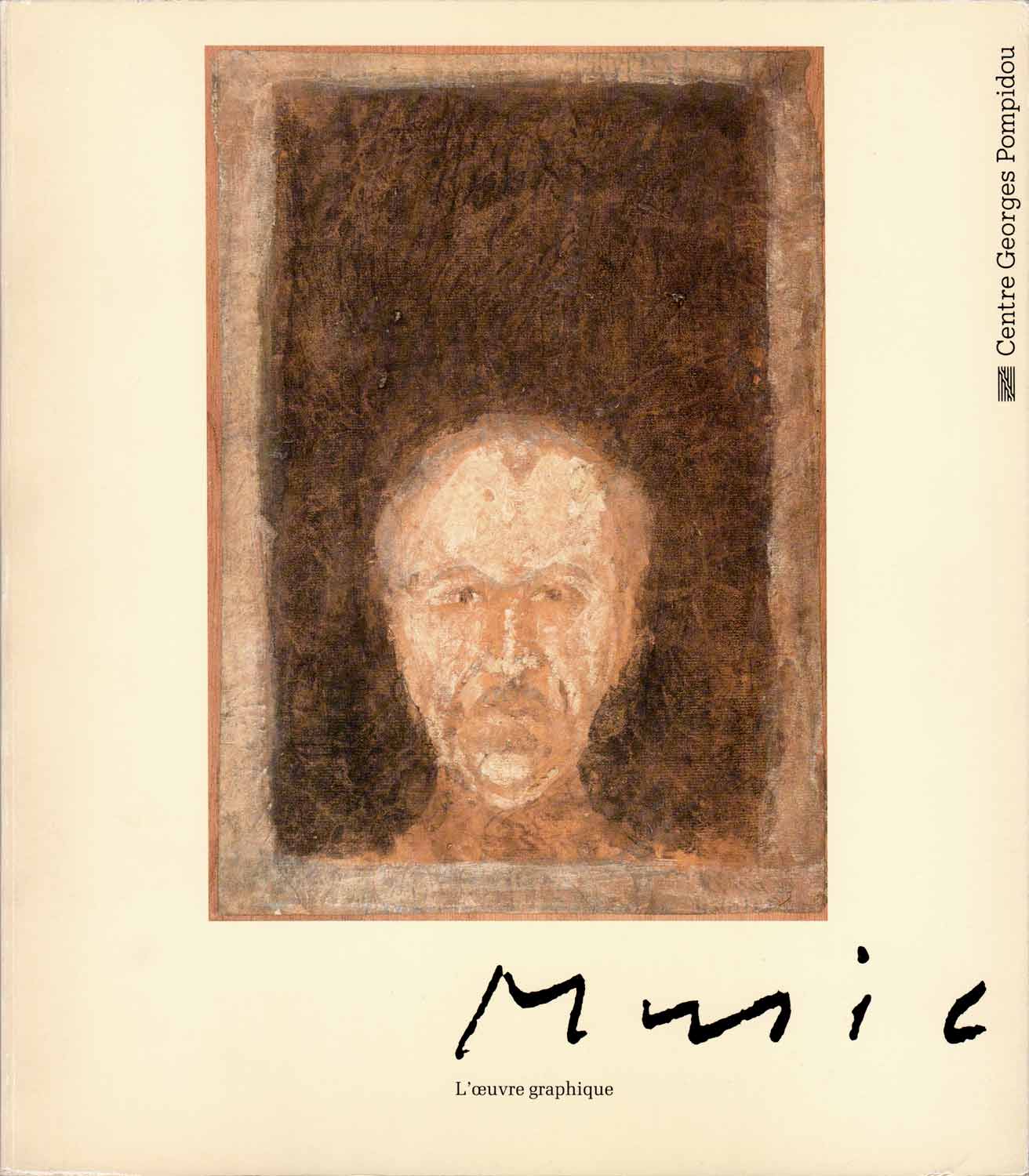
Catalogue of the exhibition at the Centre Pompidou.
Exhibition of works on paper at the Centre Pompidou, curated by Jean Clair. Beginning of the cycle of large Autoritratti (Self-Portraits) and the Ateliers.
Catalogue of the exhibition at the Centre Pompidou.
1991
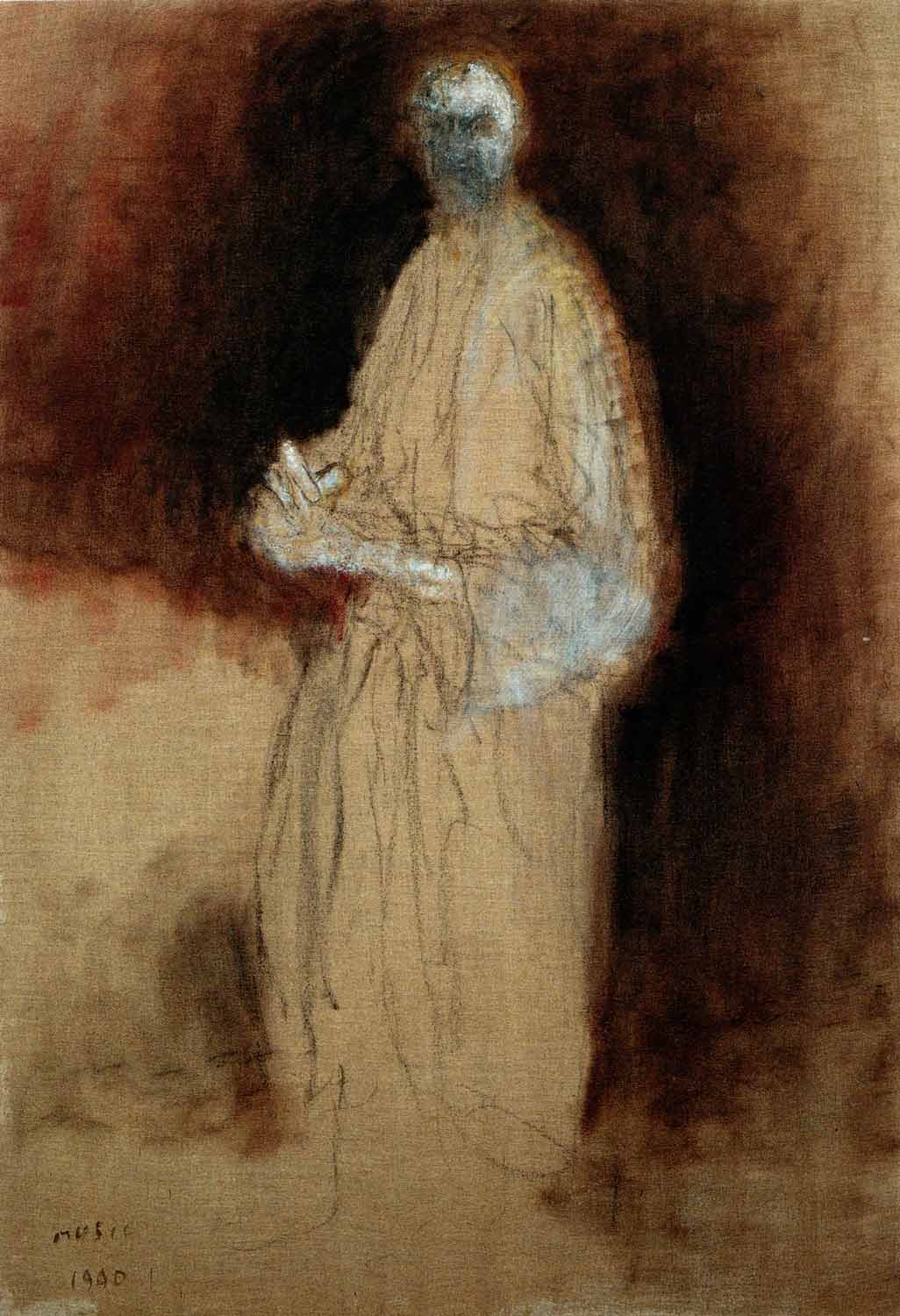
Self-Portrait, 1990, oil on canvas 162 × 114 cm, Albertina, Vienna, Sammlung Essl.
Appointed Officier de la Légion d’Honneur.
Self-Portrait, 1990, oil on canvas 162 × 114 cm, Albertina, Vienna, Sammlung Essl.
1993
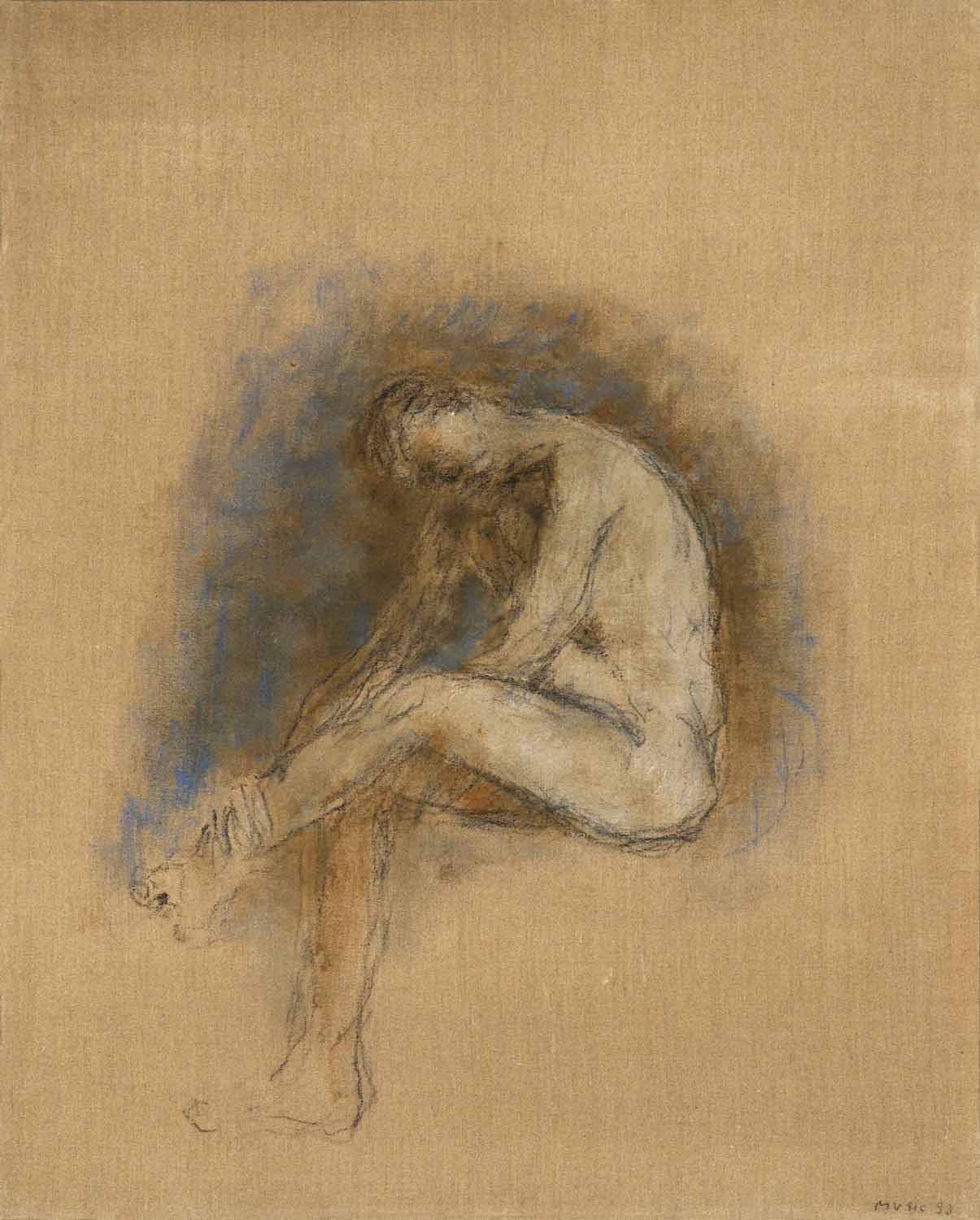
Anacoreta, 1993, oil on canvas 162 × 130 cm.
Exhibition at the French Academy in Rome and the Palazzo Reale in Milan (curated by Jean Clair). Retrospective of work on paper at the Albertina, Vienna. Also exhibited at the Jan Krugier Gallery in New York (text in catalogue by James Lord)
Anacoreta, 1993, oil on canvas 162 × 130 cm.
1994
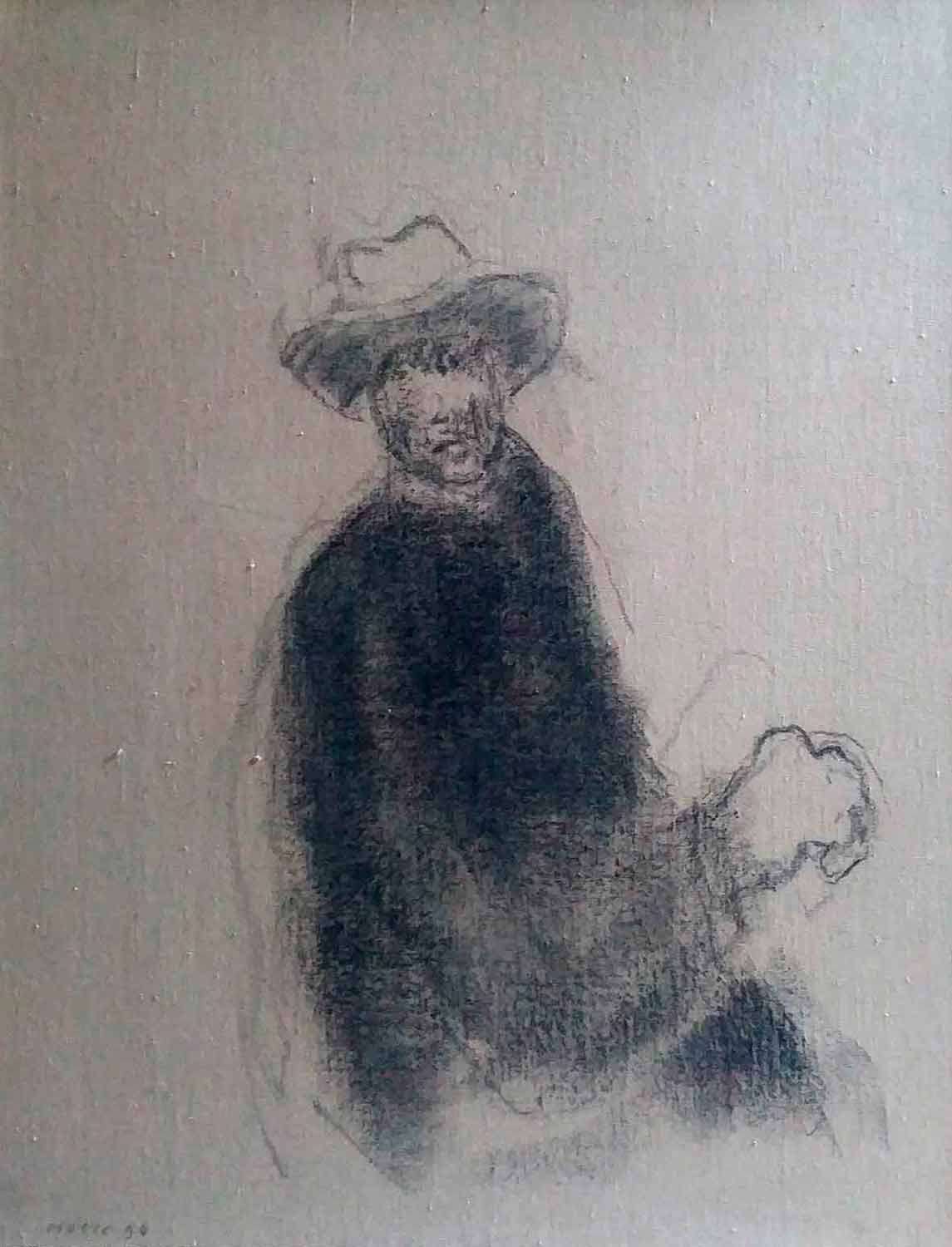
Il Viandante (The Wayfarer), 1994, charcoal on canvas 116 × 89 cm.
‘Zoran Music: el hombre sin territorio’, exhibition in Valencia, Centro Cultural Bancaixa.
Il Viandante (The Wayfarer), 1994, charcoal on canvas 116 × 89 cm.
1995
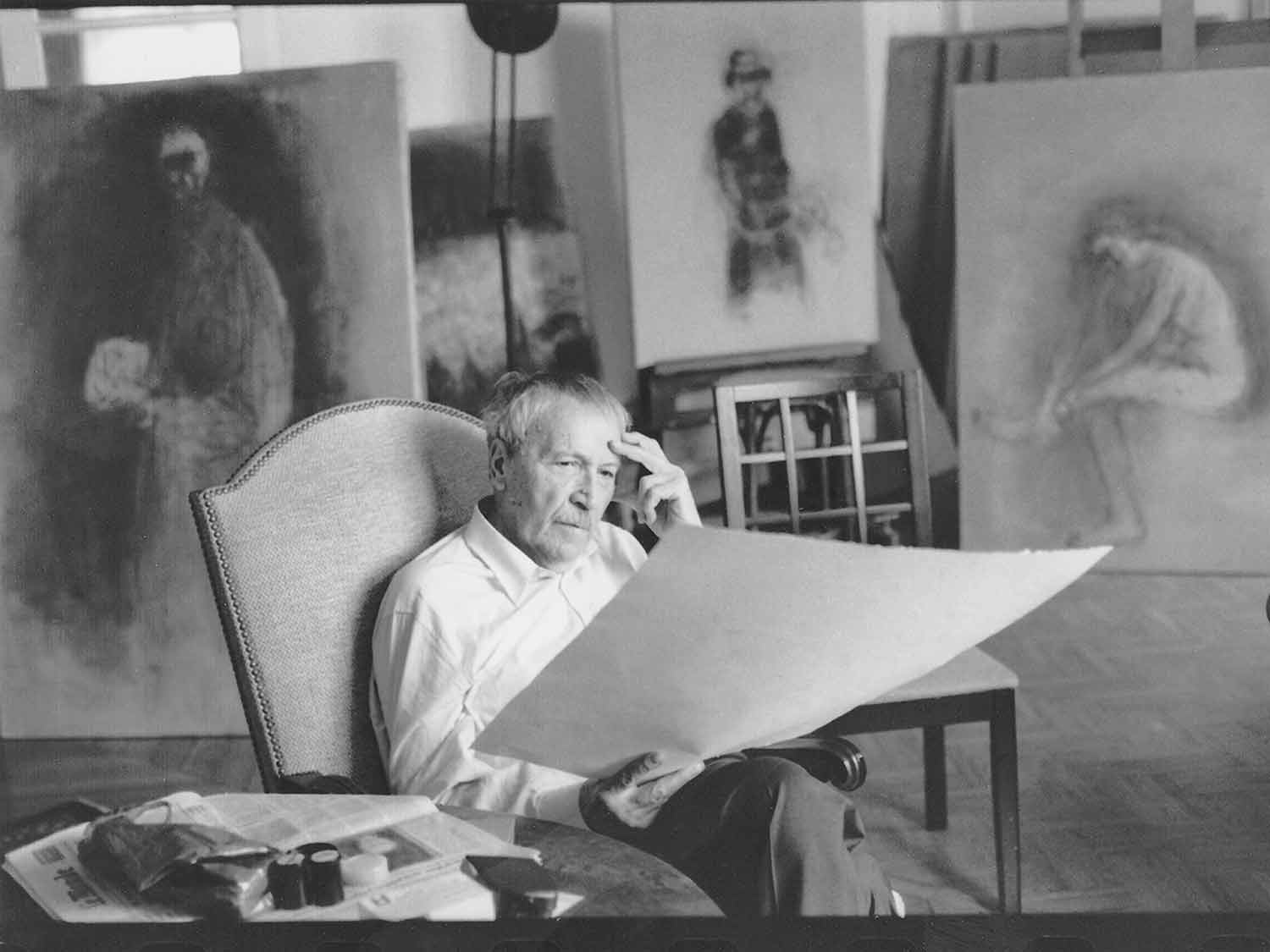
In the Paris studio, 1995.
Major retrospective at the Grand Palais in Paris, curated by Jean Clair. ‘Identità Alterità’ exhibition at Palazzo Grassi, coinciding with the ‘Centenary Biennial’, again curated by Jean Clair.
In the Paris studio, 1995.
1998
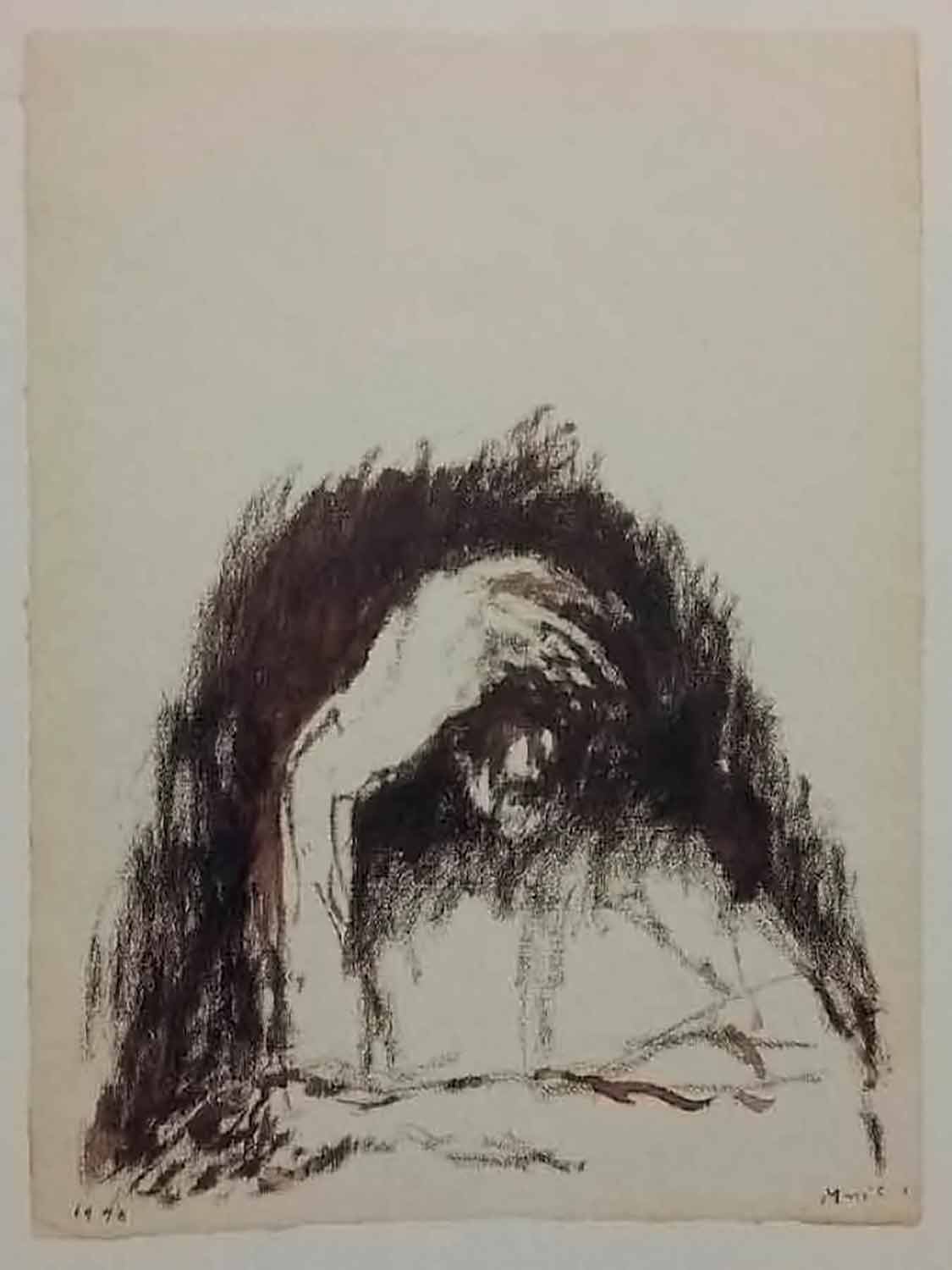
Testa (Head), 1998, coloured inks on antique paper 63 × 47.8 cm, Museo Morandi, Bologna.
Exhibition at the Museo Morandi in Bologna, dedicated to the watercolours of his early Venetian years. The following year, in Bilbao, an exhibition on recent works (Figures, Self-portraits and Double Portraits), curated by Kosme de Barañano. In 1999, a second exhibition at the Museo Morandi in Bologna featured a corpus of forty-six works on paper donated by the artist to the museum.
Testa (Head), 1998, coloured inks on antique paper 63 × 47.8 cm, Museo Morandi, Bologna.
2002
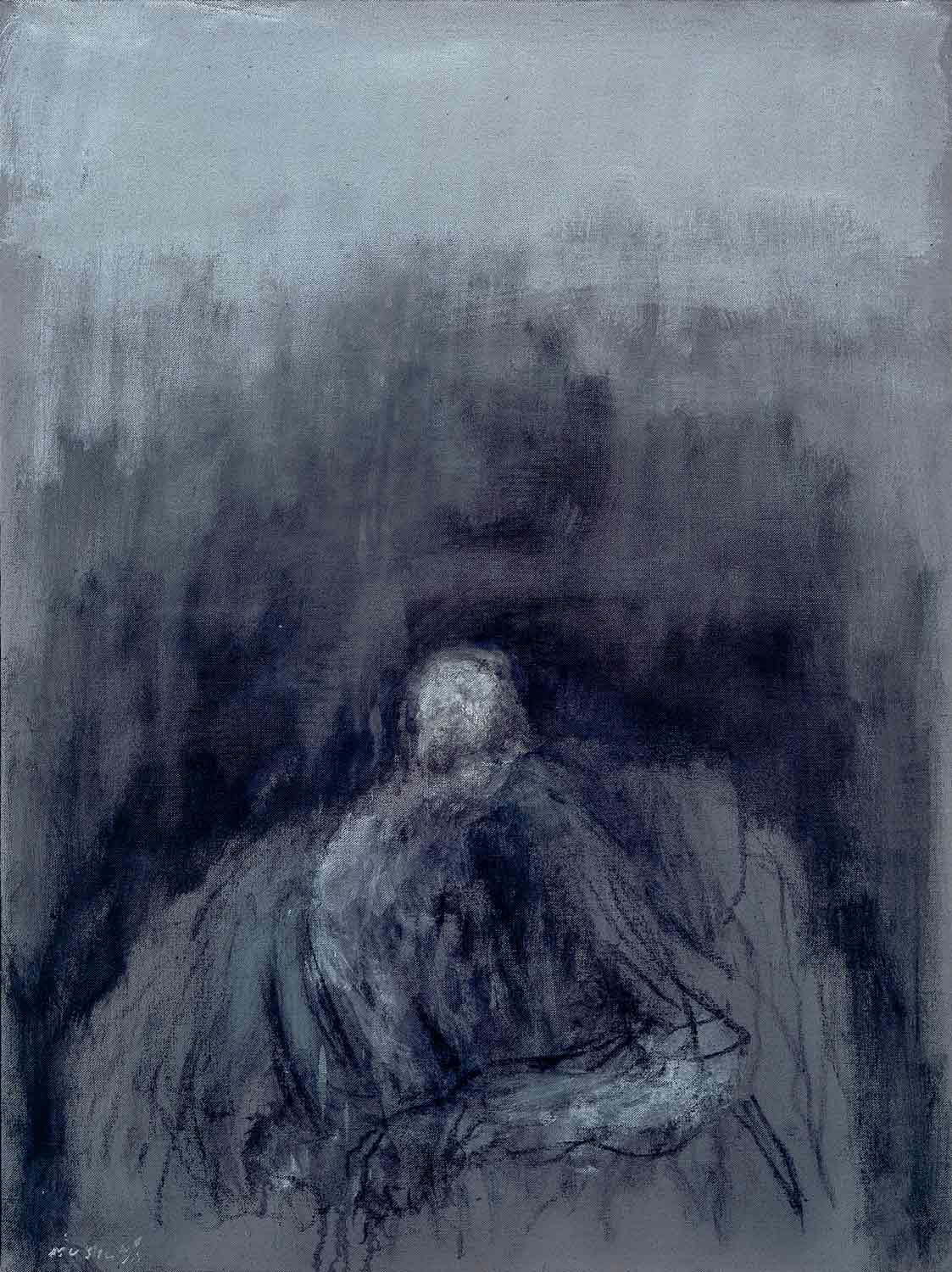
Poltrona Grigia (Grey armchair), 1998, oil on canvas 130 × 97 cm.
Exhibitions at the Sainsbury Centre of Visual Arts (Norwich) and the Estorik Collection of Modern Italian Art (London). The following year, a donation of over fifty works to IVAM (Valencia), where a major exhibition is held.
Poltrona Grigia (Grey armchair), 1998, oil on canvas 130 × 97 cm.
2003
Major retrospective at Palazzo Attems, Gorizia, curated by Marco Goldin.
2005
On 25 May he dies in Venice, at his home in San Vio.