Ida Barbarigo
TIMELINE
1920
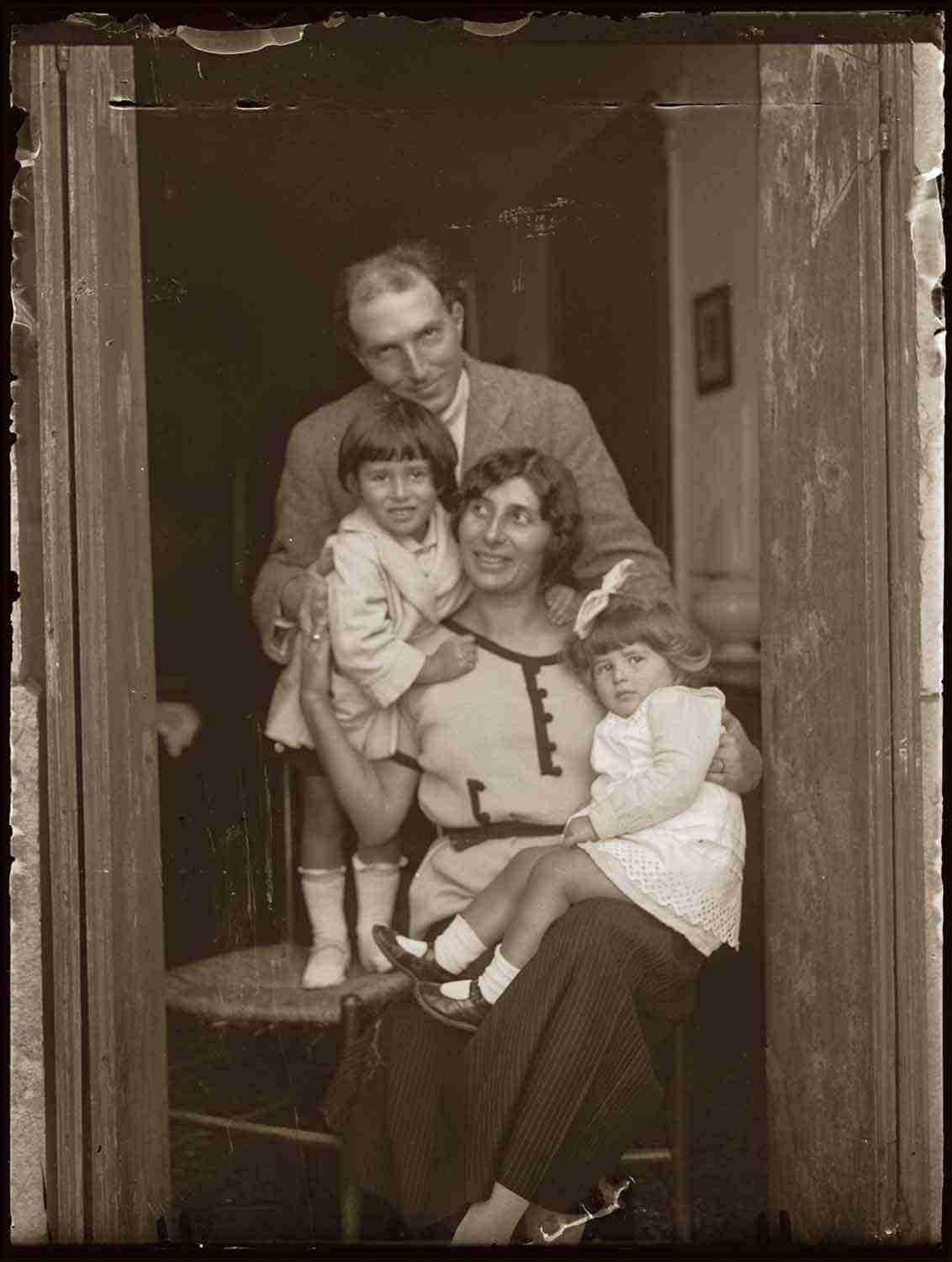
Ida in her mother Livia’s arms; with Guido and Paolo.
Ida Cadorin was born in Venice on 26 August into a family of artists, sculptors and architects, originally from the Cadore mountains.
One of my earliest memories – I must have been two or three years old – is the smell of Swiss pine shavings. On the top floor of the house in Fondamenta Briati, there were still carvers (…), the floor was covered in shavings (…). There was also grandfather Vincenzo, (…) he was a sculptor, he worked for Queen Margherita who came to visit him in his studio, and a lot for churches: he even made the throne for the pope’s jubilee. But he was not a clerically-minded. He used to say: ‘We are Christians but not bigots’. (…) Even though the workshop proper was closed in 1848 by my grandfather’s grandfather, Nicoletto, the tradition never died out. My great-grandfather Fabiano was a sculptor, with many assistants; my grandfather Vincenzo reopened the workshop, with his sons and helpers, first in San Stin, then in 1893 at the Carmini, on the fondamenta Briati. It was a big family, full of different characters, all talented.
The artist quoted by Laura Bossi, in Daniela Ferretti (ed.), La Bottega Cadorin. Una dinastia di artisti veneziani. Antiga edizioni, Crocetta del Montello, Treviso, 2016 pp. 39-40.
Ida in her mother Livia’s arms; with Guido and Paolo.
1942
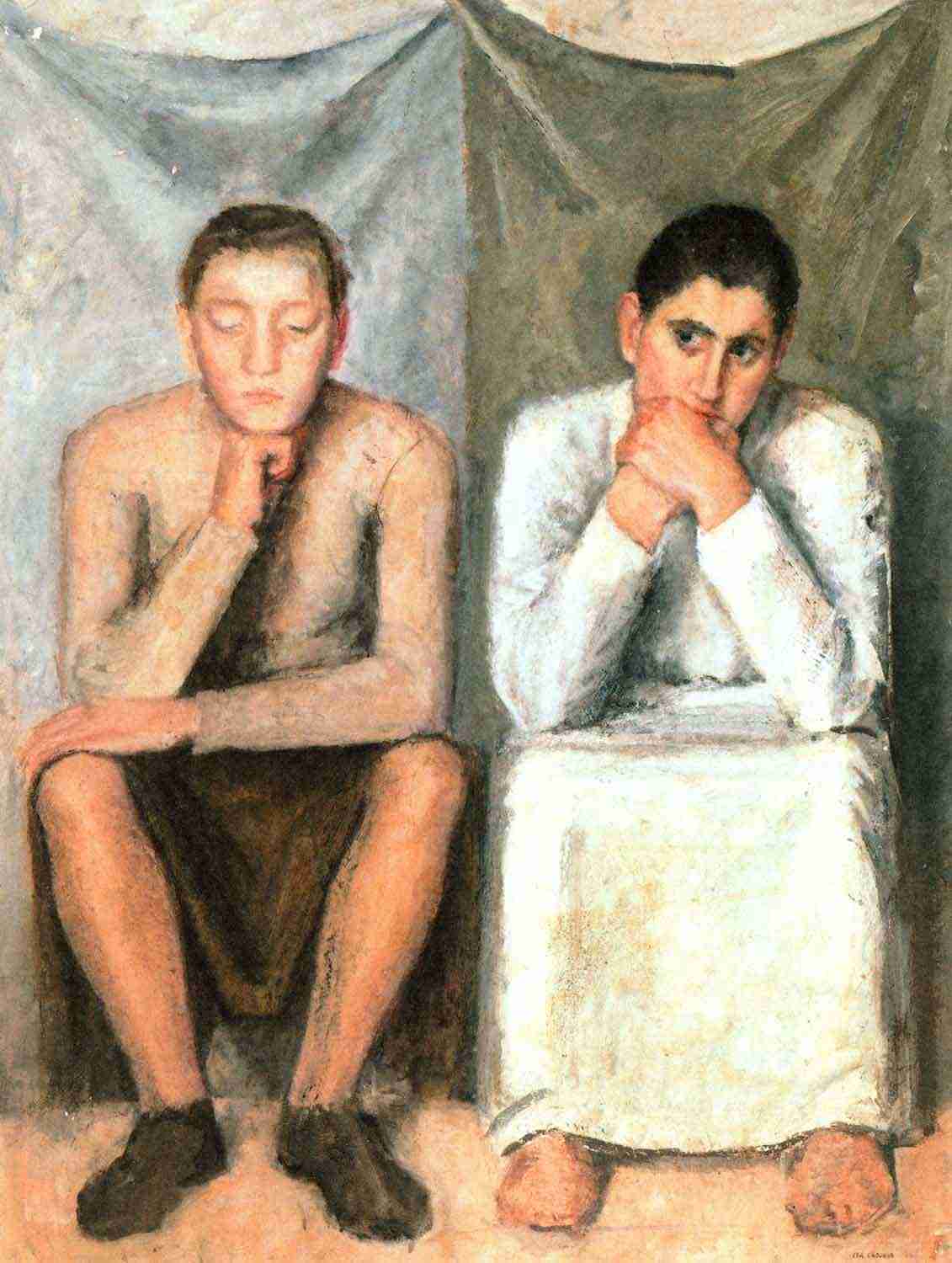
Ida Cadorin, Operaie in Riposo, 1942. Oil on panel 105 x 80 cm.
Although she was ‘born with a paintbrush in her hand’, the young artist initially chose the path of architecture, briefly attending the studio of her uncle Brenno del Giudice (1888-1957, an eminent Venetian architect), where she practised technical drawing. However, she soon abandoned this discipline and enrolled at the Accademia di Belle Arti in Venice in 1942. Here she attended courses held by her father, Guido Cadorin, and sculptor Arturo Martini. Following a competition for young artists, one of her paintings, Operaie in riposo (Workers at rest), was exhibited at the Venice Biennale.
Ida Cadorin, Operaie in Riposo, 1942. Oil on panel 105 x 80 cm.
1944 - 1946
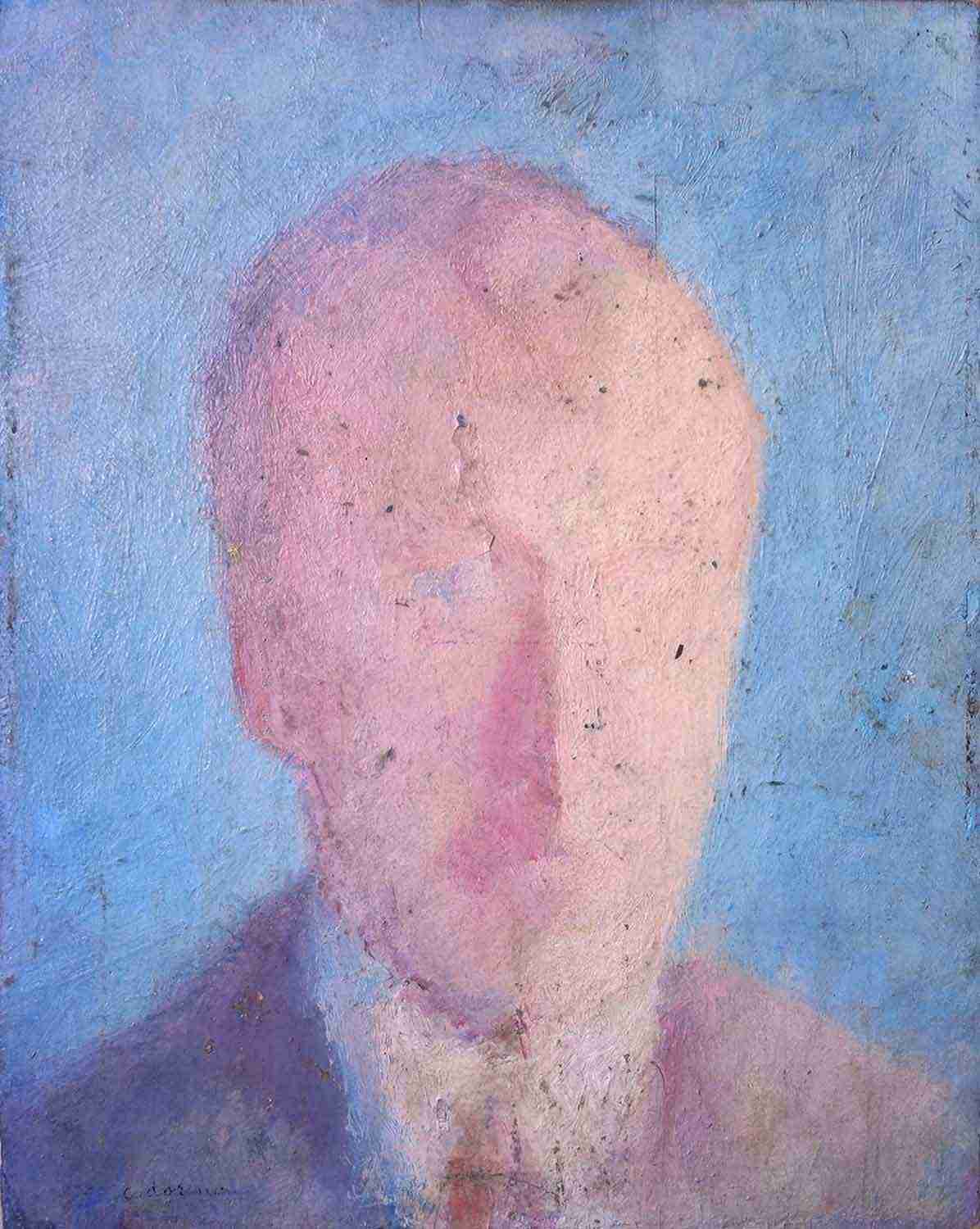
Zoran Music portrayed by Ida: Head of a Man, 1946. Oil on panel 23.5 x 14.5 cm. The painting is signed ‘Cadorina’.
In 1944 she meets the painter Zoran Music. In 1946 she adopts the name ‘Cadorina’ as her nom d’artiste.
Zoran Music portrayed by Ida: Head of a Man, 1946. Oil on panel 23.5 x 14.5 cm. The painting is signed ‘Cadorina’.
1947 - 1948
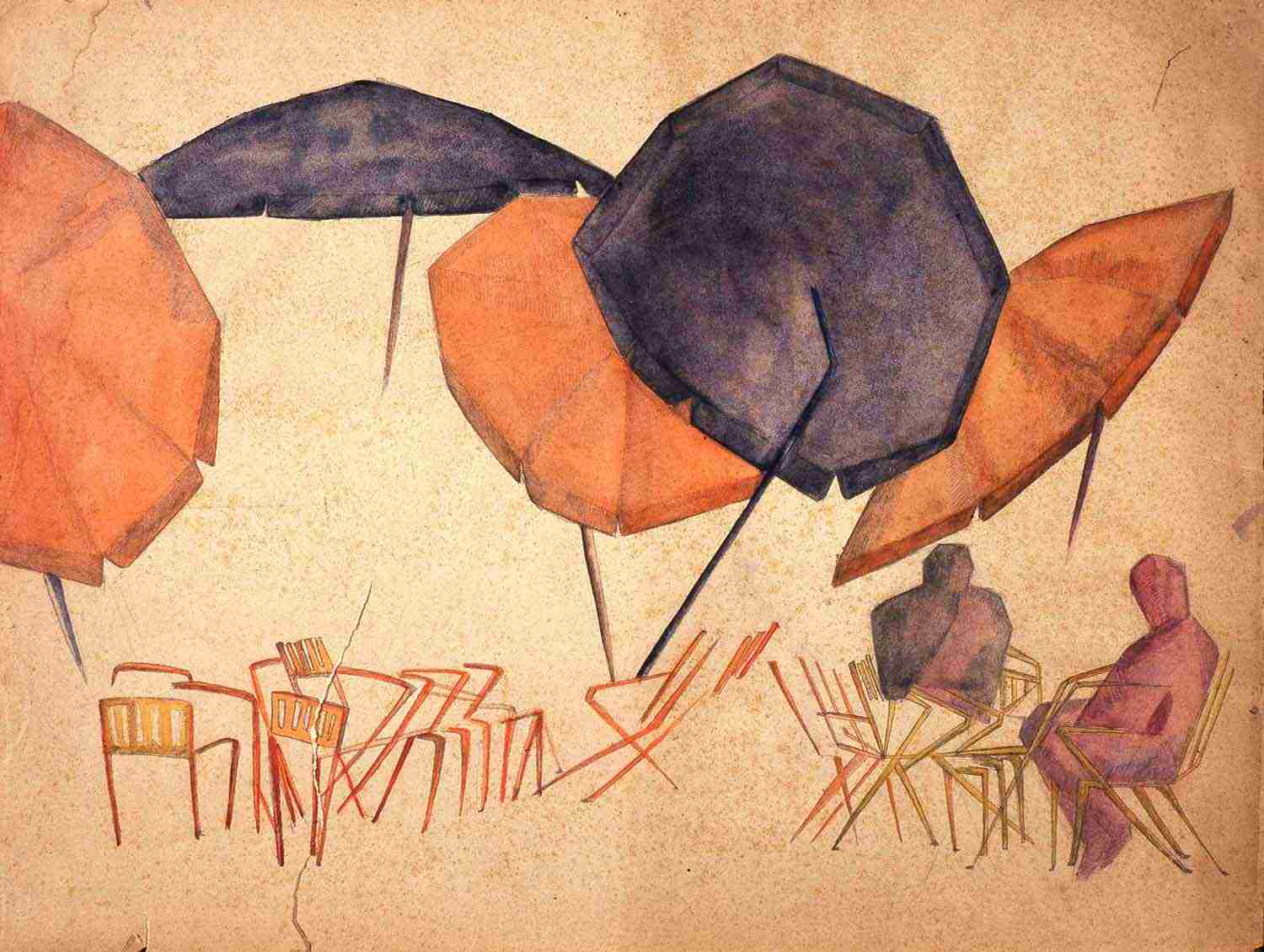
Caffè alle Zattere, 1947. Watercolour and pencil 43.5 x 58 cm.
Trips to Europe: Switzerland, where the encounter with modern art took place; France and the Netherlands, where museums were enriched with collections of modern works, still almost absent from Italian museums.
Caffè alle Zattere, 1947. Watercolour and pencil 43.5 x 58 cm.
1949
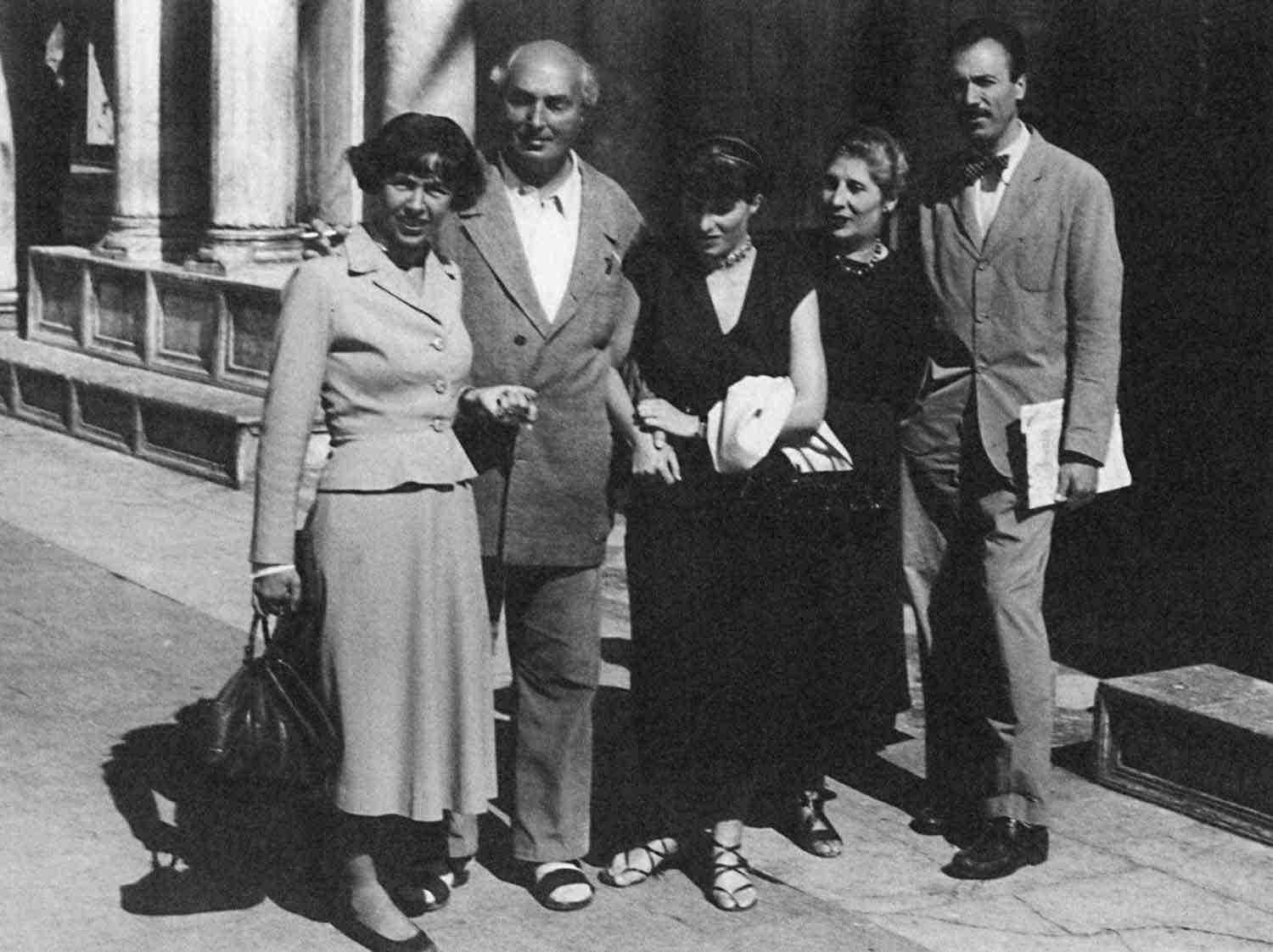
Ida and Zoran on their wedding day.
Marriage with Zoran Music. For the occasion the two artists produce an etched announcement, engraved by the two of them.
Ida and Zoran on their wedding day.
1952
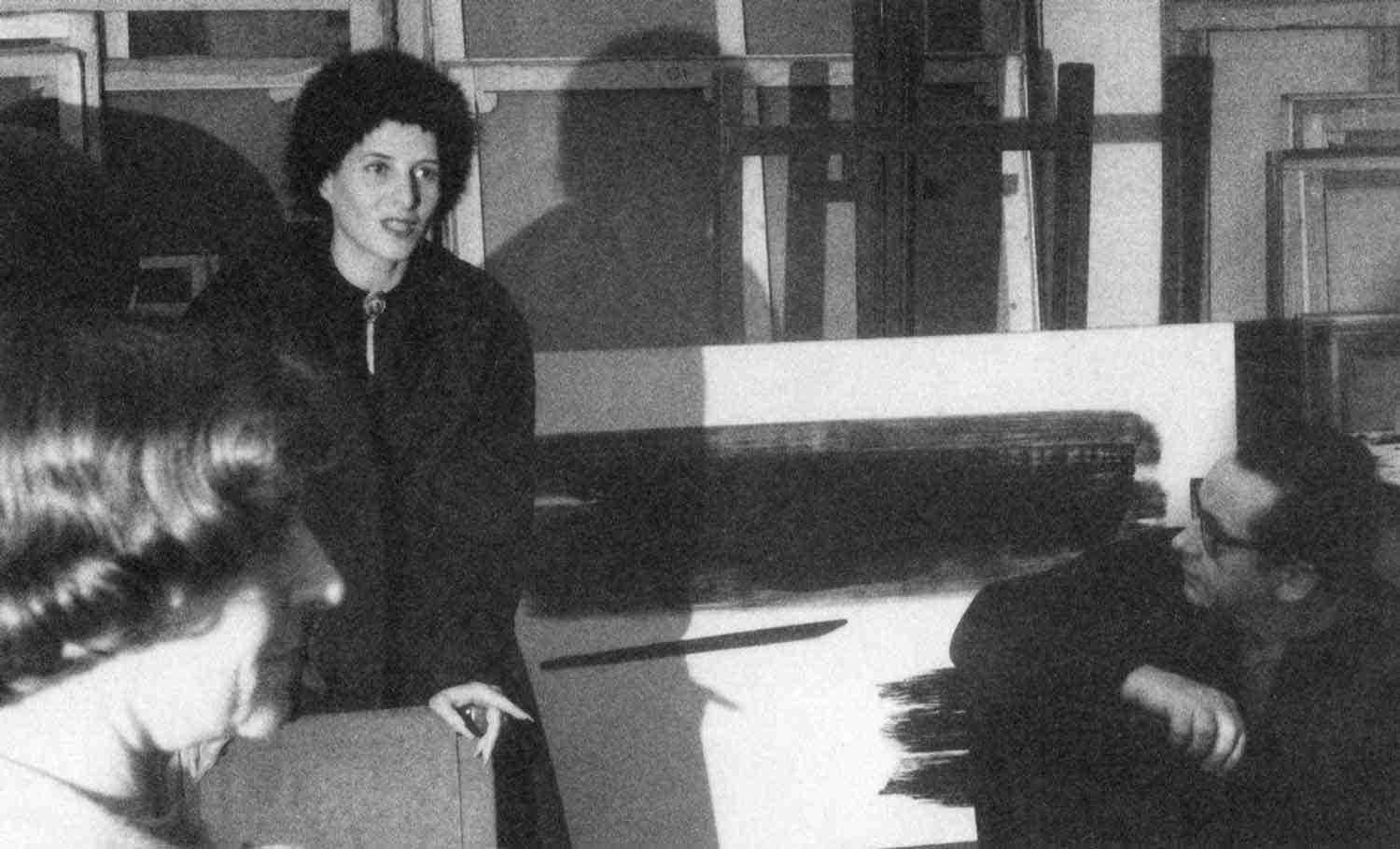
Ida Barbarigo in Hans Hartung’s studio
Ida and Zoran settle in Paris. They come into contact with, among others, artists Leon Gischia, Hans Hartung, Germaine Richier, Maria Helena Vieira de Silva and critics Jean Bouret, René de Solier, Pierre Francastel, Jack Lassaigne and Jean Leymarie. It was in these early Parisian years that the gallery owner Gildo Caputo suggested she choose a nom d’artiste.
People thought I chose the name Barbarigo because it sounds good, or because I put on airs. But it was the Galerie de France: they did not want me to take the name of my father who was a painter. There cannot be two painters with the same name… They told me, ‘Laissez nous faire!’ They chose it. (…) When I was exhibited for the first time at the Salon de Mai, with two innocent little paintings – but Helène Parmelin had put them next to a Picasso – I was so proud that if they had told me to sign ‘Tutankhamun’ I would have done it.
The artist quoted by Laura Bossi Régnier, in Daniela Ferretti (ed.), La Bottega Cadorin. Una dinastia di artisti veneziani. Antiga edizioni, Crocetta del Montello, Treviso, 2016 p. 55.
Ida Barbarigo in Hans Hartung’s studio
1955
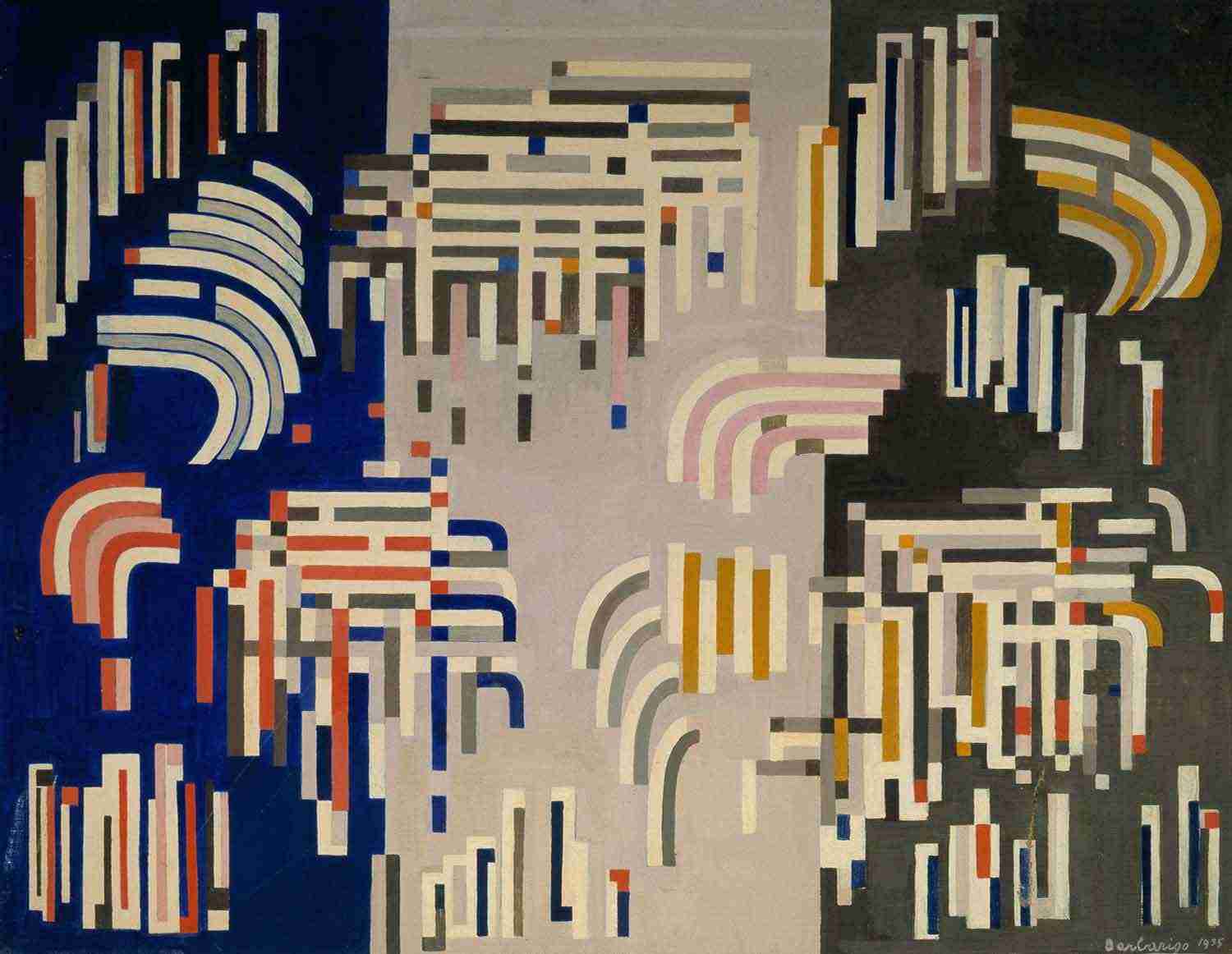
Construction (La ville), 1955, oil on canvas 50,5 x 65,5 cm.
She exhibits at the Salon de Mai, at which she will be assiduously present in the following years (in 1956, 1961, 1966, and in all editions from 1972 to 1980).
Construction (La ville), 1955, oil on canvas 50,5 x 65,5 cm.
1957
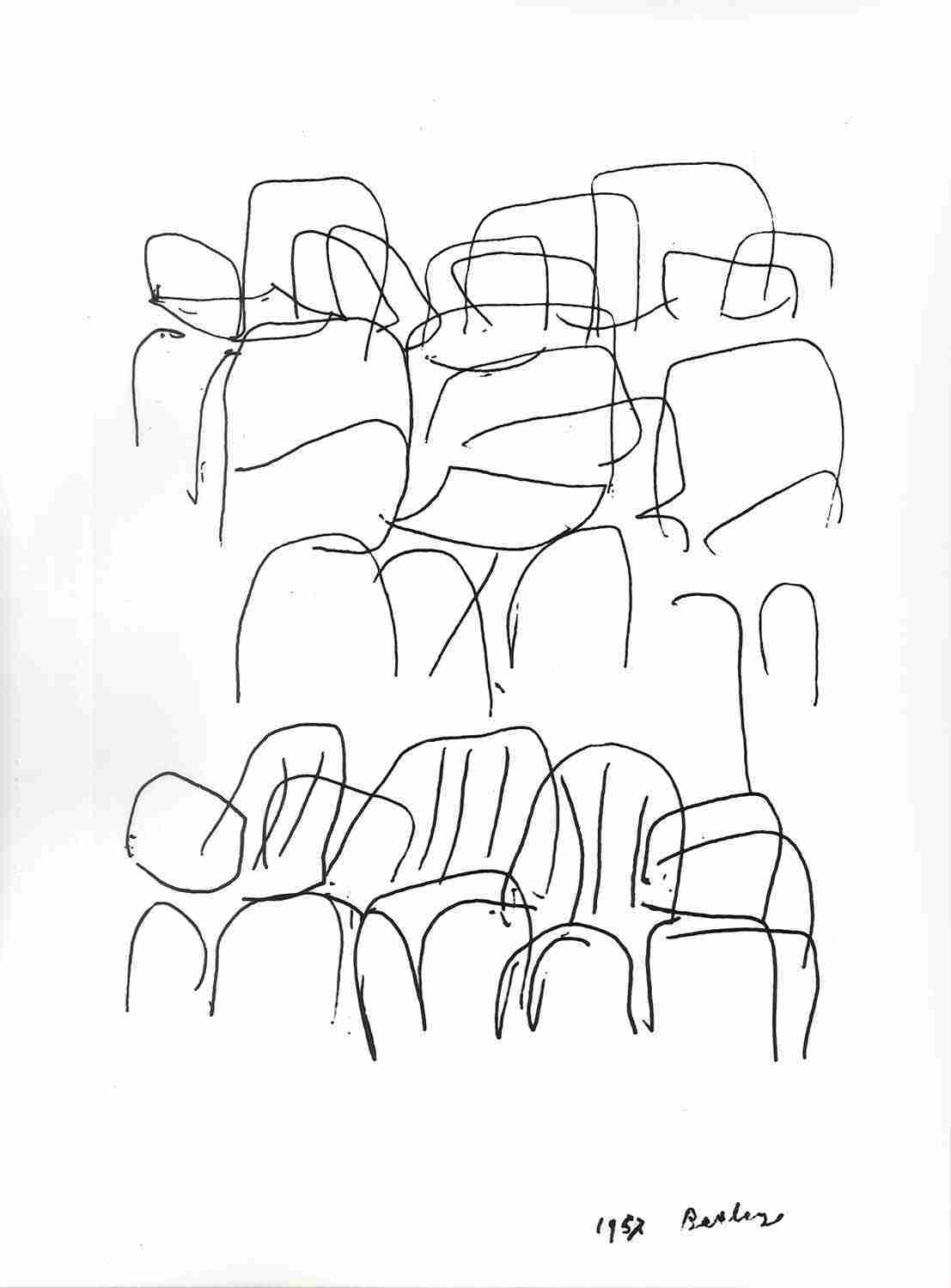
Untitled (seggiole), 1957, india ink on paper.
She travels through Belgium, the Netherlands and to London. The bare coastal landscapes of the North Sea make a strong impression on the artist.
Untitled (seggiole), 1957, india ink on paper.
1958-1959
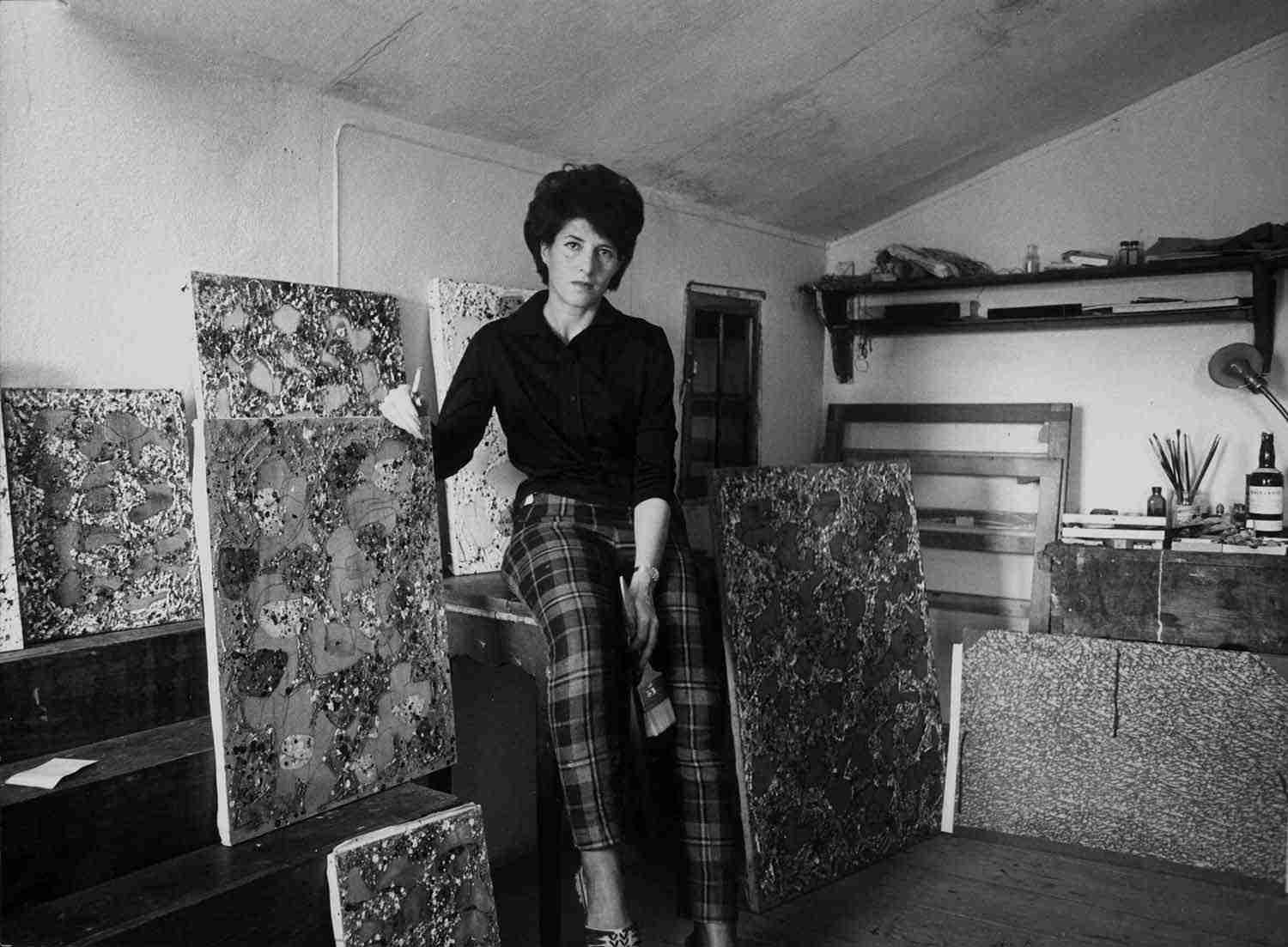
The artist in the Carmini studio, late 1950s.
Léon and Odile Degand put her in touch with Jacques Seletti, who opened a gallery in New York. Solo exhibition at the Seletti Gallery, New York.
The artist in the Carmini studio, late 1950s.
1960
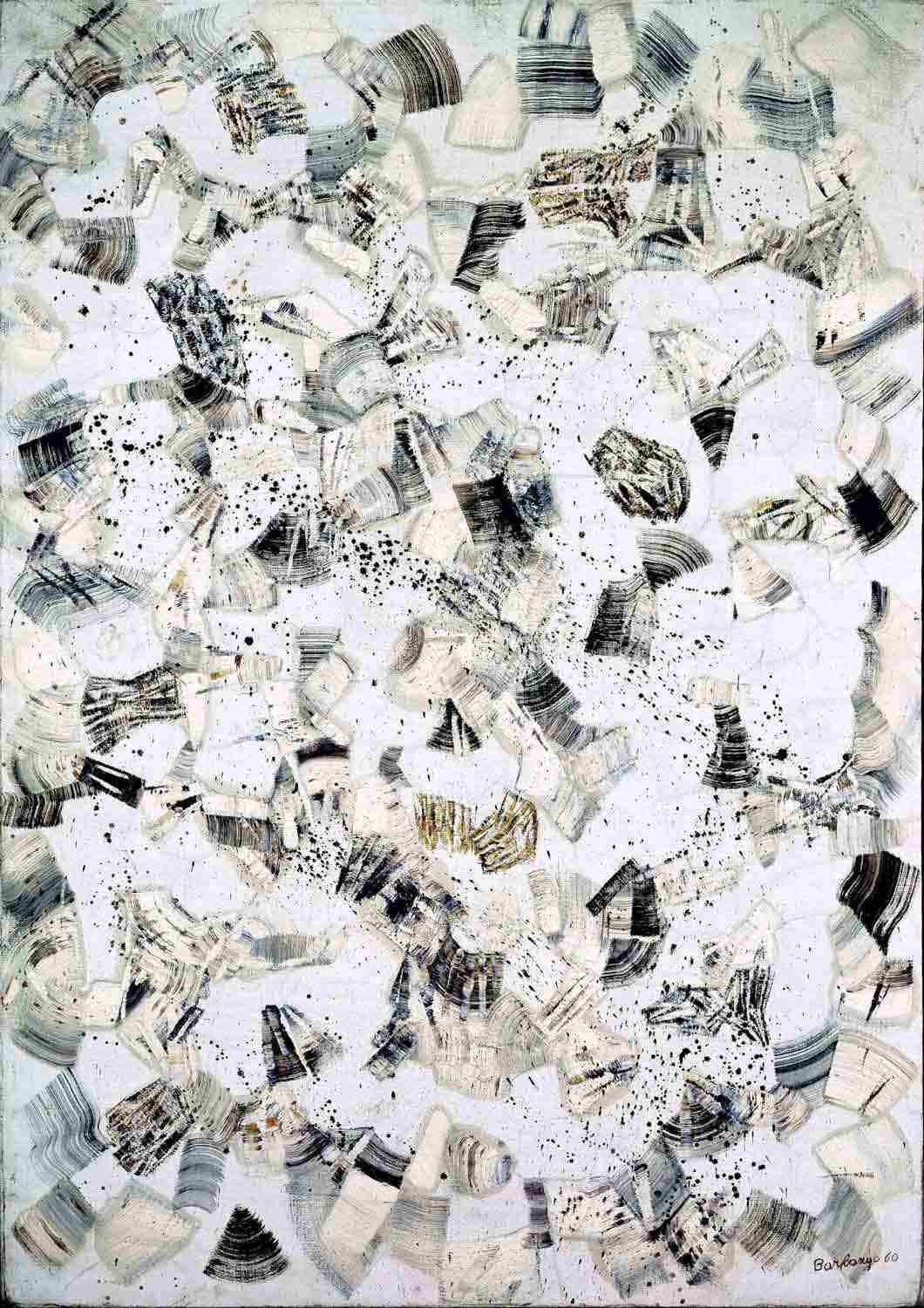
Untitled, 1960, oil on canvas 162 x 113 cm.
Solo exhibition at the Museum of Modern Art in Rijeka, Yugoslavia, curated by Boris Vizintin; the exhibition then moves on to Ljubljana and Zagreb in 1961.
Untitled, 1960, oil on canvas 162 x 113 cm.
1962
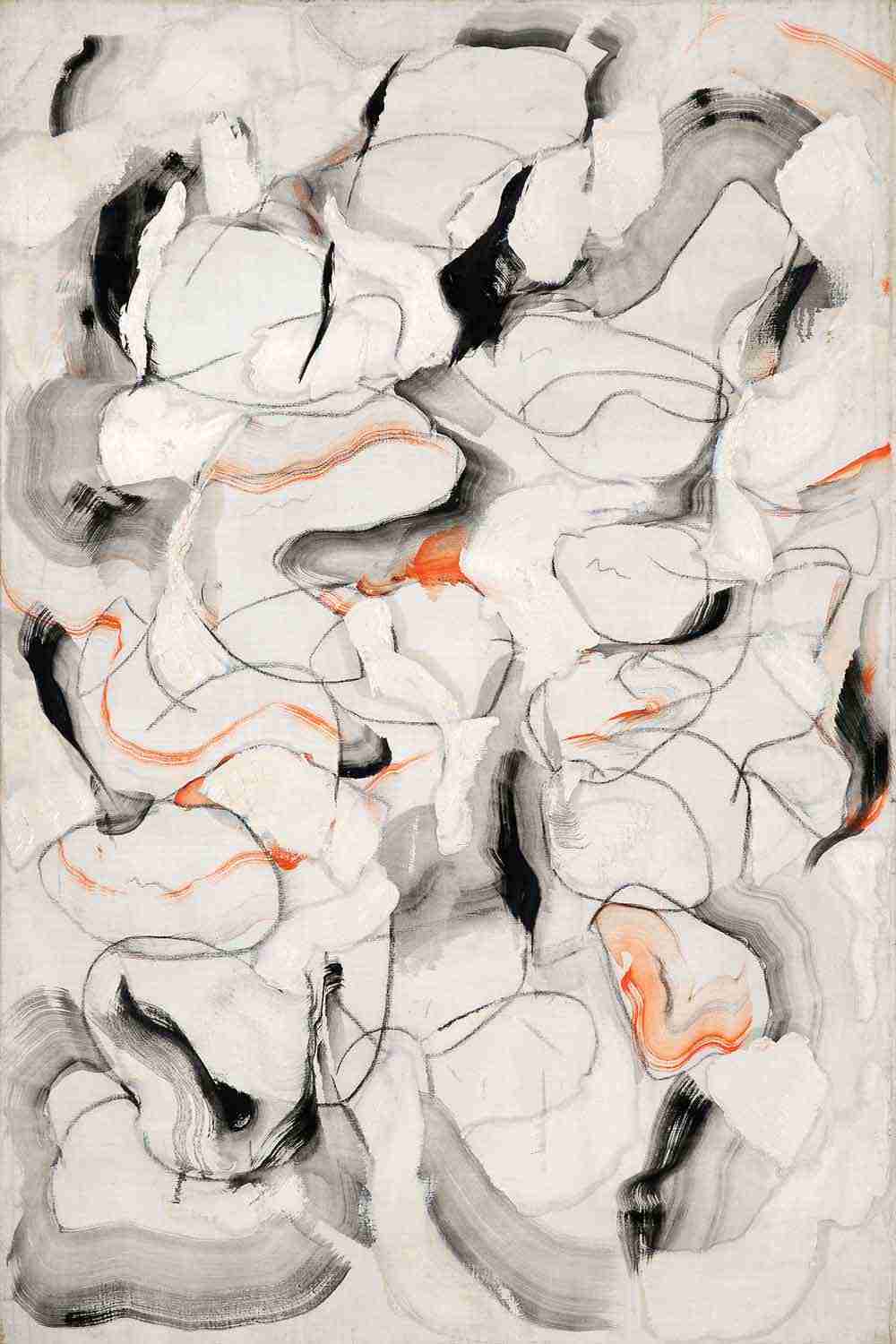
Jeu ouvert, 1961, oil on canvas 146 x 97 cm. Tate Gallery, London.
Group exhibition curated by Giuseppe Marchiori in Cortina: ‘Sei pittori di Parigi: Barbarigo, Gischia, Music, Pignon, Pulga, Scialoja’.
Jeu ouvert, 1961, oil on canvas 146 x 97 cm. Tate Gallery, London.
1963
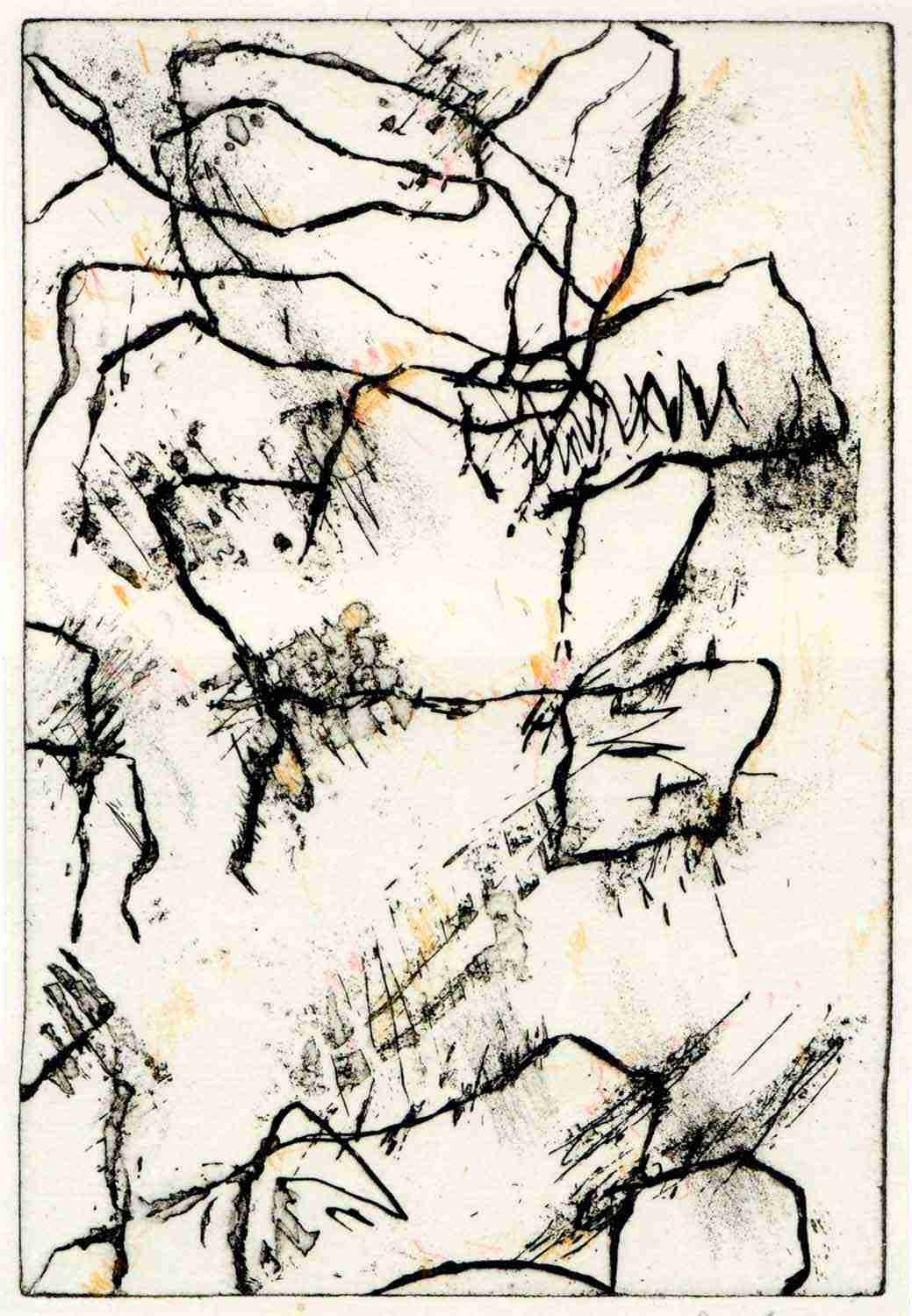
Promenade, 1963. Etching on zinc, 148 × 100 mm.
She participates in the 5th Biennale of Contemporary Printmaking, Venice.
Promenade, 1963. Etching on zinc, 148 × 100 mm.
1964
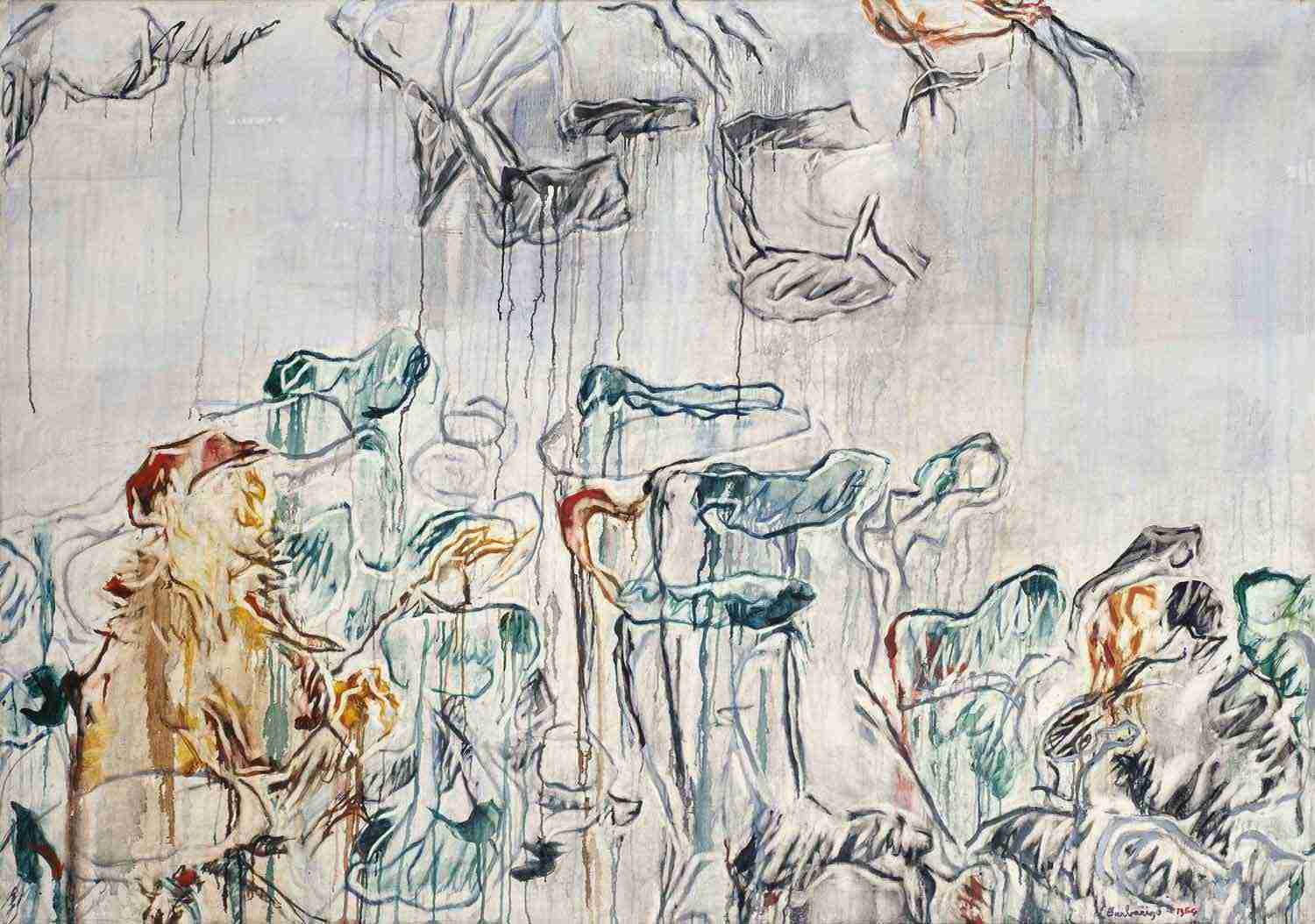
General dixi: doman piovi, 1964, oil on canvas 114 x 162 cm.
She participates in the exhibition entitled ‘6 Parisier Maler (Barbarigo, Bergman, Gischia, Hartung, Music, Pulga)’ at the Kunsthalle in Nuremberg. Solo exhibition at the Il Traghetto gallery in Venice, where she meets Lucio Fontana. An essay on the artist is published in the magazine ‘Quadrum’ No. 7, written by Umbro Apollonio.
General dixi: doman piovi, 1964, oil on canvas 114 x 162 cm.
1965
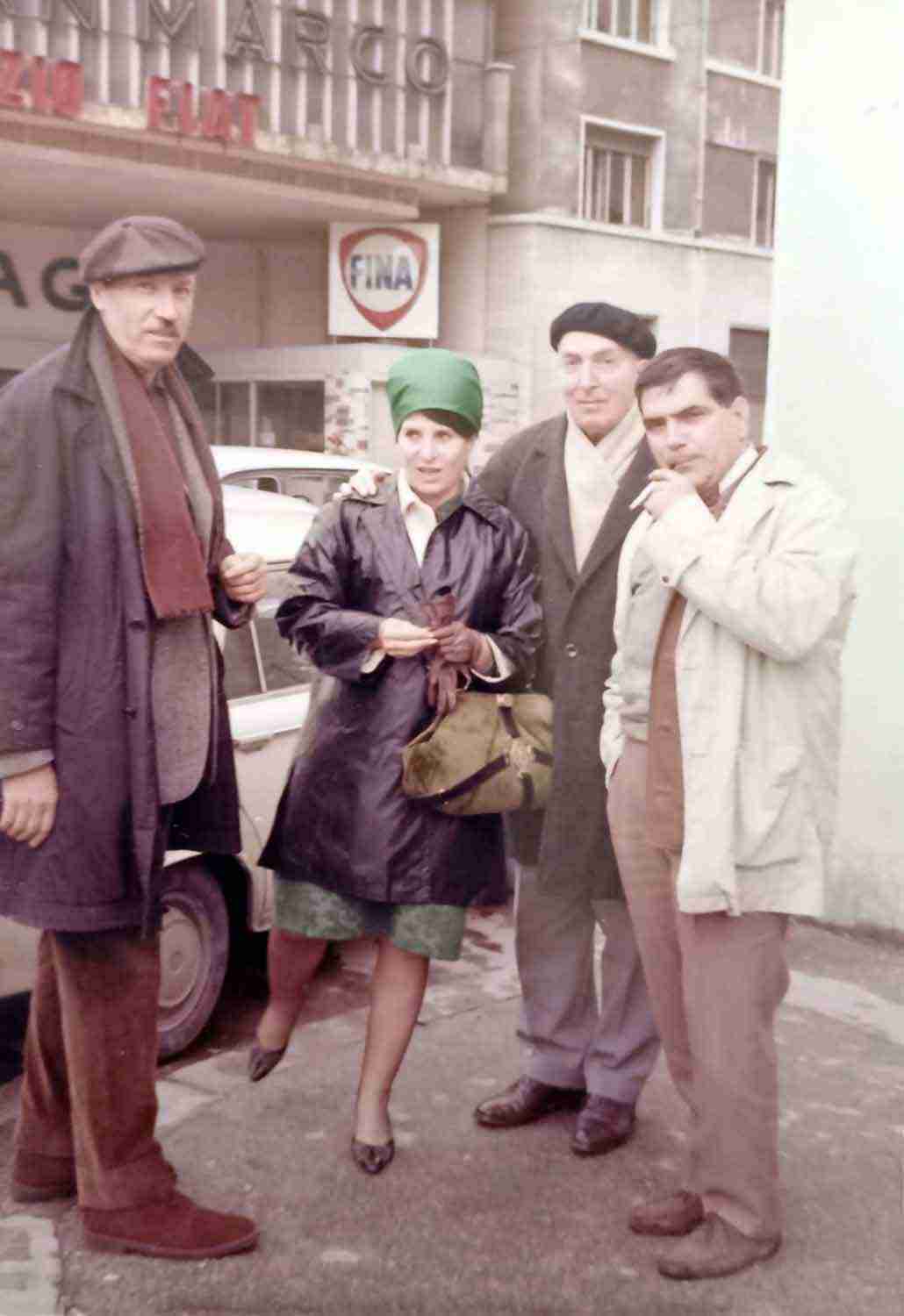
Zoran Music, Ida Barbarigo and Guido Cadorin with the painter Bruno Pulga.
Paris, solo exhibition at the Galerie Paul Facchetti. Her paintings are supported by a small circle of collectors and critics including Madame de Gavardie and Jean Bouret. Text by Marchiori in the magazine ‘Mardi-Samedi’ in June 1965. Silvio Branzi publishes a long essay on Ida Barbarigo’s work in ‘Art International’. Solo exhibition at the L’Elefante gallery (Mestre). Presentation in the catalogue by Nino Frank.
Zoran Music, Ida Barbarigo and Guido Cadorin with the painter Bruno Pulga.
1966
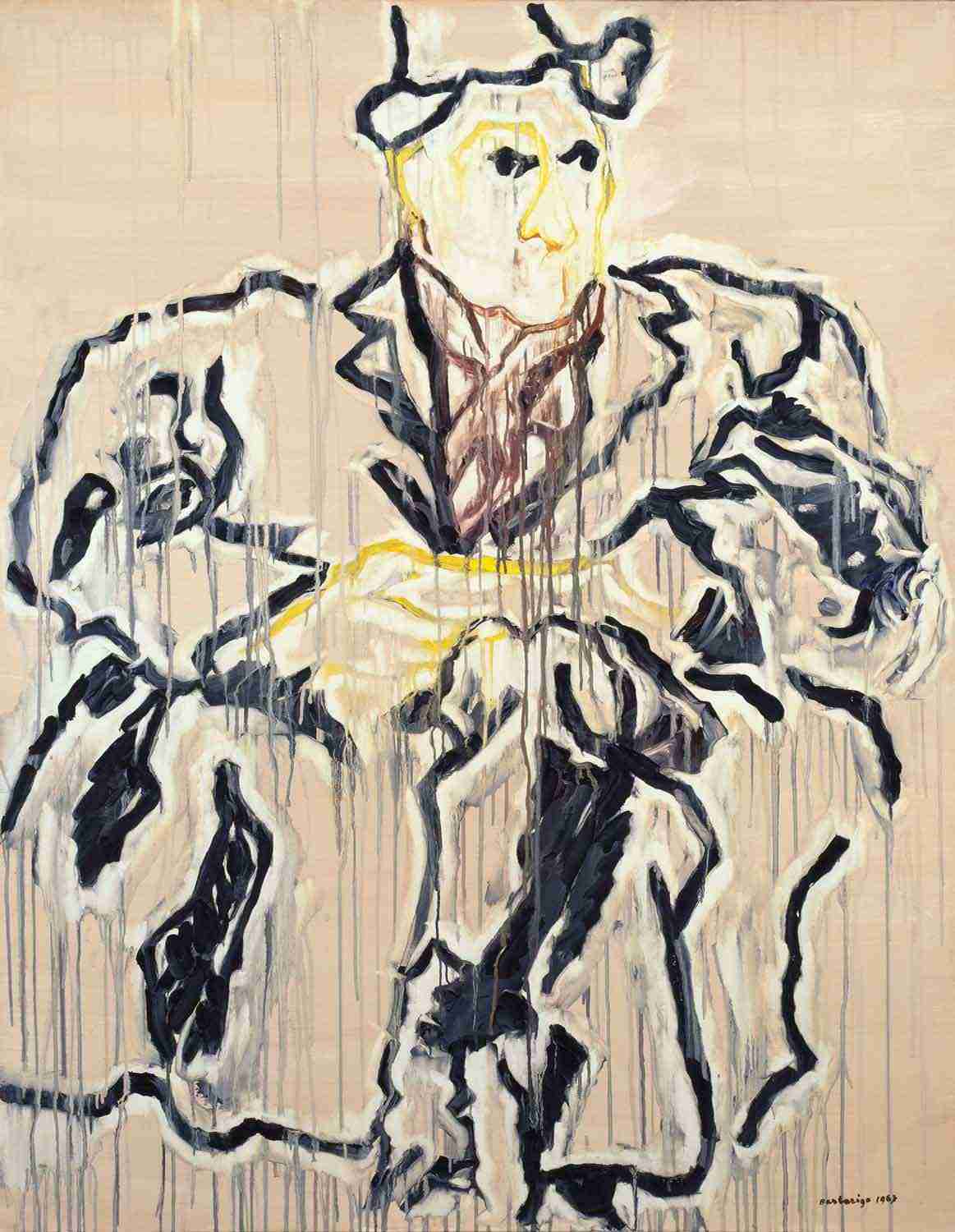
L’uomo di pietra, 1967, oil on canvas 146 x 114 cm.
Basel, solo show at the Handshin gallery (text in the catalogue by Jean Bouret). The Commandeur (or The Stone Man) and Chaises-Arbres series begin.
L’uomo di pietra, 1967, oil on canvas 146 x 114 cm.
1967
Group shows in Oslo (Holst Halvorsen Gallery) and Marseille (‘Pittori Italiani di Parigi’, at the Istituto Italiano).
1968
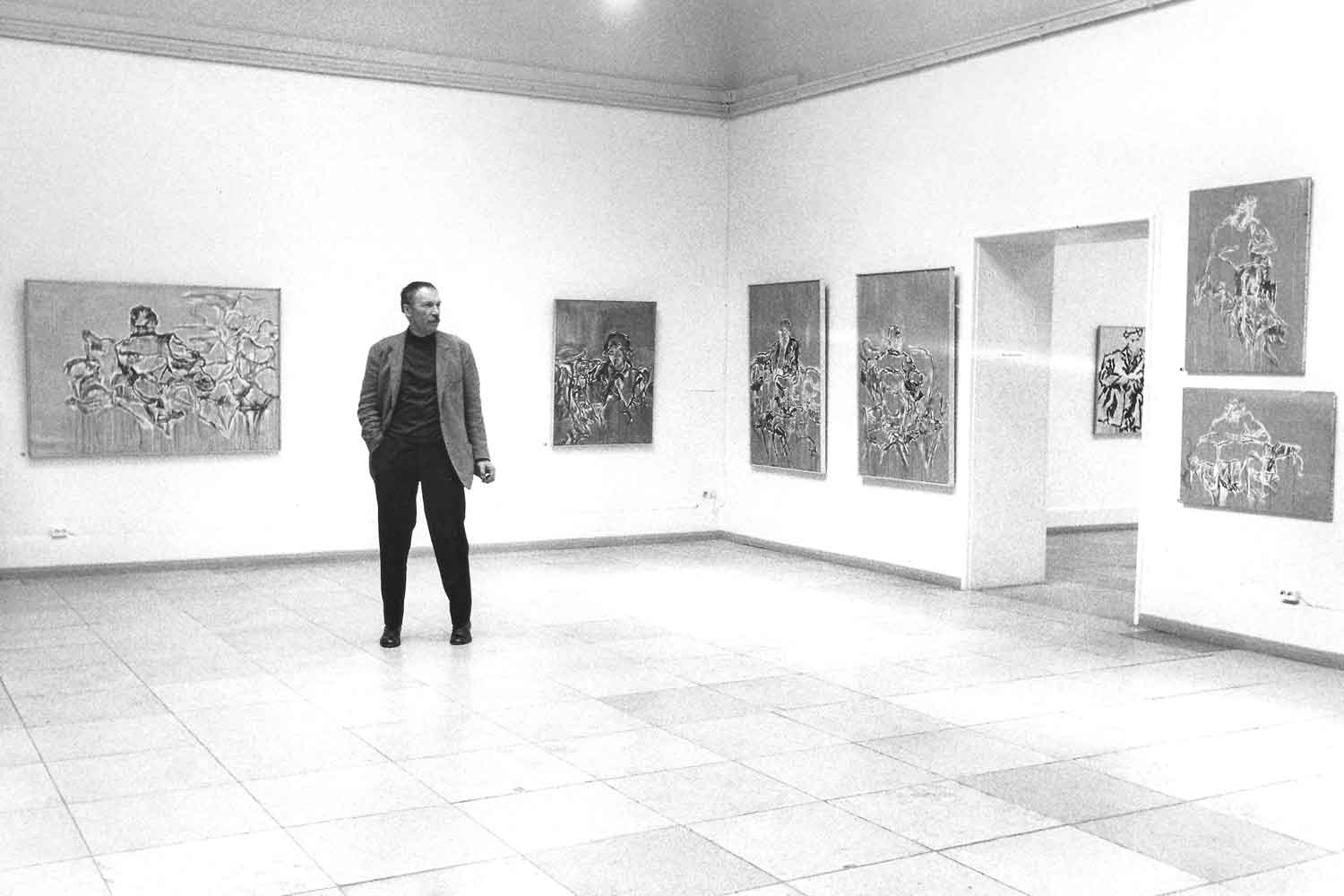
Zoran Music visiting the exhibition in Nuremberg. Behind Music, near the corner, the painting Oh! Devo andare dalla pellicciaia.
Solo exhibition at the Kunsthalle Nuremberg. The museum buys a portrait of Livia painted by Ida: Oh! Devo andare dalla pellicciaia; she wins a prize at the Menton Biennale for the triptych Histoires de Caïn.
Exhibition at Palazzo Chiericati in Vicenza (28 September – 28 October, organised in collaboration with the Kunsthalle Nuremberg). Text in the catalogue by Garibaldo Marussi. Lecture by Marco Valsecchi.She participates in the first International Biennale of Drawing in Rijeka.
Zoran Music visiting the exhibition in Nuremberg. Behind Music, near the corner, the painting Oh! Devo andare dalla pellicciaia.
1969
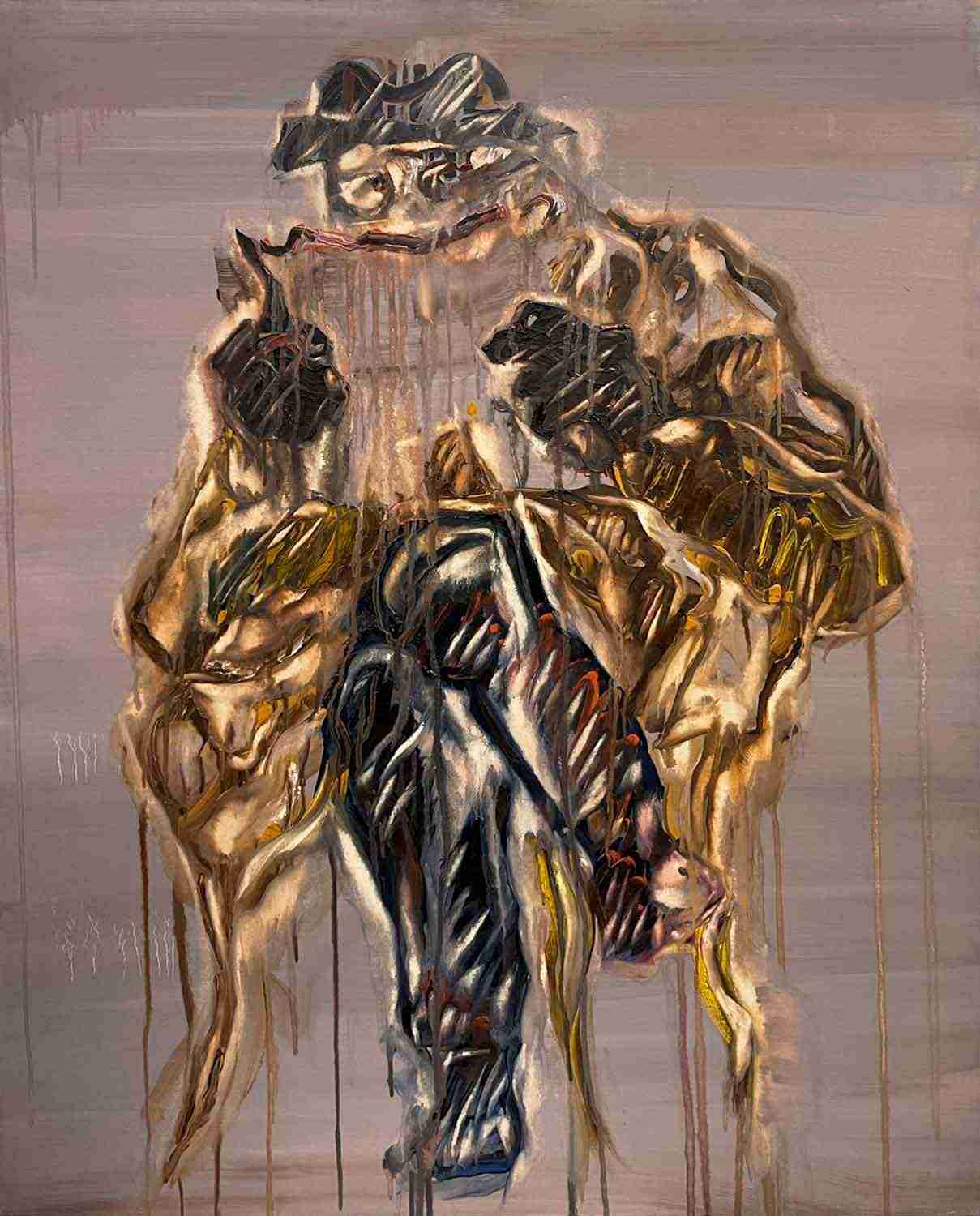
Riso di Socrate, 1969, oil on canvas 100 x 81 cm.
Ljubljana, Bien Biennale nial of Graphic Art at the Museum of Modern Art. Erik Estorik takes an interest in her work and becomes one of her main collectors. Start of collaboration with the Grosvenor Gallery in London with the participation in the exhibition ‘Season of Italian Art’. Solo show at the Galleria Bergamini (catalogue text: Marco Valsecchi). Series I ghe dixe Tartaruga and Riso di Socrate.
Riso di Socrate, 1969, oil on canvas 100 x 81 cm.
1970
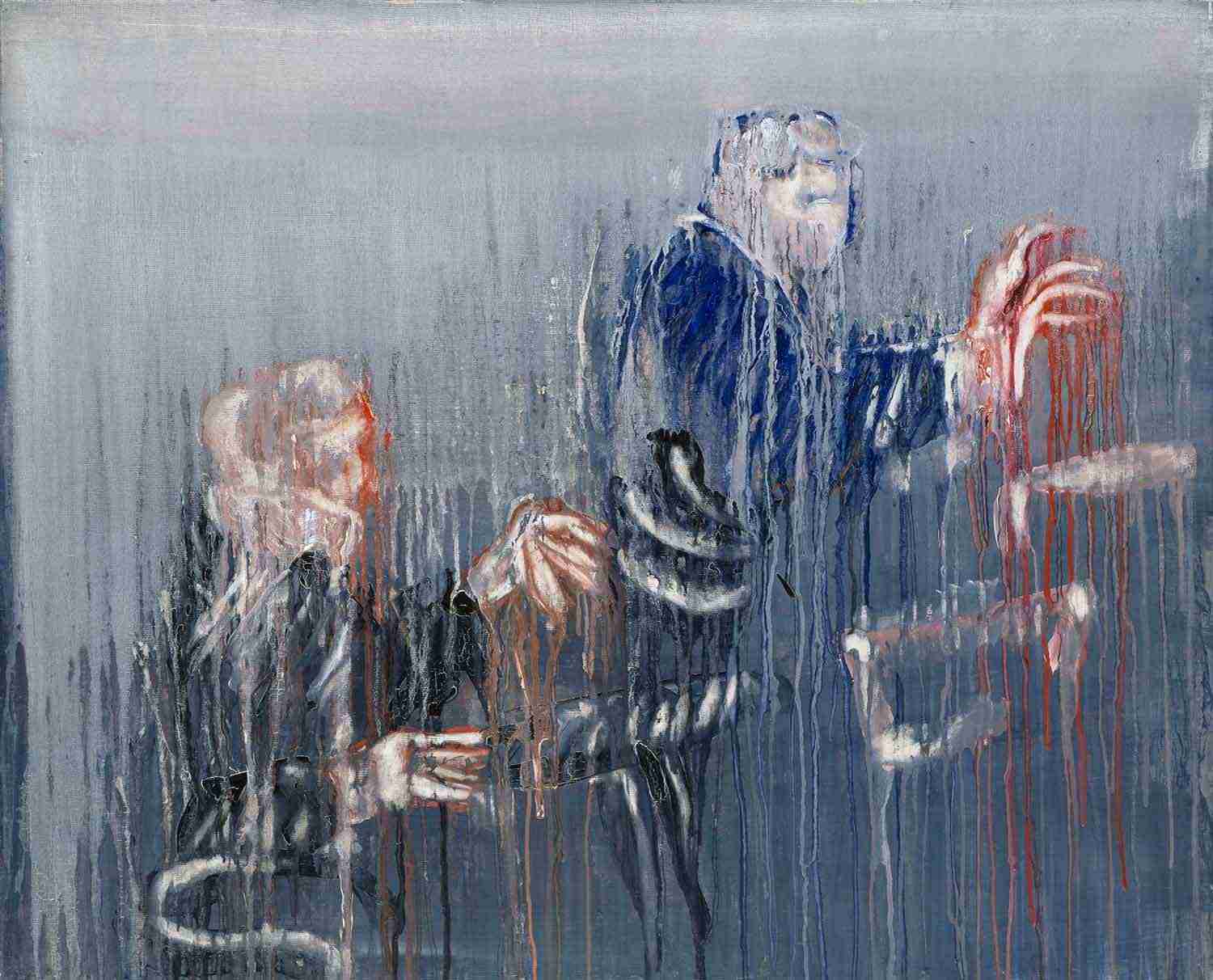
I giudici, 1970, oil on canvas 65 x 81 cm.
Solo exhibition in London, Grosvenor Gallery. Exhibition of Italian artists in France, travelling exhibition: Venice (Ala Napoleonica, Museo Correr), Milan, Legnano. Paris, Italian Institute: Selection 1970. Publisher Bruno Alfieri publishes a monograph in Italian and French on her work: Chaises et Voyeurs, by René de Solier. She begins working on the I Giudici, I misteri di Campo S. Margherita and Tiene cara de Leon series.
I giudici, 1970, oil on canvas 65 x 81 cm.
1971
A significant essay on her work is published by Barbara Wright in “Art Review” of 27 February 1971. Her work is displayed at the Galliera Museum in an exhibition organised by the National Museum of Modern Art: Peinture et Objets- Paris 1971. Solo exhibition at Galleria La Nuova Loggia (Bologna), text in the catalogue by Jacques Lassaigne.
1972
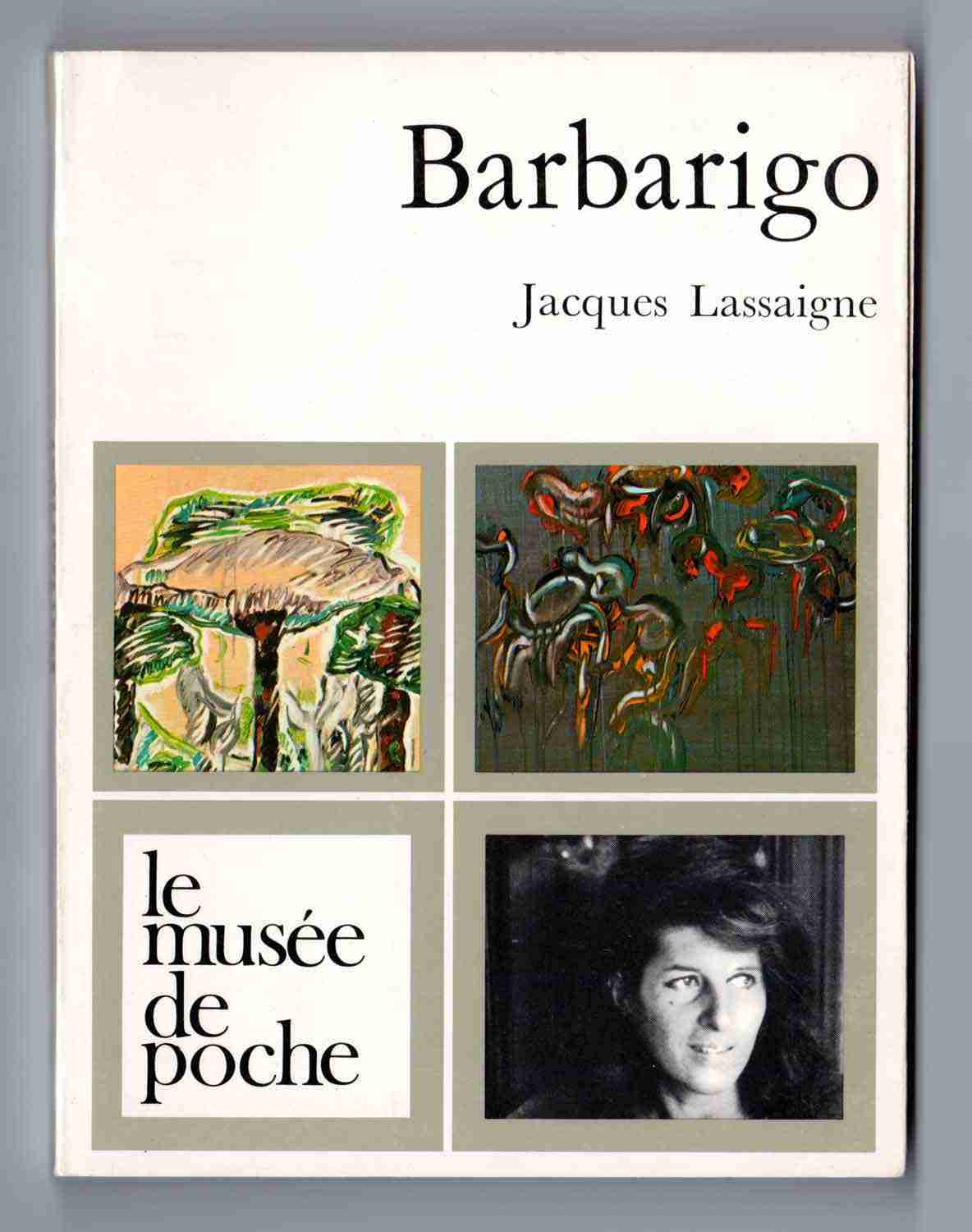
Cover of the monograph dedicated to the artist, “Musée de Poche” series.
Retrospective in Paris, Musée d’Art Moderne de la Ville da Paris: Barbarigo peintures with works from 1964 to 1972. Jacques Lassaigne, the museum’s ‘Conservateur en Chef’, curates the exhibition and also writes a monograph dedicated to the artist, published in the ‘Musée de Poche’ series. Barbarigo participates in the Venice Biennale (in the graphic works section) and the Biennale of graphic works in Tokyo and Kyoto. His mother, Livia Tivoli, dies.
Cover of the monograph dedicated to the artist, “Musée de Poche” series.
1974
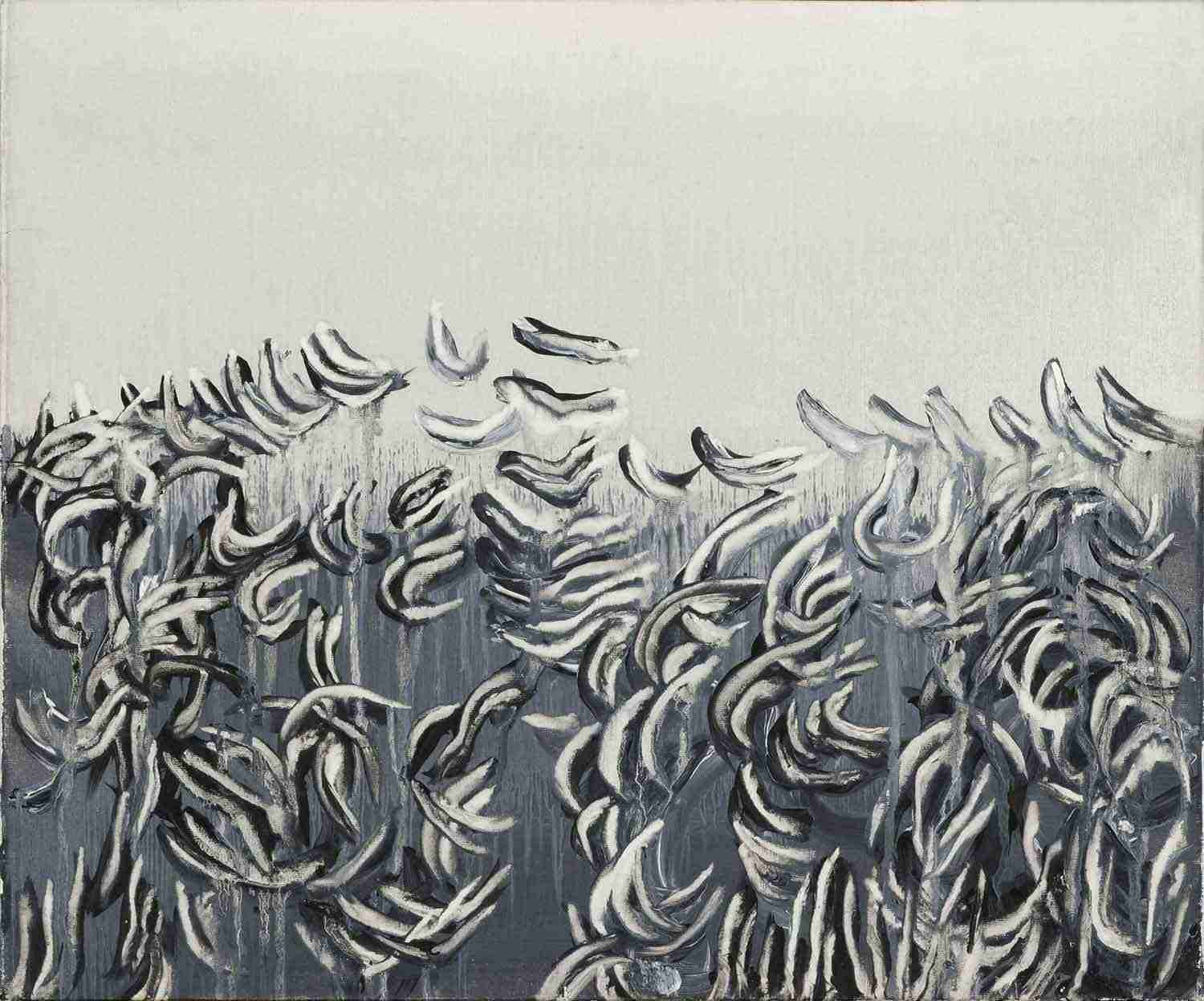
Untitled (Son cose che incantano) undated (1974-1975), oil on canvas 46 x 65 cm.
Travelling exhibition at the museums of modern art in Linz and Vienna. Menton Biennale. Son cose che incantano / Jardins d’Orphée series begun.
Untitled (Son cose che incantano) undated (1974-1975), oil on canvas 46 x 65 cm.
1975
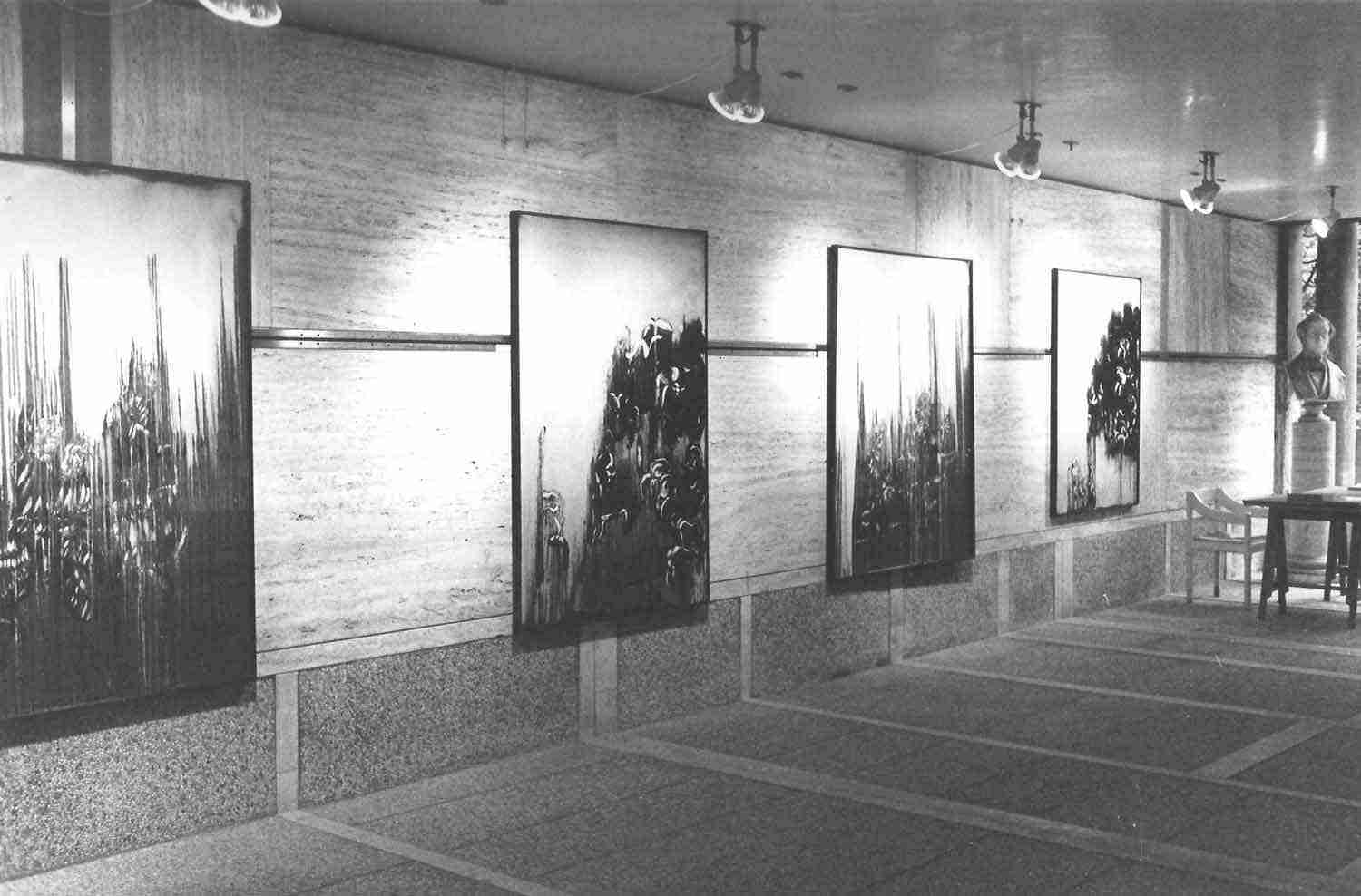
View of the exhibition at the Fondazione Querini Stampalia.
Solo show at the Fondazione Querini Stampalia, Venice. Text in catalogue by Jean Bouret.
View of the exhibition at the Fondazione Querini Stampalia.
1976
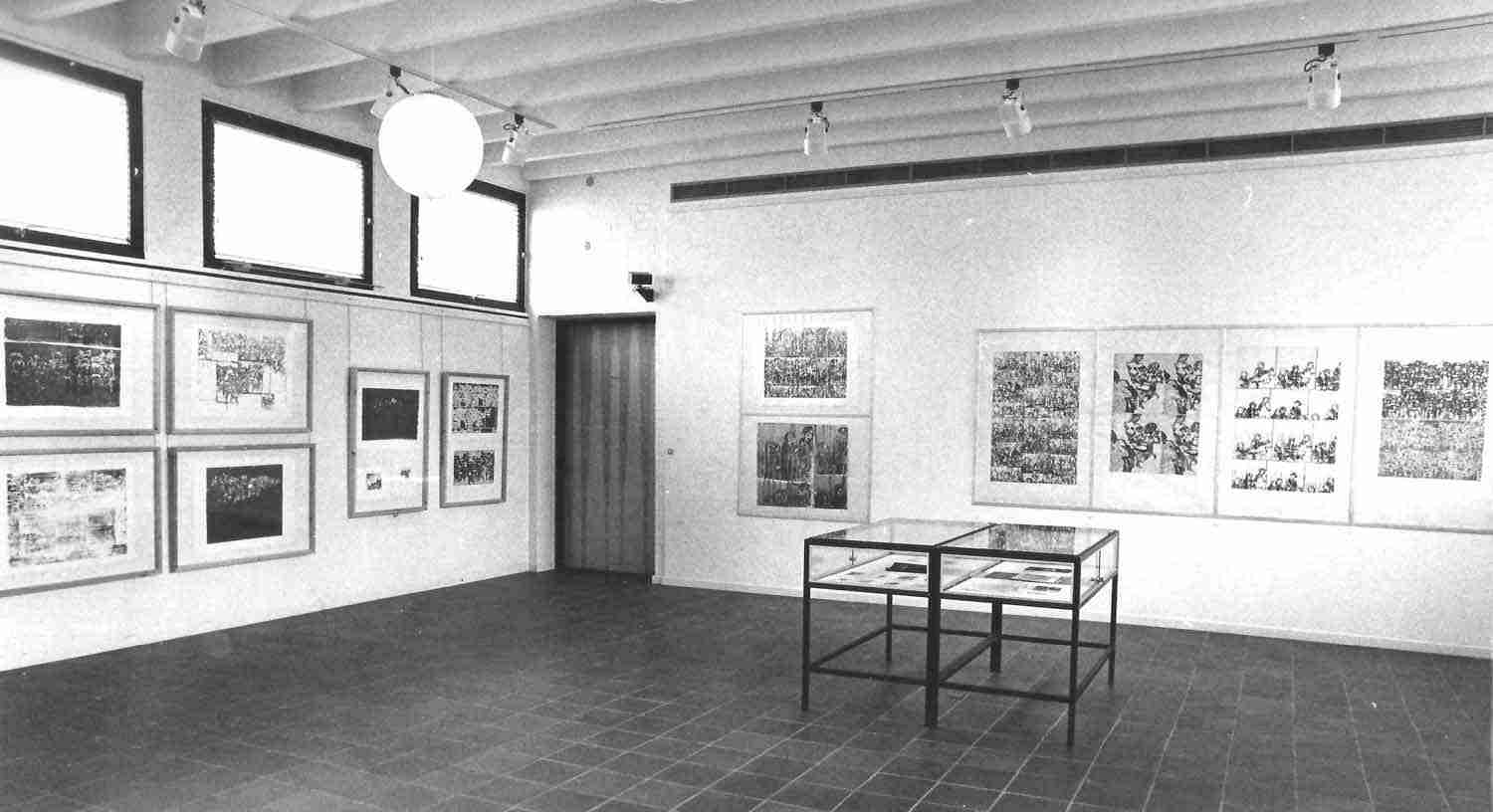
View of the solo show at the Italian Cultural Institute, Hellerup, Copenhagen, Denmark.
Solo show at the Galerie de France, Paris. Text in the catalogue by Giuseppe Mazzariol. Italian Cultural Institute, Copenhagen, then Stockholm. Catalogue text by Gertrude Sutton Köbke. On 18 August, her father Guido dies in Venice.
View of the solo show at the Italian Cultural Institute, Hellerup, Copenhagen, Denmark.
1977
Solo exhibition at the Italian Cultural Institute, Helsinki (text in the catalogue by Luciano Raimondi). Travelling exhibition: Alvar Aalto Museum, Jyväskylä (Finland), Kunstmuseum, Tönder Sönderjyllands. American collector Patti Cadby Birch starts collecting her works. She paints the first pictures of the Persecutori series.
1978
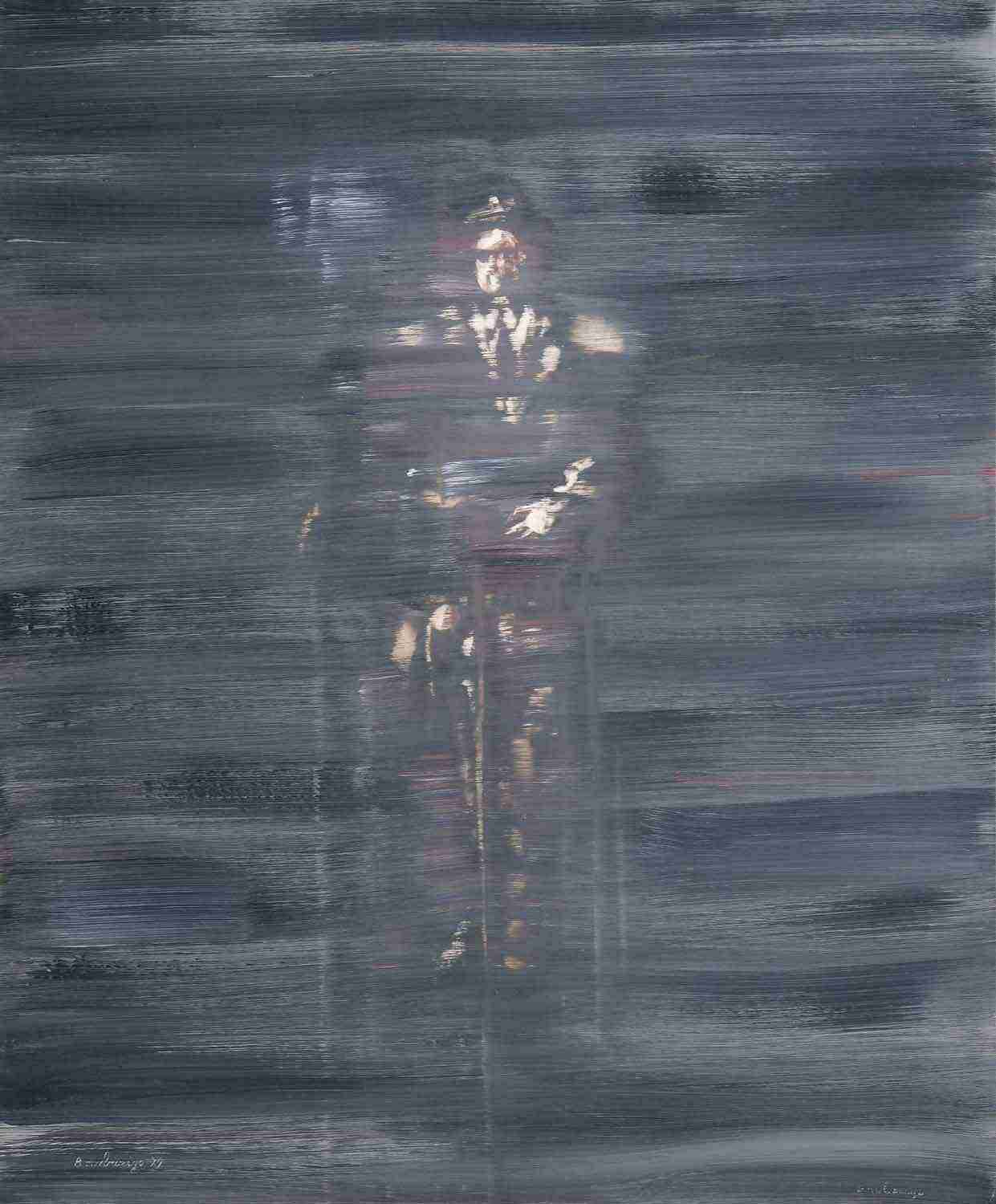
Le persécuteur, 1979, oil on canvas 105 x 87 cm.
She exhibits at the Venice Biennale in a dedicated room: I Persecutori, curated by Luigi Carluccio, who also writes the catalogue text.
Le persécuteur, 1979, oil on canvas 105 x 87 cm.
1979
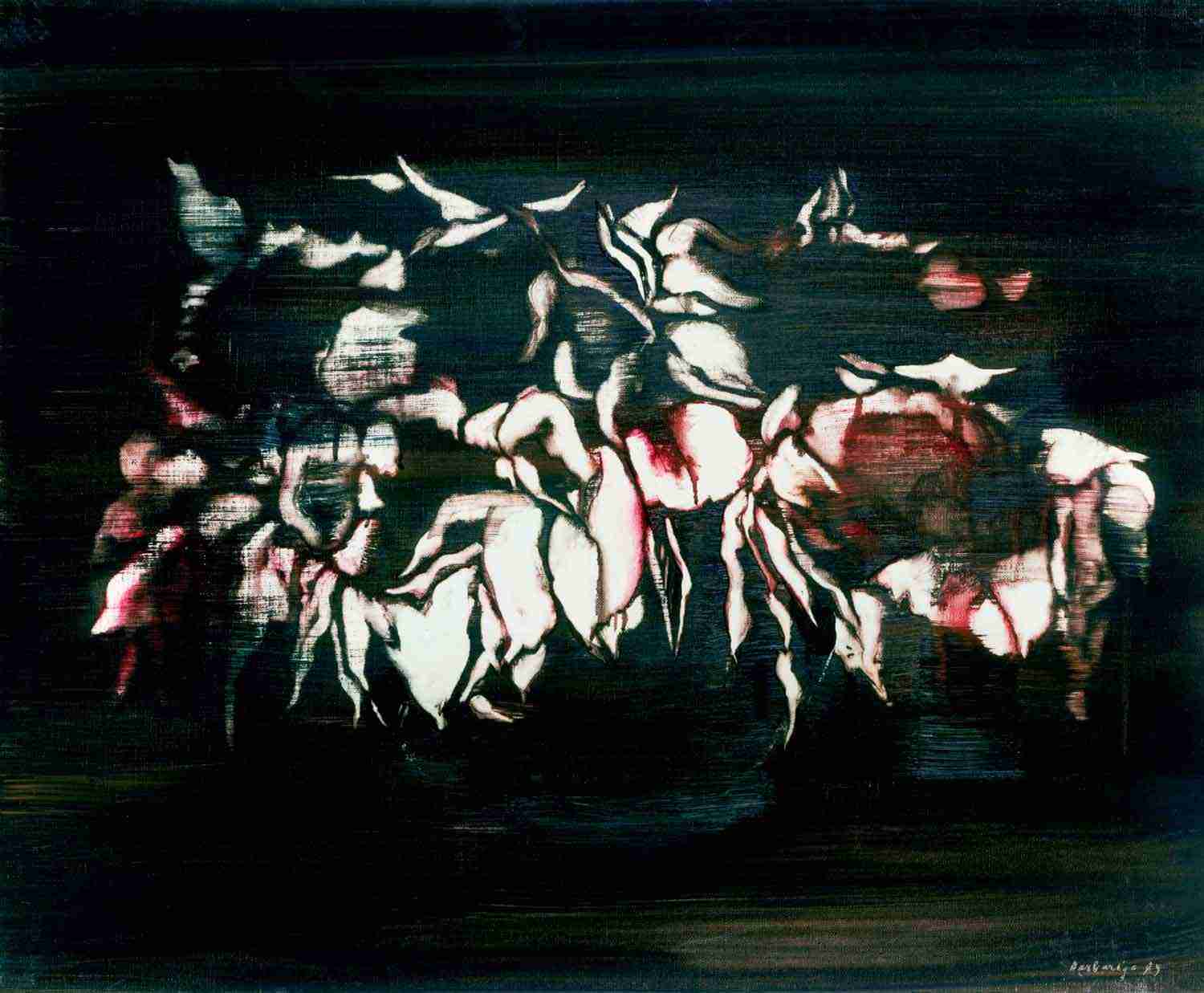
Diventar peonia / Devenir pivoine, 1979, oil on canvas 55 x 65 cm.
Solo exhibition at Galleria Il Traghetto, Venice. Text in the catalogue by Giuseppe Mazzariol. She begins the Fiori series (with titles such as Devenir Pivoine, Roses, Feuilles…etc.)
Diventar peonia / Devenir pivoine, 1979, oil on canvas 55 x 65 cm.
1980
Giuseppe Mazzariol writes the monograph “Fiori e Persecutori di Ida Barbarigo” (bilingual French and English edition, Patty Birch, New York 1980). Article by Jean Clair on the artist, published in the ‘NRF’. Beginning of the Autoritratti and Erme series.
1982
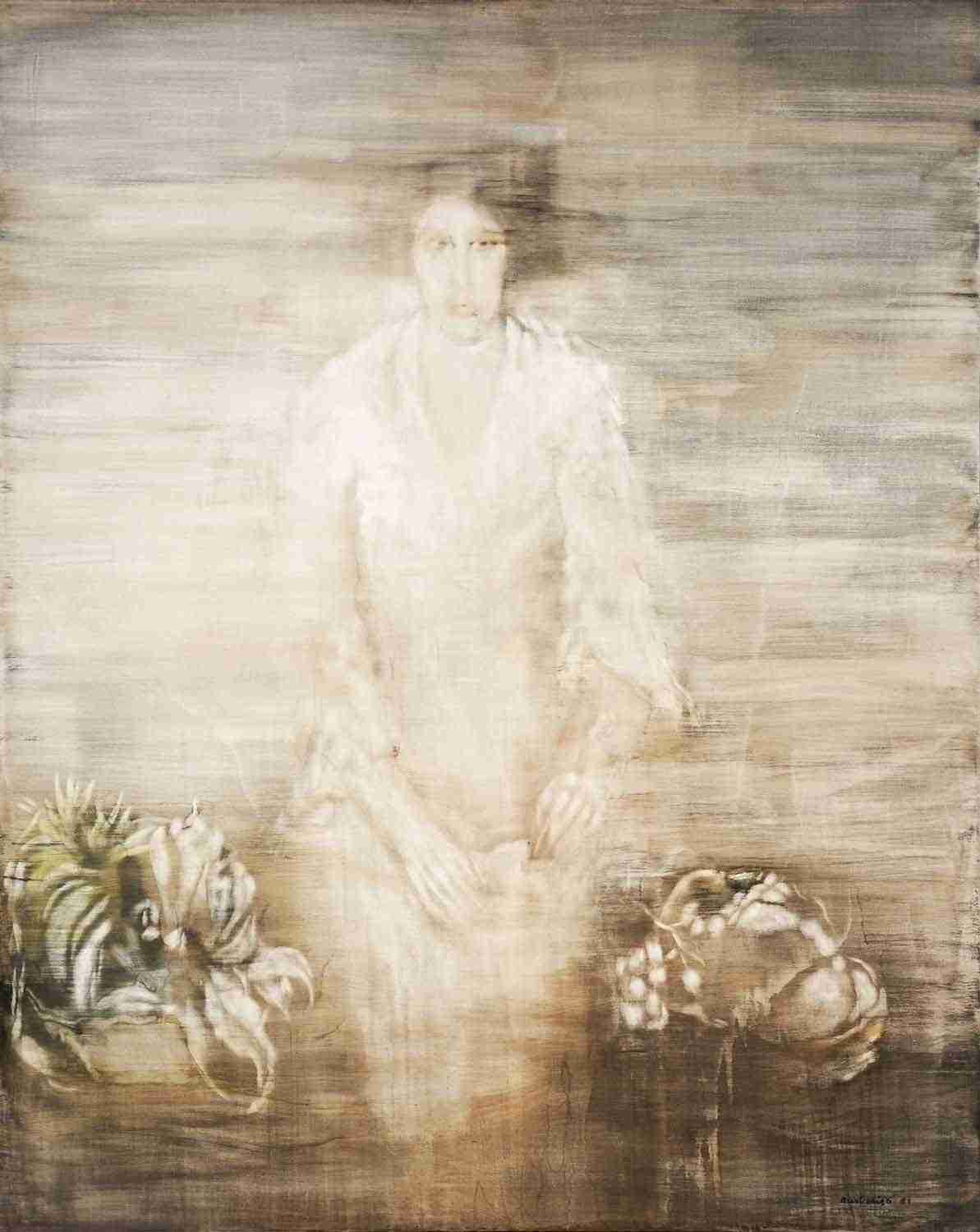
Erma, 1981, oil on canvas 162 x 130 cm.
She exhibits at the Haus der Kunst in Munich. Texts in the catalogue by Eric Steingräber and Jean Clair.
Erma, 1981, oil on canvas 162 x 130 cm.
1983
Series of Nudi. Personal show at the Galleria Manus Presse, Stuttgart.
1985
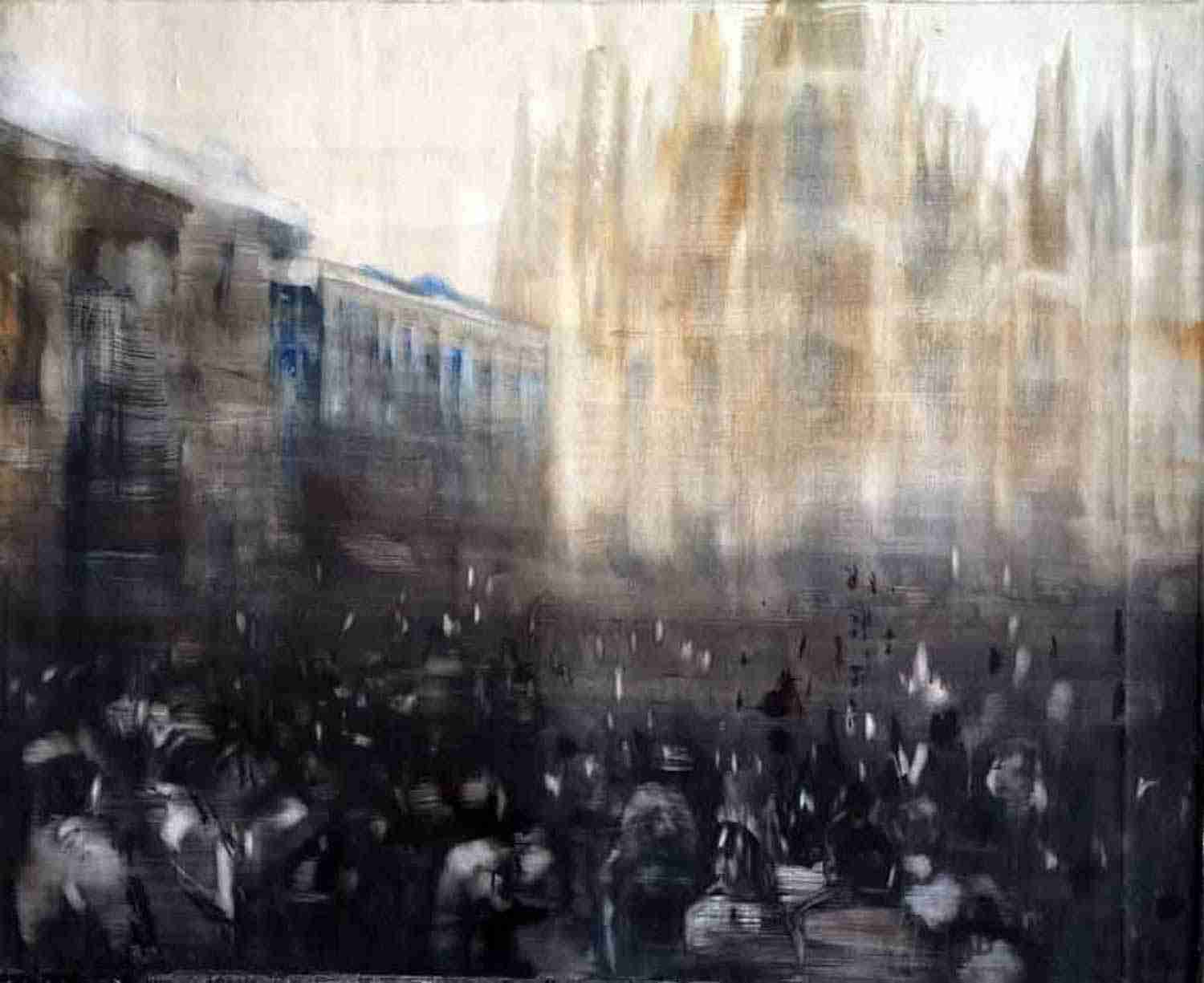
Untitled (La ville), 1985 c. oil on canvas 65 x 81 cm.
La Città series.
Untitled (La ville), 1985 c. oil on canvas 65 x 81 cm.
1986-1988
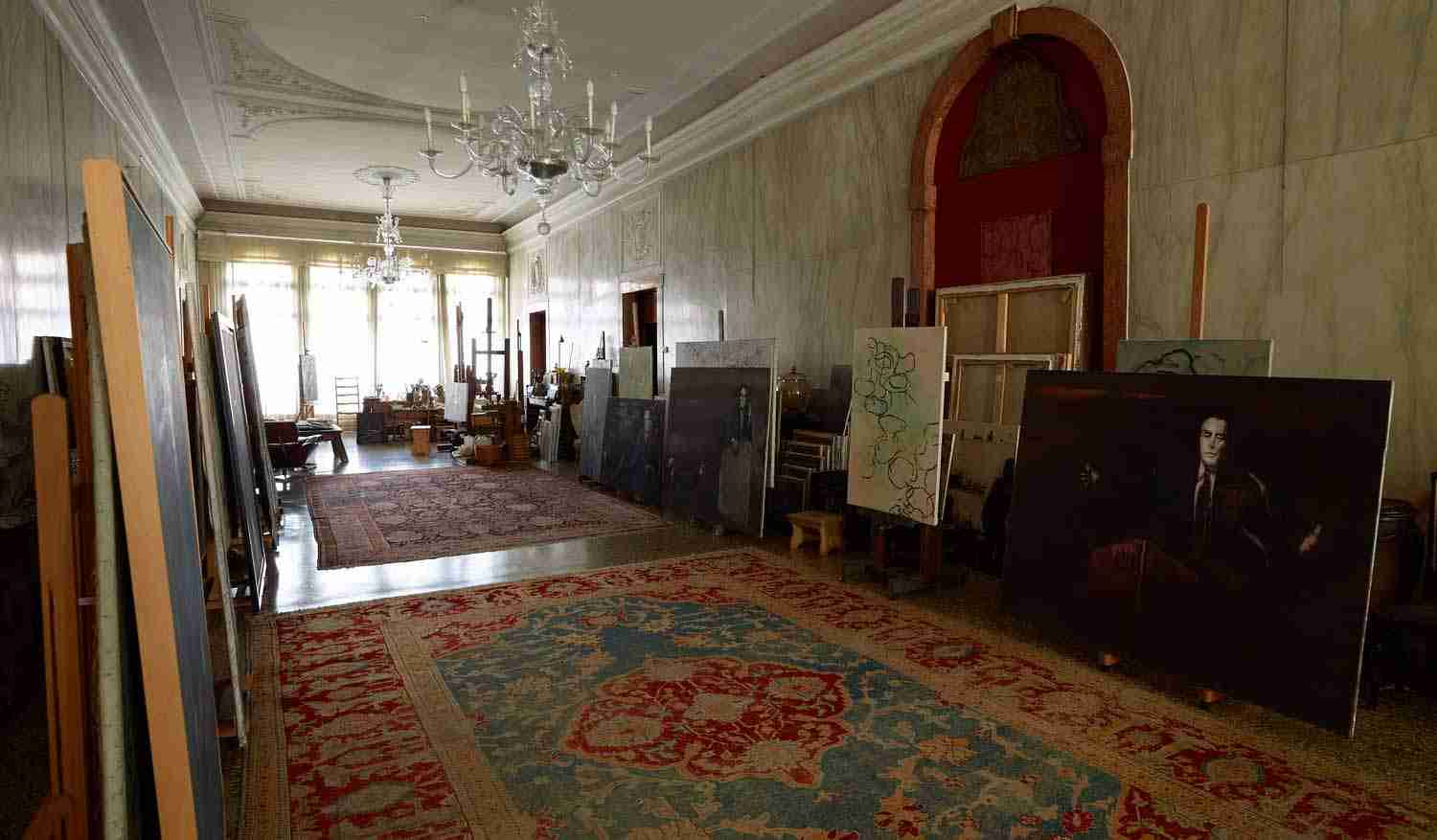
Some portraits of President Mitterrand in the painter’s Venetian studio, Palazzo Balbi (Photo Laziz Hamani, 2016).
The Spiagge series. Solo exhibition at the Kara Gallery, Geneva (1987). Text in the catalogue by Sylvio Acatos. The Presidency of the French Republic commissions a portrait of President Mitterrand, to be exhibited at the Elysée Palace.
The President always used to come to Venice, and slept here, in this room, which we now call the ‘President’s room’, with my father’s paintings. Sometimes he would come with Anne and Mazarine, sometimes he would bring some friends on holiday. And each time he would say to me: ‘Quelle chance vous avez d’être née à Venise’. And he would look askance at me. (…) Until the end he came to see us; he would stay here, resting; I heard him on the phone just before he left… (…) And I also had to paint his portrait. I don’t do portraits, I told him I couldn’t: ‘Monsieur le Président, je ne fais pas de portraits’. And he: ‘Essayez’. And I portrayed myself. Then he says to me: ‘Je vous l’ordonne! C’est une commande d’État’. It was hard to say no to him.
The artist quoted by Laura Bossi Régnier, in Daniela Ferretti (ed.), La Bottega Cadorin. Una dinastia di artisti veneziani. Antiga edizioni, Crocetta del Montello, Treviso, 2016 pp. 55-56.
Some portraits of President Mitterrand in the painter’s Venetian studio, Palazzo Balbi (Photo Laziz Hamani, 2016).
1988
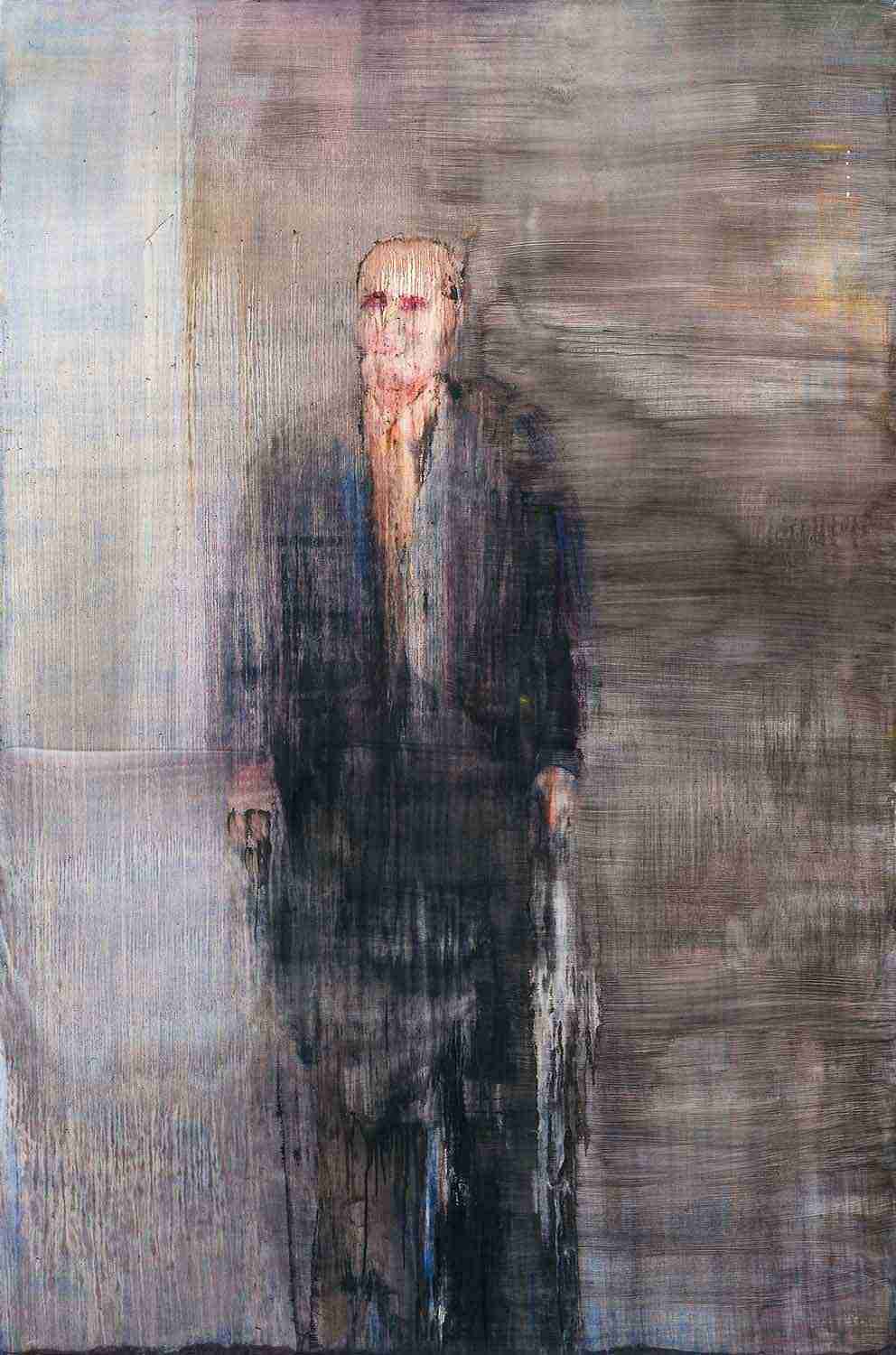
Le Président Mitterrand, 1987, oil on canvas, 195 x 130 cm.
Exhibition at the Galerie des Amis des Arts, Neuchatel, presented by Sylvio Acatos. Exhibited at the Contini Gallery, Venice-Mestre. In March 1988 the magazine ‘Die Kunst’ in Munich publishes an editorial by Regina Löewe and an essay by Wolfgang Saurè. The same magazine publishes an interview by Regina Löewe and Wieland Schmied in September: Ritratto di un uomo di Stato.
Le Président Mitterrand, 1987, oil on canvas, 195 x 130 cm.
1989-1990
Cover of the catalogue of the exhibition at the Museo Diocesano di S. Apollonia.
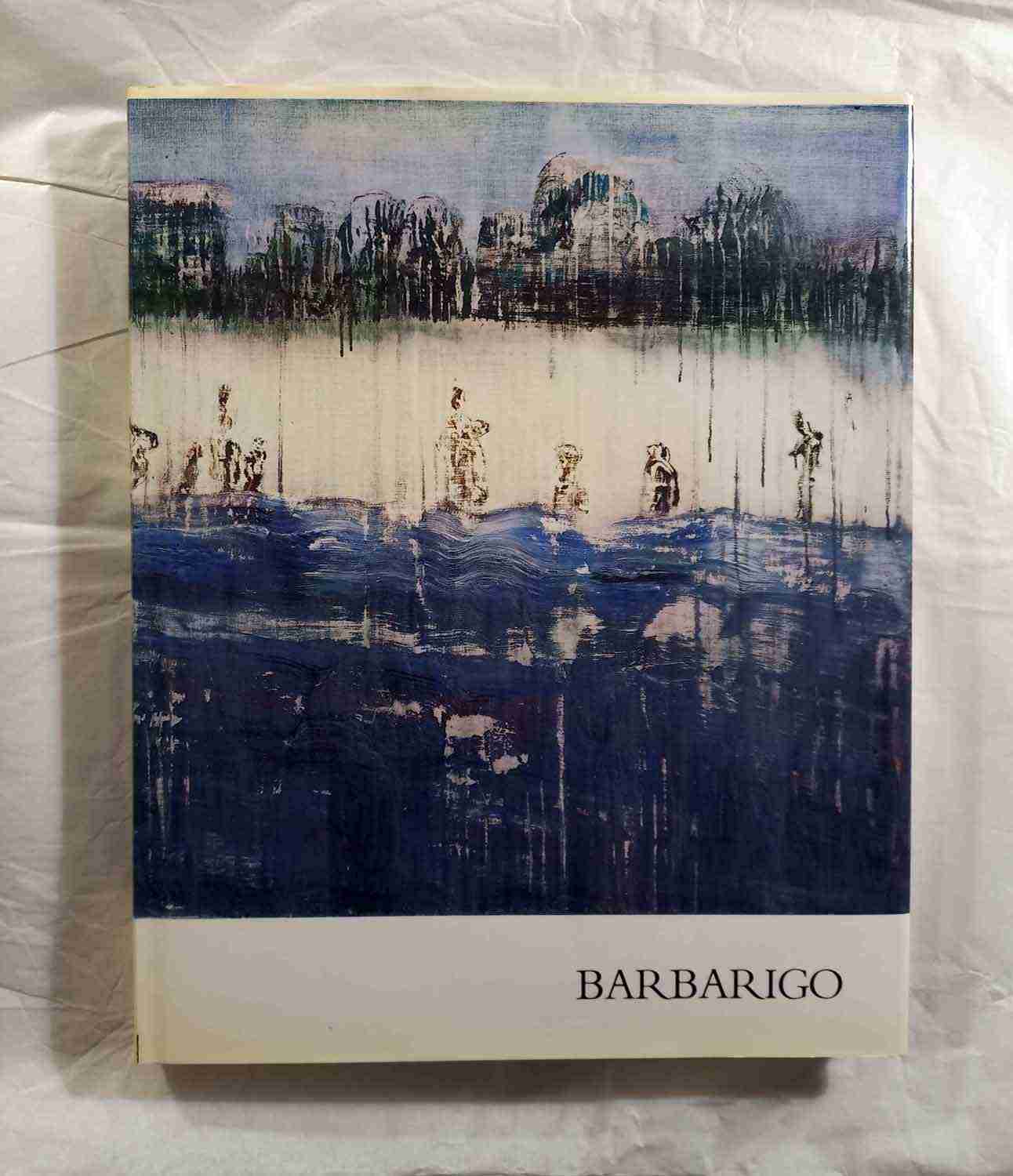
The Luoghi series begins. Il Parco – La Città series. The artist exhibits at the Museo d’Arte Moderna Rimoldi in Cortina d’Ampezzo; at the Museo Diocesano di S. Apollonia, Venice (catalogue texts by Paolo Rizzi, Gino Nebiolo, Alberto Fiz); at the Galleria Contini, Venice (‘Tancredi-Barbarigo 1950-1960’exhibition, text by Paolo Rizzi); at the Atelier Lambert gallery, Paris (‘Works on paper’exhibition, catalogue text by Jean Clair).
Cover of the catalogue of the exhibition at the Museo Diocesano di S. Apollonia.
1991
She exhibits at the Krugier-Ditesheim Gallery, Geneva (text in catalogue: Jean Clair).
1992-1993
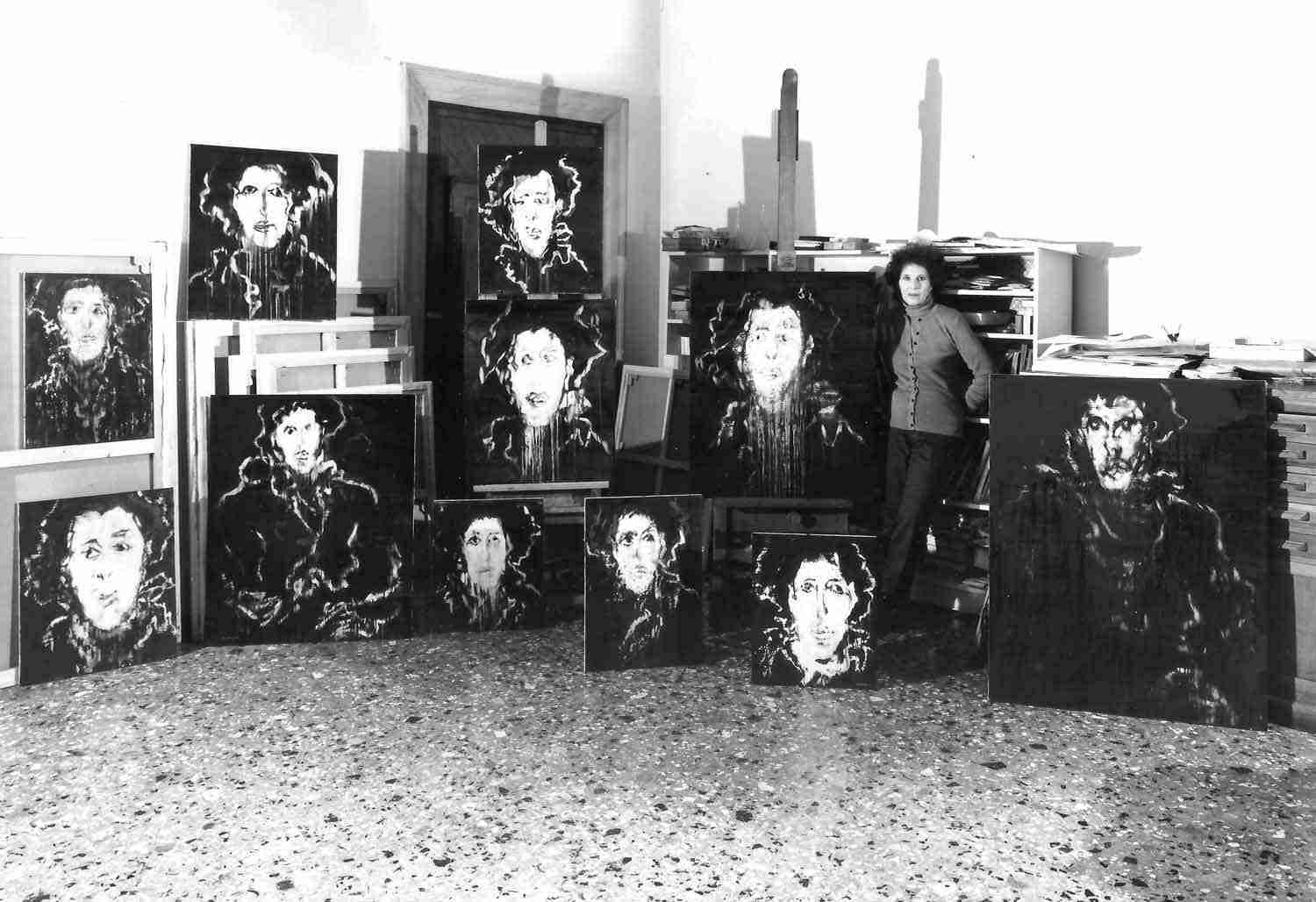
Ida Barbarigo photographed in the studio of Palazzo Balbi among the self-portraits (photo Claudio Franzini).
Series of self-portraits: Egiziaca, Teste minacciose…
Ida Barbarigo photographed in the studio of Palazzo Balbi among the self-portraits (photo Claudio Franzini).
1994
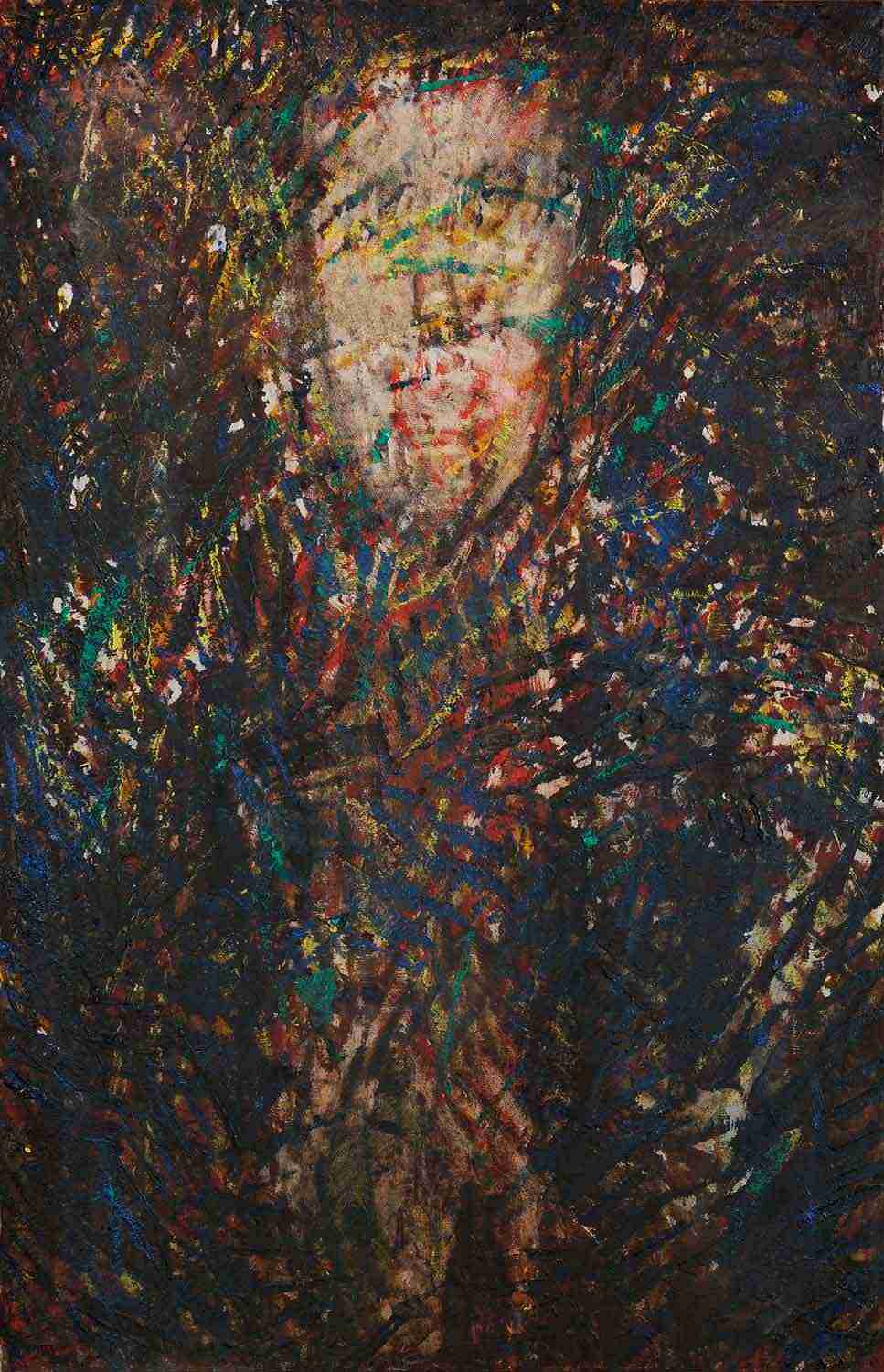
Sfinge, 1994, oil on canvas 100 x 65 cm.
Vallois Gallery, Paris, text in catalogue by Philippe Carteron. The same gallery presents the exhibition at the Salon de Mars. Series of Sfingi (Sphinxes).
Sfinge, 1994, oil on canvas 100 x 65 cm.
1995
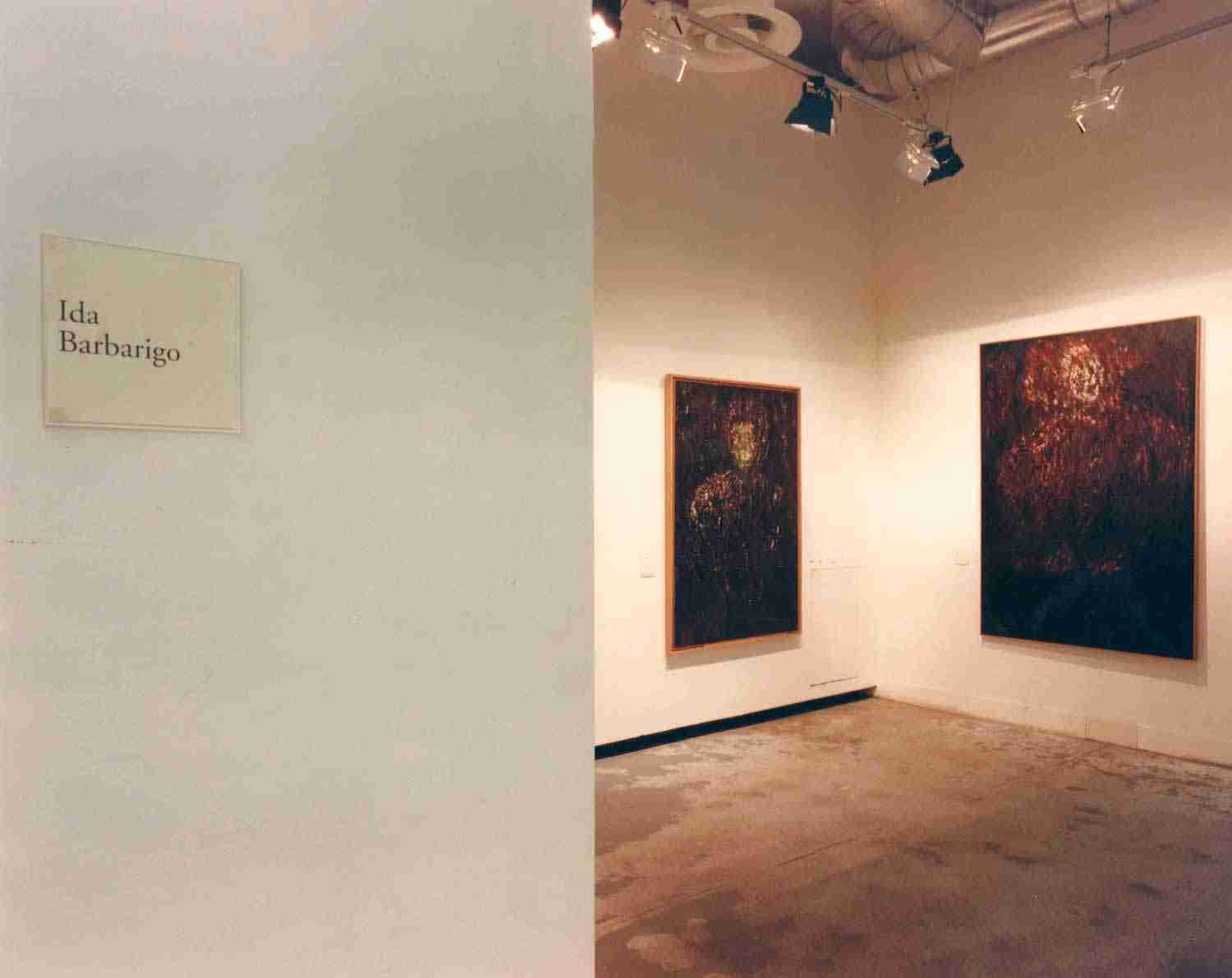
Room at the Biennale, view of the installation with the large paintings from the Sfinge cycle.
Solo room at the Biennale del Centenario, curated by Jean Clair.
Room at the Biennale, view of the installation with the large paintings from the Sfinge cycle.
1996-1997
Solo shows in Neuchâtel (Galleria Ditesheim), Venice and Cortina (Galleria Contini): she exhibits I Volti, texts in the catalogue by Paolo Levi and Michael Peppiat. Article by Sebastiano Grasso in the Corriere della Sera of 2 February 1997.
1998
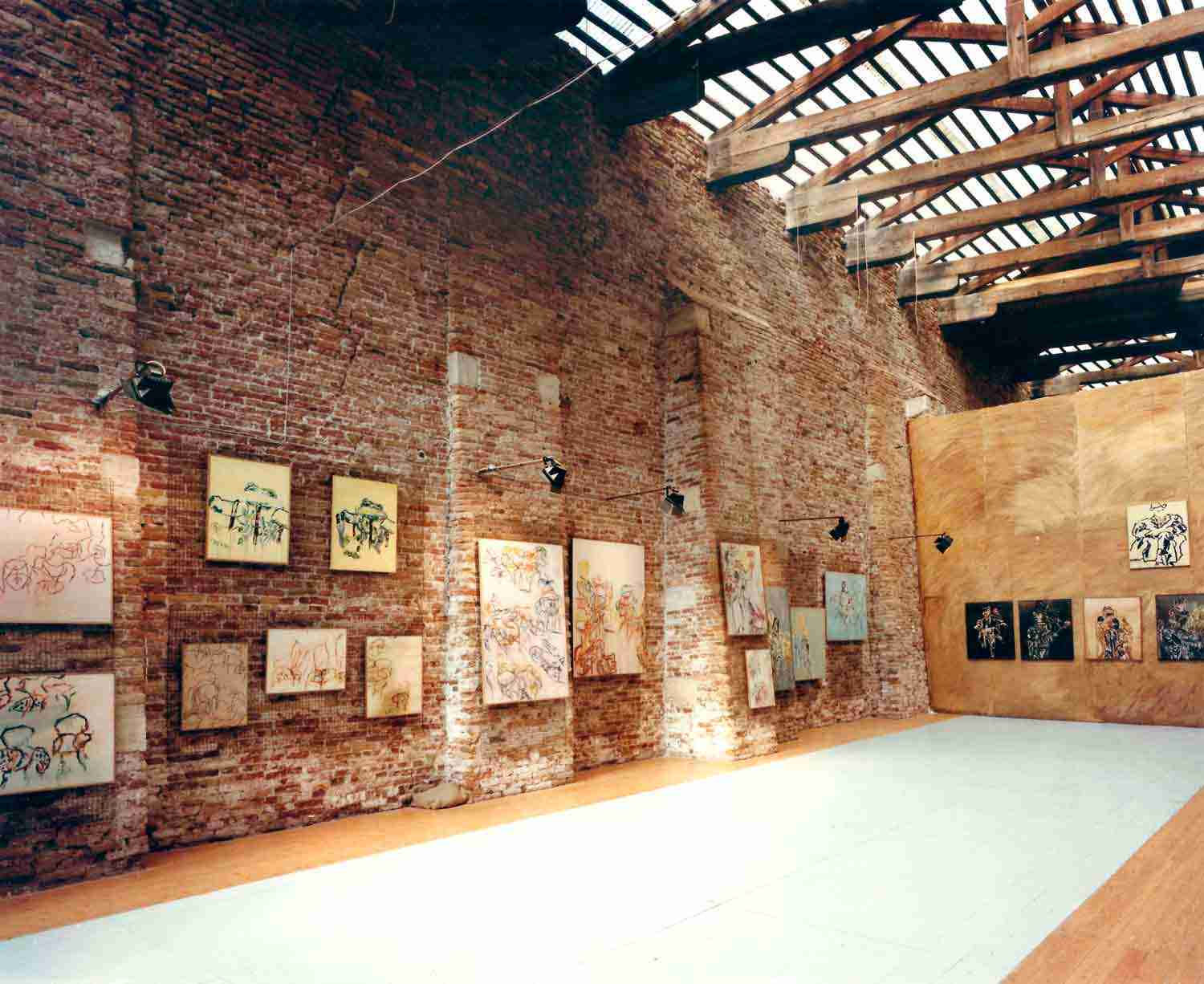
View of the ‘Alle Zattere 1962-1976’ exhibition at the Magazzini del Sale.
Galleria Maggiore, Bologna: ‘La Cerchia di Saturno’ exhibition, text in catalogue by Marilena Pasquali. Exhibition at Magazzini del Sale, Venice (Ikona Gallery): Alle Zattere 1962-1976. Catalogue text by Giuseppina Dal Canton. Italarte Gallery, Rome. Essay by Rossana Bossaglia. Article by Giorgio Soavi in “Corriere della Sera” of 19 October 1998. Article by Pietro Sanavio in “Liberazione”.
View of the ‘Alle Zattere 1962-1976’ exhibition at the Magazzini del Sale.
1999
Ikona Gallery, Magazzini del Sale, Venice: ‘La cerchia di Saturno e la dimora di Dioniso’. Catalogue text by Riccardo Held.
2000
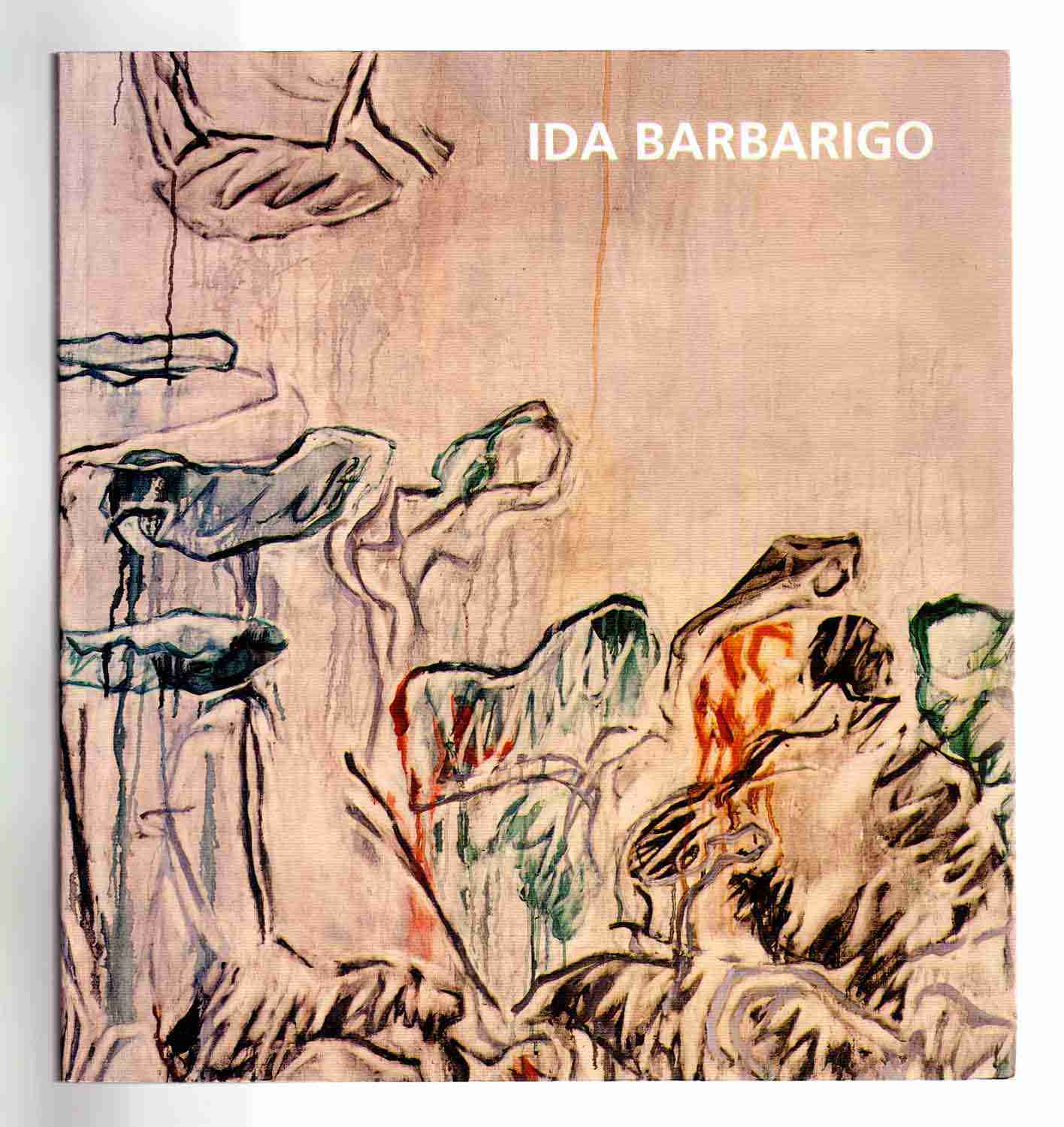
Bilbao exhibition catalogue.
Solo show at BBK Foundation, Bilbao. Catalogue text by Kosme de Barañano.
Bilbao exhibition catalogue.
2001
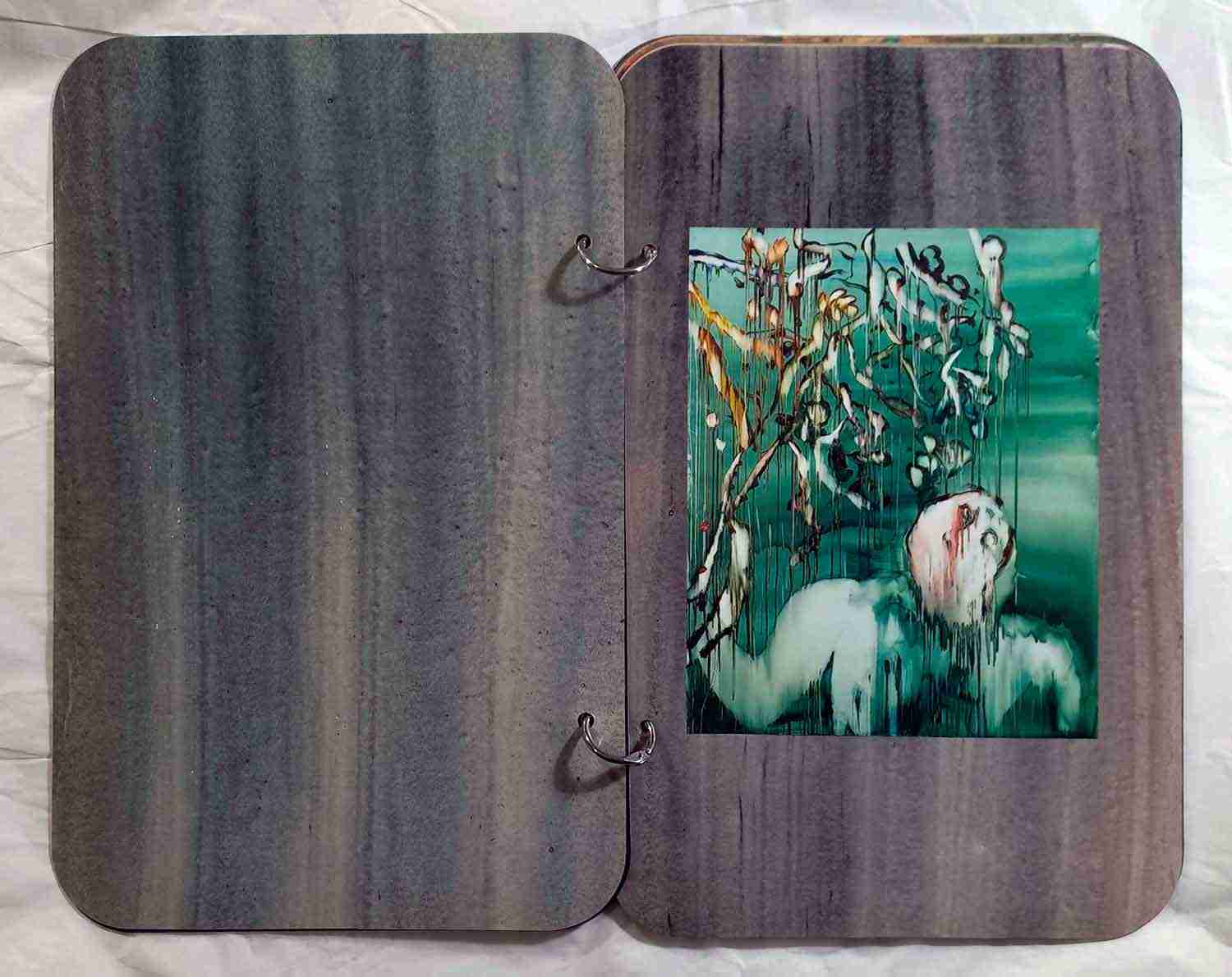
Catalogue of the exhibition at the Magazzini del Sale.
Ikona Gallery, Magazzini del Sale, Venice: ‘Guardando, guardando’. Catalogue text by Luca Massimo Barbero.
Catalogue of the exhibition at the Magazzini del Sale.
2002
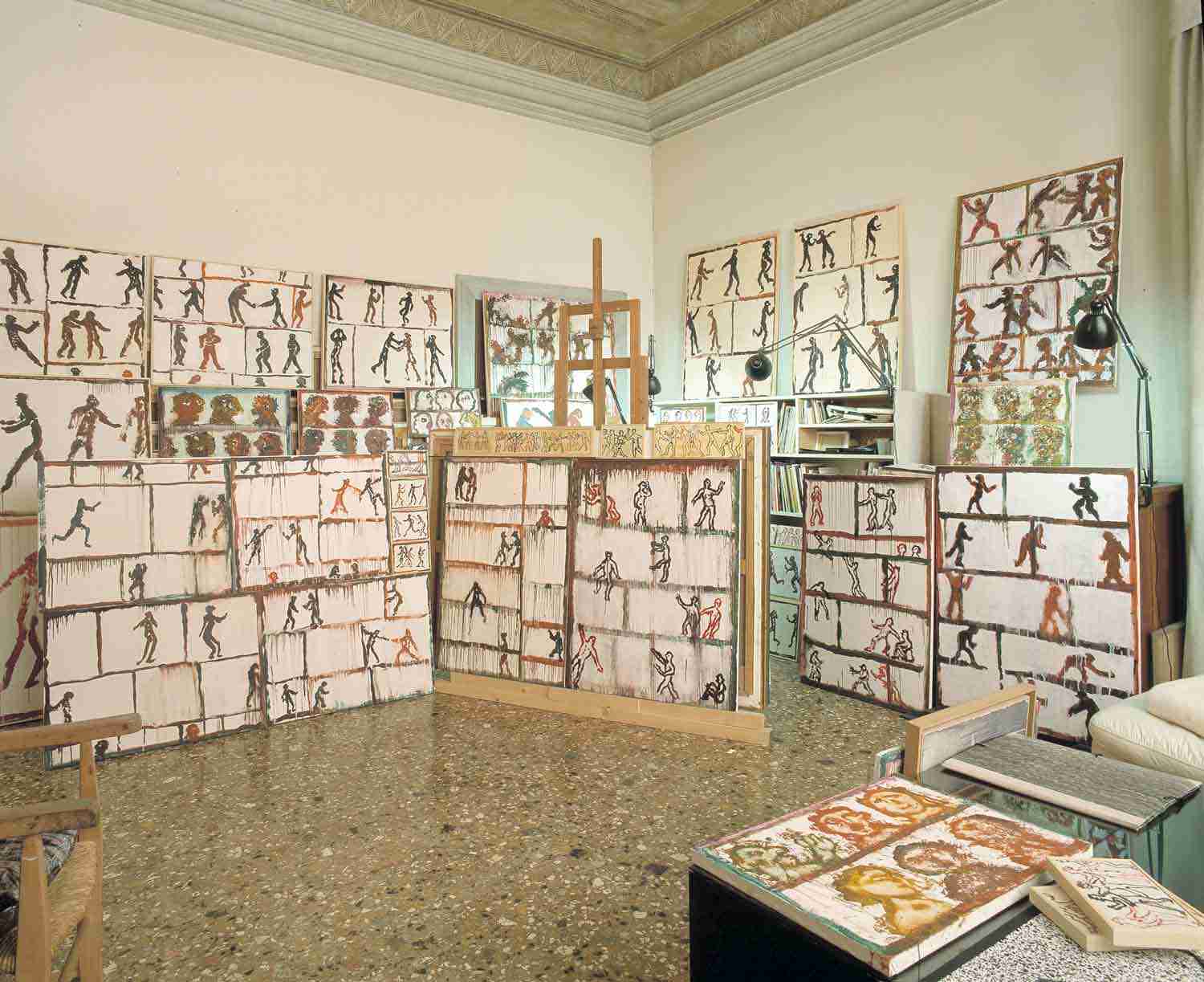
Paintings from the Terrestri series set up in the artist’s studio (Palazzo Balbi Valier, Venice).
Solo exhibition at Palazzo Te, Mantua: ‘Ida Cadorin Barbarigo. Opere recenti’, curated by Živa Kraus. Text in catalogue by Jill Lloyd. Paris, Albert Benamou Gallery: ‘Peintures 1978-2002’. Catalogue text by Jean Clair. Beginning of the Terrestri series (until 2007).
These mammals of the Terrestrials, invading my home, I don’t know what they are, where they come from. Tthey were born a bit in bulk, people coming in and out of the paper, in halves, oil paintings on paper. There was no way to stop them. But I can’t explain them. I am just an instrument, me, the plant that produces these Earthlings. As if they were tomatoes.
The artist quoted by Marco Vallora, in Daniela Ferretti (ed.), La Bottega Cadorin. Una dinastia di artisti veneziani. Antiga edizioni, Crocetta del Montello, Treviso, 2016 p. 284.
Paintings from the Terrestri series set up in the artist’s studio (Palazzo Balbi Valier, Venice).
2004
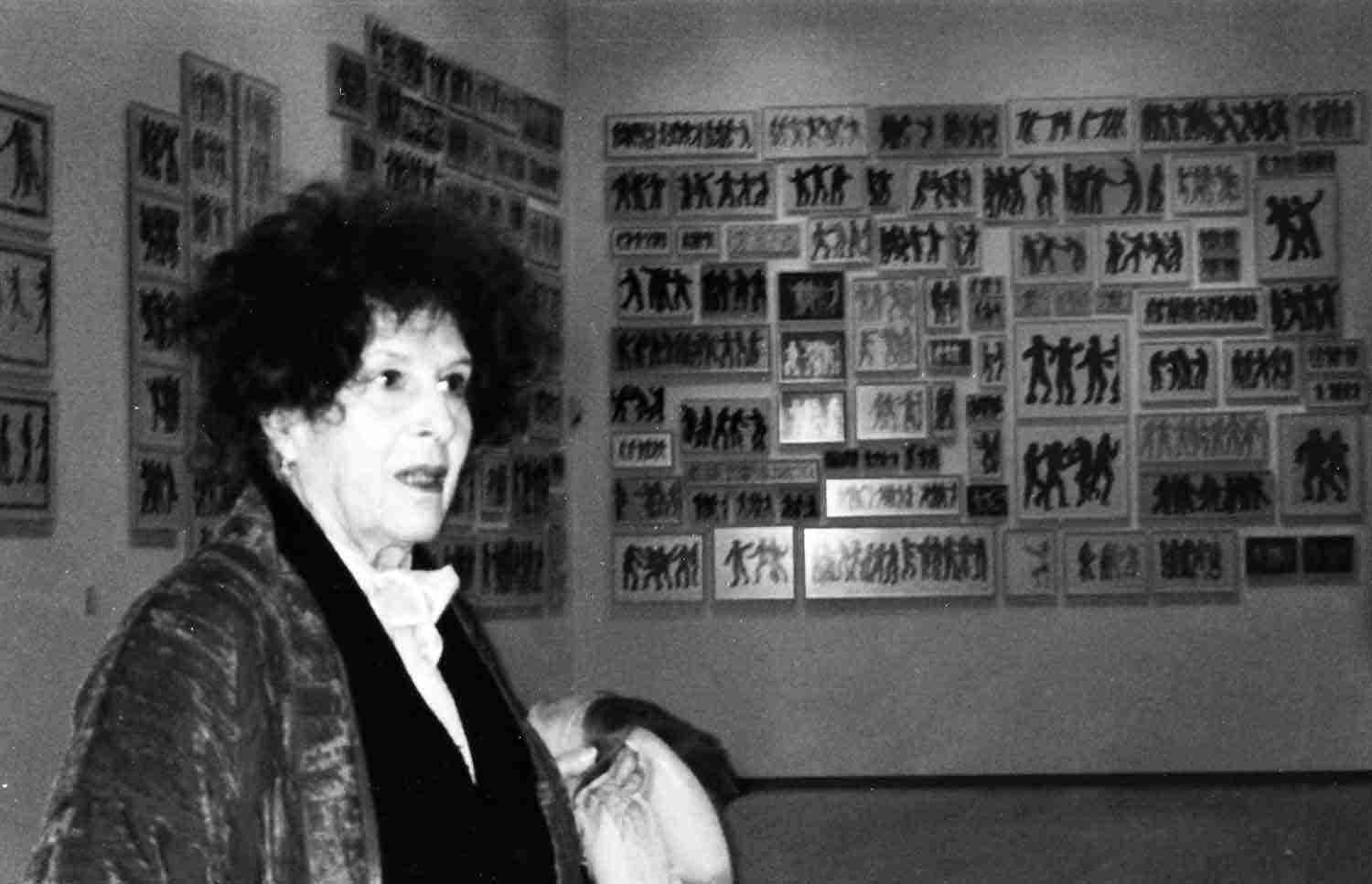
Ida Barbarigo visiting her solo exhibition at IVAM. On the walls, paintings from the Terrestri series.
Solo exhibition at the Galleria Contini (April-May): ‘Ida Barbarigo Cadorin. I Terrestri’. Retrospective at the Museum of Modern Art in Valencia (IVAM), curated by Kosme de Barañano (November-January 2005). Catalogue texts by Kosme de Barañano, Jean Clair, Sabine Schulze; interview with the artist by Michael Peppiatt.
Ida Barbarigo visiting her solo exhibition at IVAM. On the walls, paintings from the Terrestri series.
2005
Zoran Music dies at the age of 96.
2006
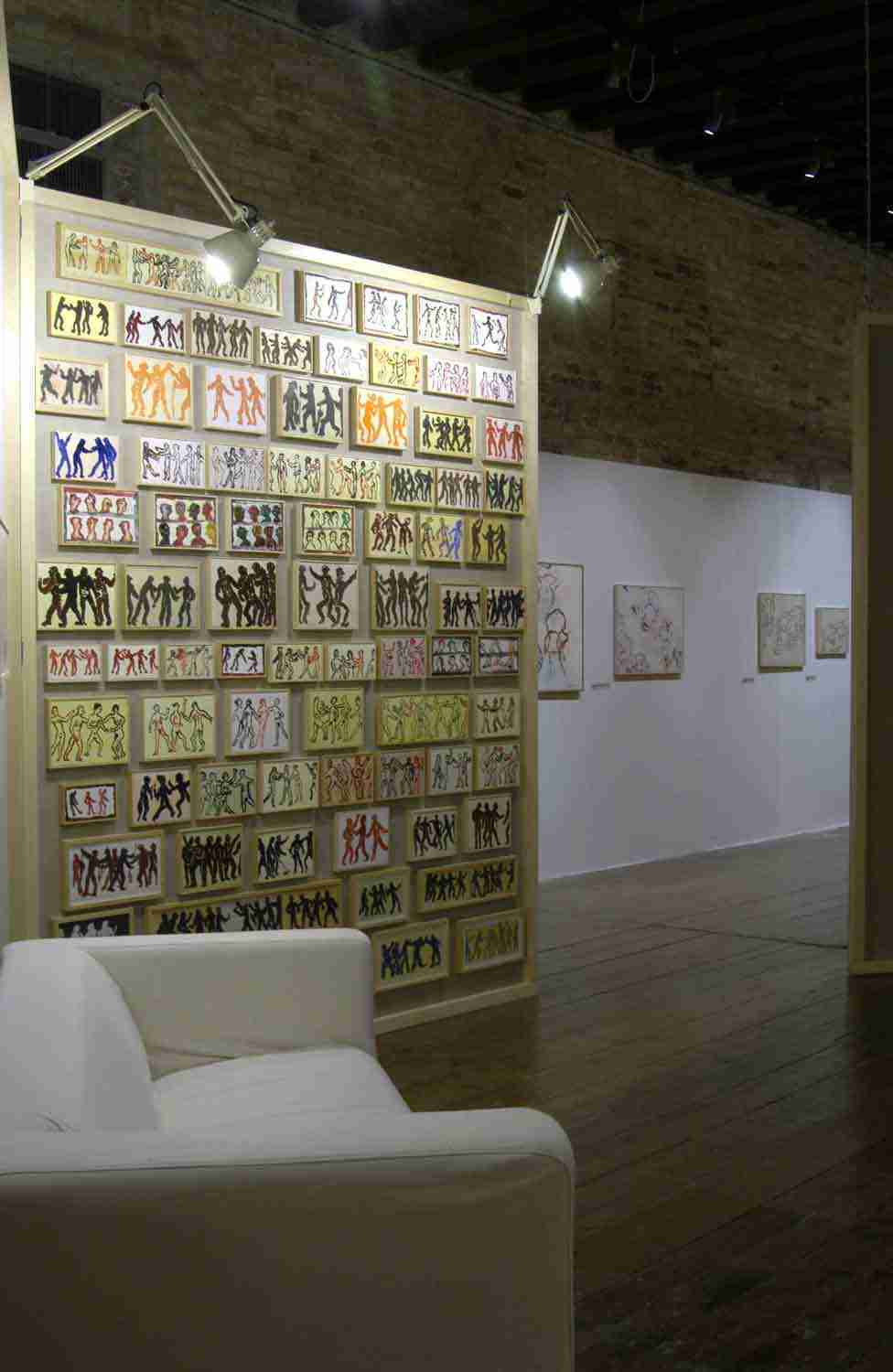
View of the Ida Barbarigo. I Terrestri exhibition. Exhibition layout by Daniela Ferretti.
‘Ida Barbarigo. I Terrestri’ exhibition at Palazzo Fortuny, Venice. Texts by Giandomenico Romanelli, Silvio Fuso, Jean Clair, Kosme de Barañano, Giovanna Dal Bon.
View of the Ida Barbarigo. I Terrestri exhibition. Exhibition layout by Daniela Ferretti.
2009
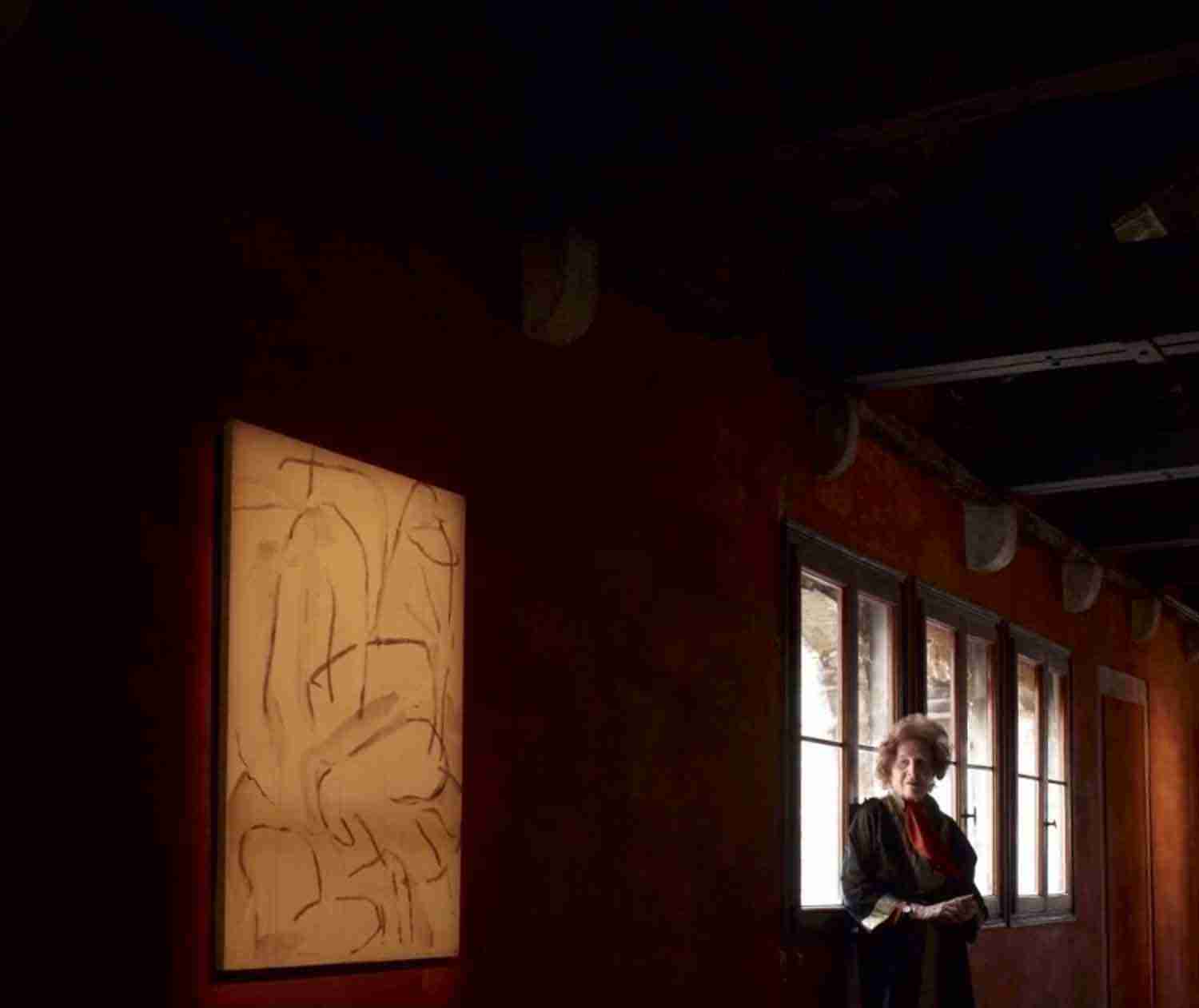
Ida Barbarigo at Palazzo Fortuny (Photo Jean-Pierre Gabriel).
Several of her works are exhibited at In-finitum, curated by Daniela Ferretti, Francesco Poli and Axel Vervoordt at Palazzo Fortuny (Venice).
Ida Barbarigo at Palazzo Fortuny (Photo Jean-Pierre Gabriel).
2011
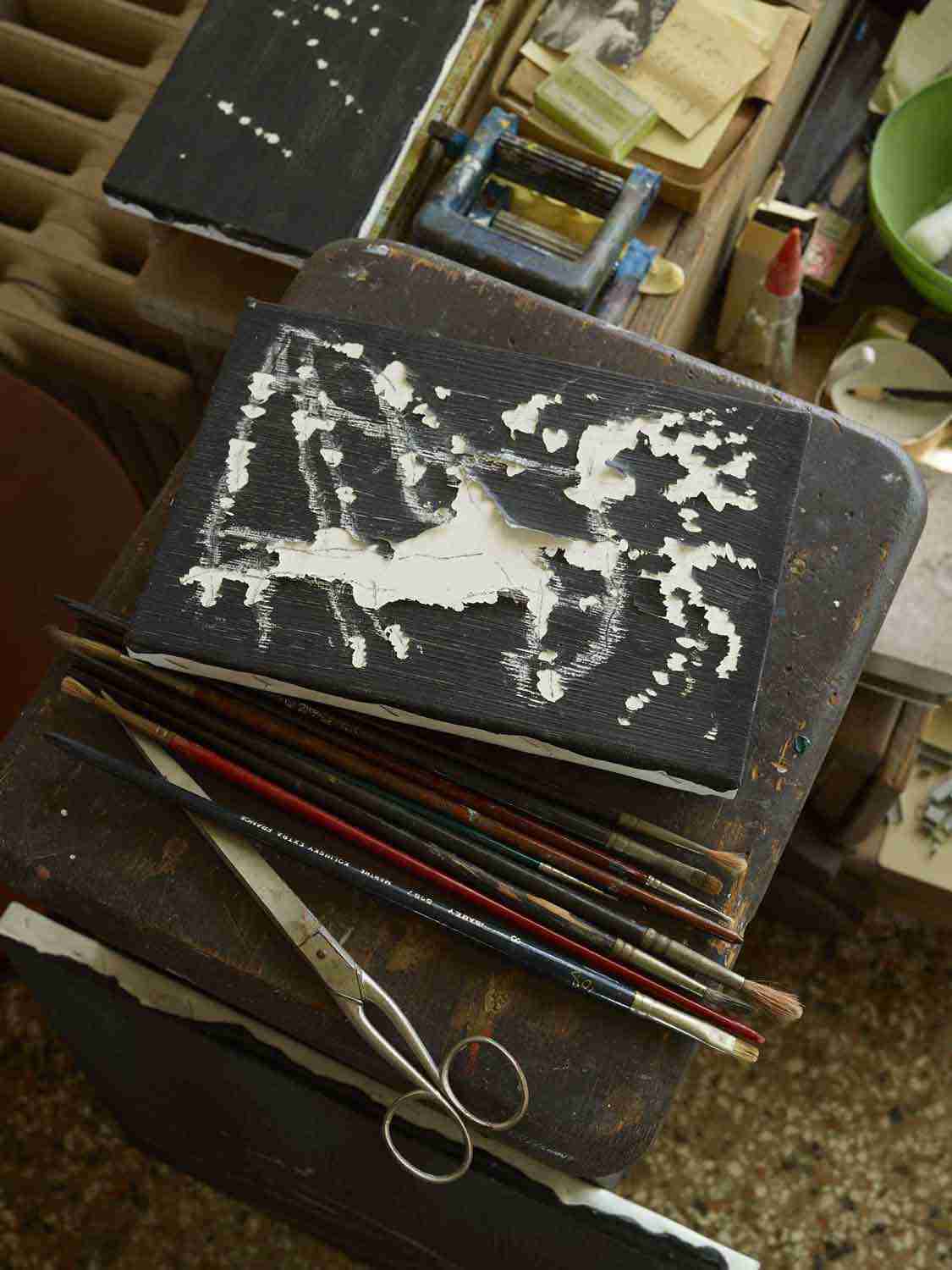
The artist’s studio, in the foreground a painting from the Unità nel Profondo series.
Book (and exhibition at the Estorick Collection, London): ‘Double Portrait. Ida Barbarigo – Zoran Music’ curated by Giovanna Dal Bon. Exhibited at Palazzo Fortuny in the exhibition ‘TRA’, curated by Daniela Ferretti, Rosa Martinez, Francesco Poli and Axel Vervoordt. Towards the end of the year, she starts a new series, which will occupy her over the next two years: Unità nel Profondo.
The artist’s studio, in the foreground a painting from the Unità nel Profondo series.
2015
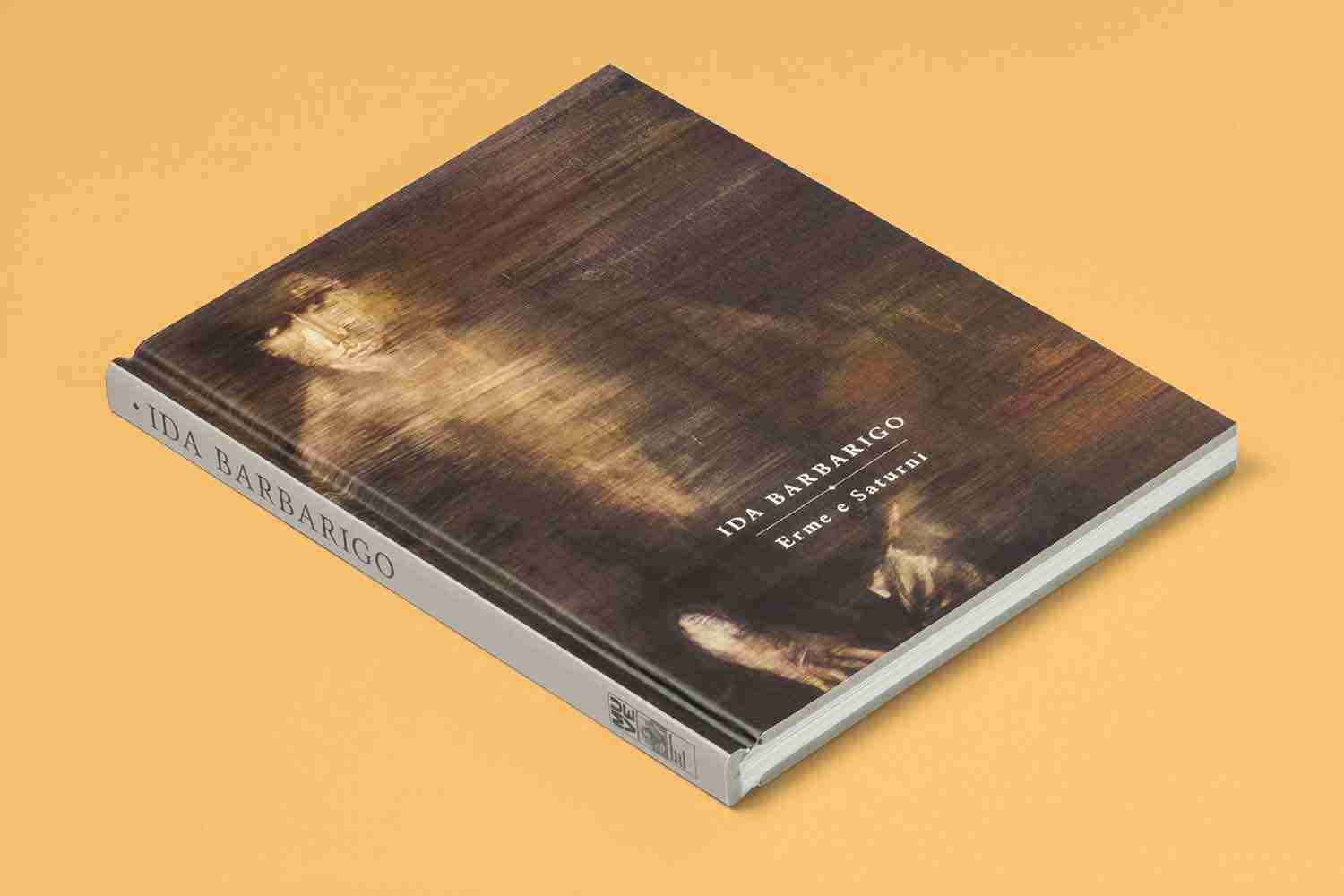
Catalogue of the Erme e Saturni exhibition.
One of her solo exhibitions is part of the ‘Winter at Palazzo Fortuny’ programme: ‘Ida Barbarigo. Erme e Saturni’ curated by Daniela Ferretti, catalogue with text by Luca Massimo Barbero.
Catalogue of the Erme e Saturni exhibition.
2016
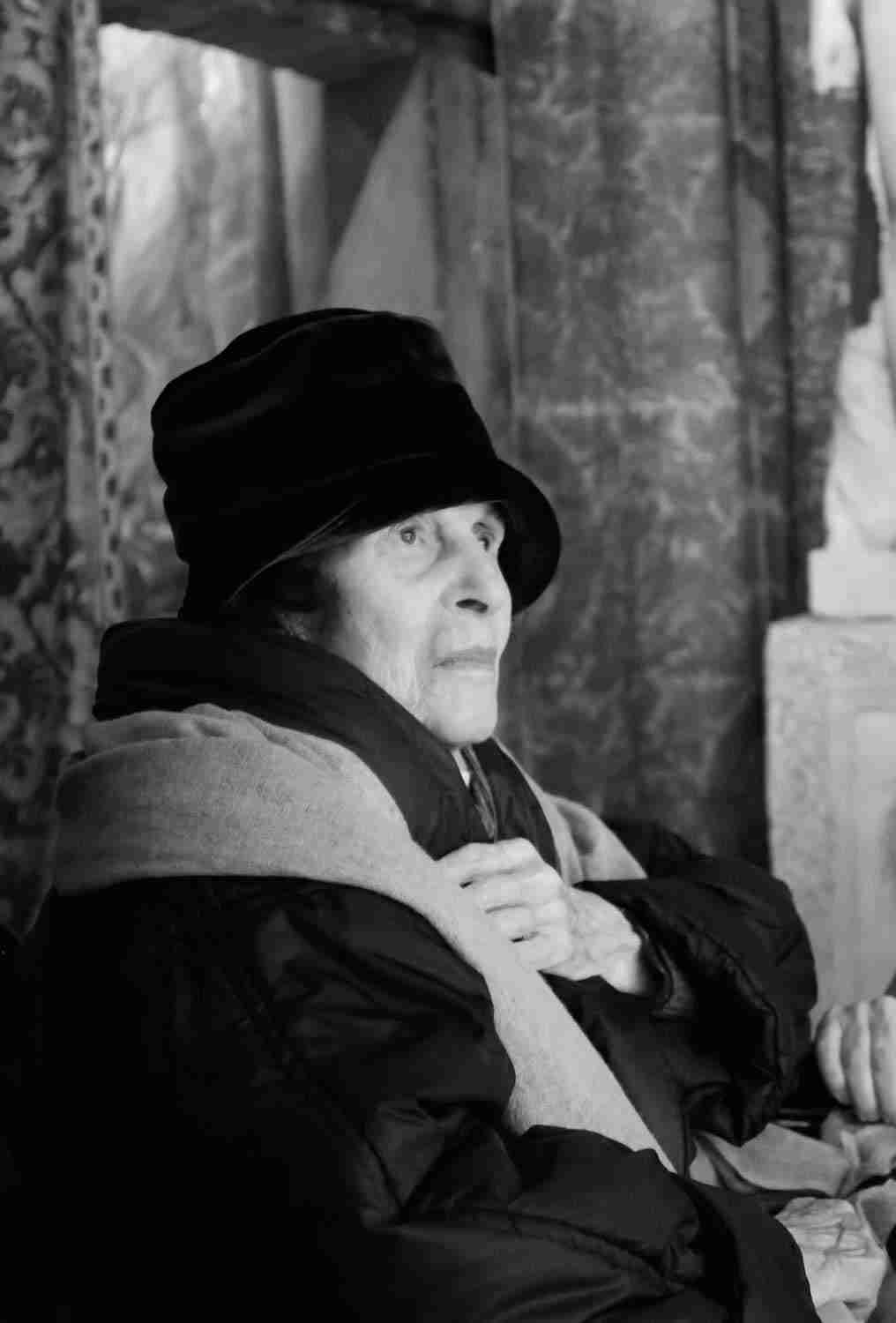
Ida Barbarigo visiting the Cadorin exhibition at Palazzo Fortuny (photo Garance Laporte).
Opening on 26 November of the ‘La bottega Cadorin. Una dinastia di artisti veneziani’ exhibition, curated by Jean Clair. The painter’s works are exhibited alongside those of her grandfather, Vincenzo Cadorin, her father Guido, her uncles Ettore and Romeo, her mother, Livia Tivoli Cadorin and her maternal grandfather Augusto Tivoli. In the catalogue, the text on the artist is by Marco Vallora.
Ida Barbarigo visiting the Cadorin exhibition at Palazzo Fortuny (photo Garance Laporte).
2018
On 15 January, she dies in his Venetian home, Palazzo Balbi.
Dad used to tell us: ‘Above all, don’t be an artist, it’s a terrible thing!’ (…). I went to middle school and classical high school, and I never dared to think of being a painter. To be a painter, you have to be number one. (…) One day I went to a place where there was nothing, just the sea, nothing, and I said to myself, now I must decide, and I drew a picture. Although I was very young, I said to myself, there is something, there is something. And I never stopped. I didn’t know I was going to be a painter, I painted like someone who scratches his head, or sneezes, he doesn’t think he is the master of sneezing, it’s not his job to sneeze, but he sneezes. I thought it was a great claim to be a painter. I didn’t think I had any talent, it was natural, I thought I was struggling and instead the paintings just came out of me… they came by themselves and one has no merit. (…) I have been painting all my life. I haven’t lived. But at least I have done the paintings.
The artist quoted by Laura Bossi Régnier, in Daniela Ferretti (ed.), La Bottega Cadorin. Una dinastia di artisti veneziani. Antiga edizioni, Crocetta del Montello, Treviso, 2016 pp. 52-53.